



Palletising is the last step before your product leaves the facility. It is also one of the most physically demanding, injury-prone, and labour-dependent tasks on any packaging floor.
In most Indian manufacturing operations, it is still done by hand.
Workers lift cartons sometimes weighing 15 to 25 kg each and stack them onto pallets in a defined pattern, shift after shift. The process is slow, inconsistent, and takes a physical toll that shows up in absenteeism, injury claims, and high operator turnover in the palletising role.
Palletising automation solves all three problems simultaneously. The question is not whether automation makes sense for most operations above a certain volume; it clearly does. The question is whether your operation is ready for it right now, and what the right starting point is.
The Signs Your Palletising Operation Needs Automation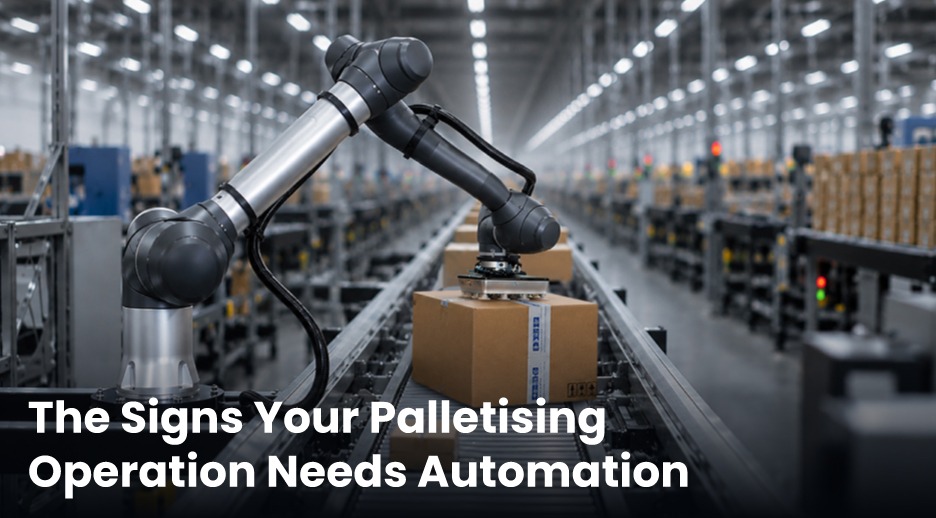
You do not need a consultant to tell you whether palletising is a problem on your floor. The signs are visible every shift.
Operators struggling to maintain stacking speed during peak production hours. Pallet patterns that vary across operators or degrade over the shift. Frequent musculoskeletal complaints from palletising staff. Trucks waiting at the gate because palletising cannot keep pace with dispatch. Damage to top-layer cartons from inconsistent stacking under compression.
If two or more of these describe your current operation, palletising is already costing you more than the investment in automation would.
What Palletising Automation Actually Involves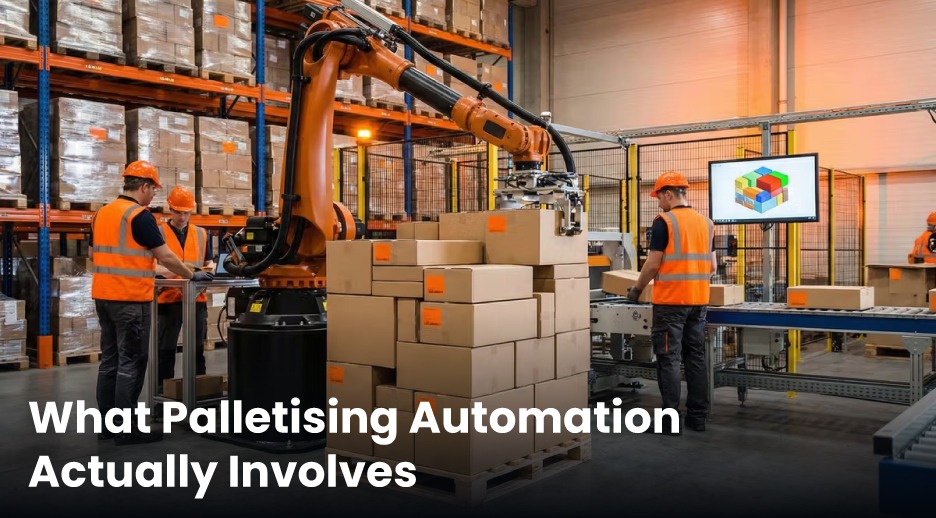
Palletising automation does not mean a single solution for every operation. The right system depends on your throughput, your carton range, your floor space, and your budget.
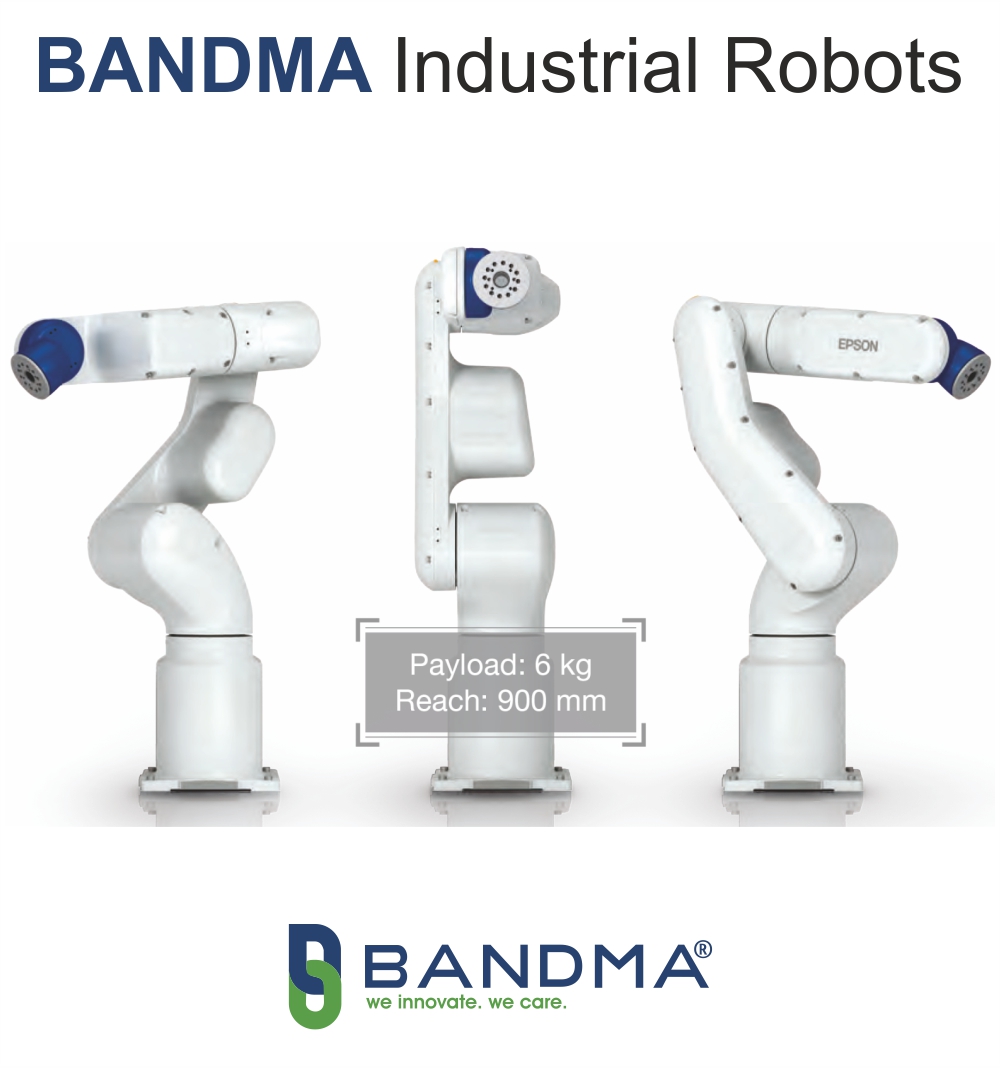
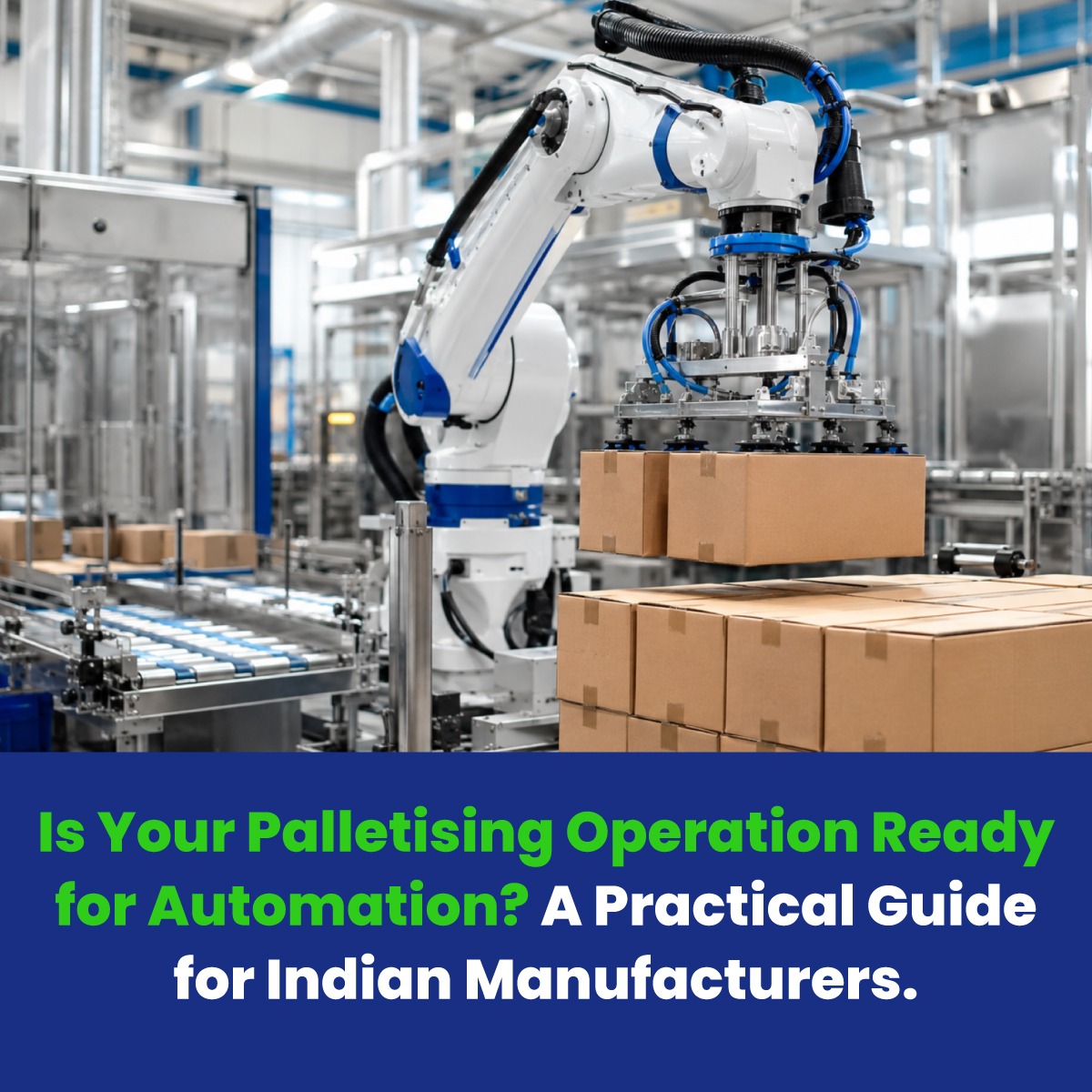
Robotic palletisers use an industrial robot arm with a specialised end-of-arm gripper to pick cartons from a conveyor and place them onto a pallet in a programmed pattern. They handle multiple carton sizes with pattern changes made through software rather than physical adjustment. Robotic palletisers are the right choice for operations with varied SKUs, high throughput requirements, and the need for precise, consistent stacking patterns.
Conventional layer palletisers build complete layers of cartons simultaneously and place them onto the pallet one layer at a time. They are faster than robotic systems at very high speeds but less flexible when carton sizes change frequently.
Collaborative robots cobots work alongside operators rather than replacing them entirely. They handle the lifting while the operator guides placement. For operations not yet ready for full automation, cobots offer a meaningful ergonomic improvement at a lower entry cost.
Assessing Your Readiness: Three Practical Questions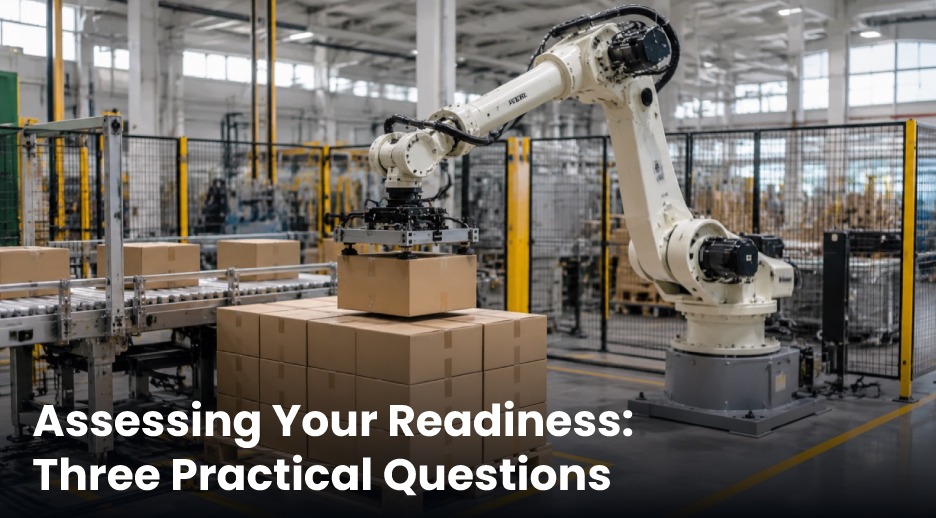
How many cartons do you palletise per shift?
Below 200, manual palletising with improved ergonomic support is often the right answer. Between 200 and 600, a cobot or entry-level robotic palletiser typically delivers strong ROI. Above 600 cartons per shift, full robotic palletising automation almost always pays back within 18 to 24 months.
How many carton sizes do you run?
High SKU variety favours robotic palletisers with programmable pattern changes. Low variety with consistent carton dimensions suits conventional layer palletisers.
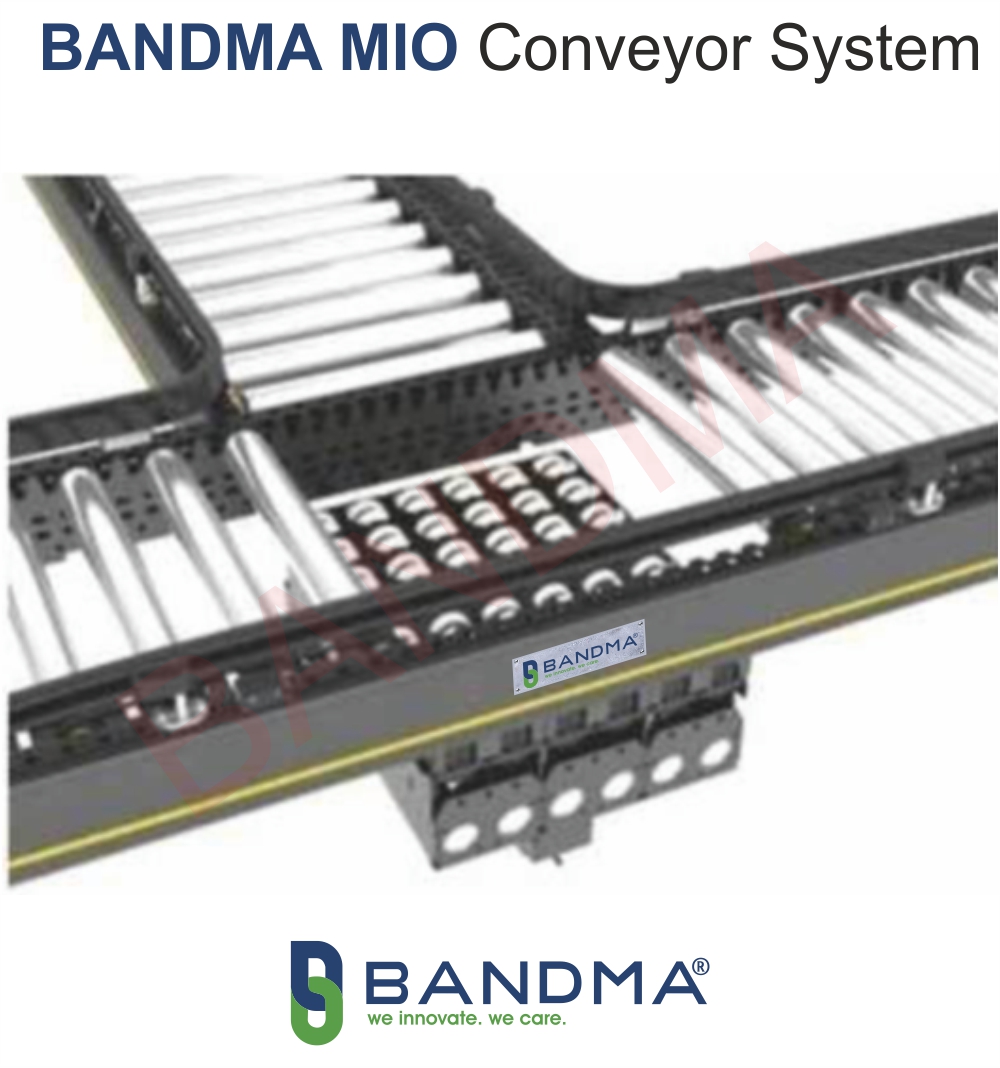
Is your conveyor infrastructure in place? A palletising robot requires cartons to arrive at a defined position on a conveyor. If your line currently ends with manual carrying to the pallet station, conveyor integration is the necessary first step before palletising automation can be introduced.
What Bandma Offers
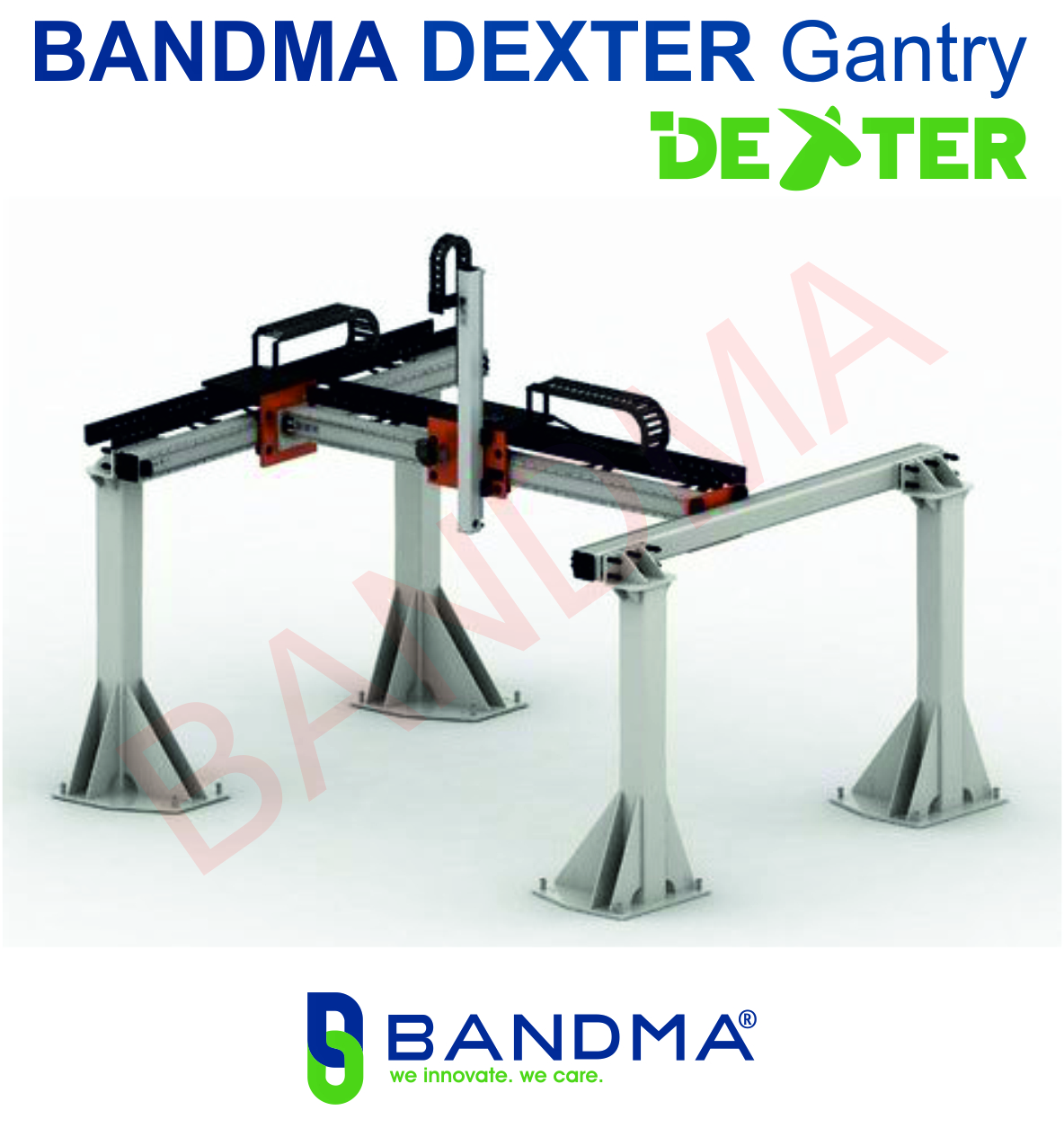
Bandma supplies industrial robots and gantry systems configured for palletising applications across food, FMCG, pharmaceutical, and industrial packaging environments.
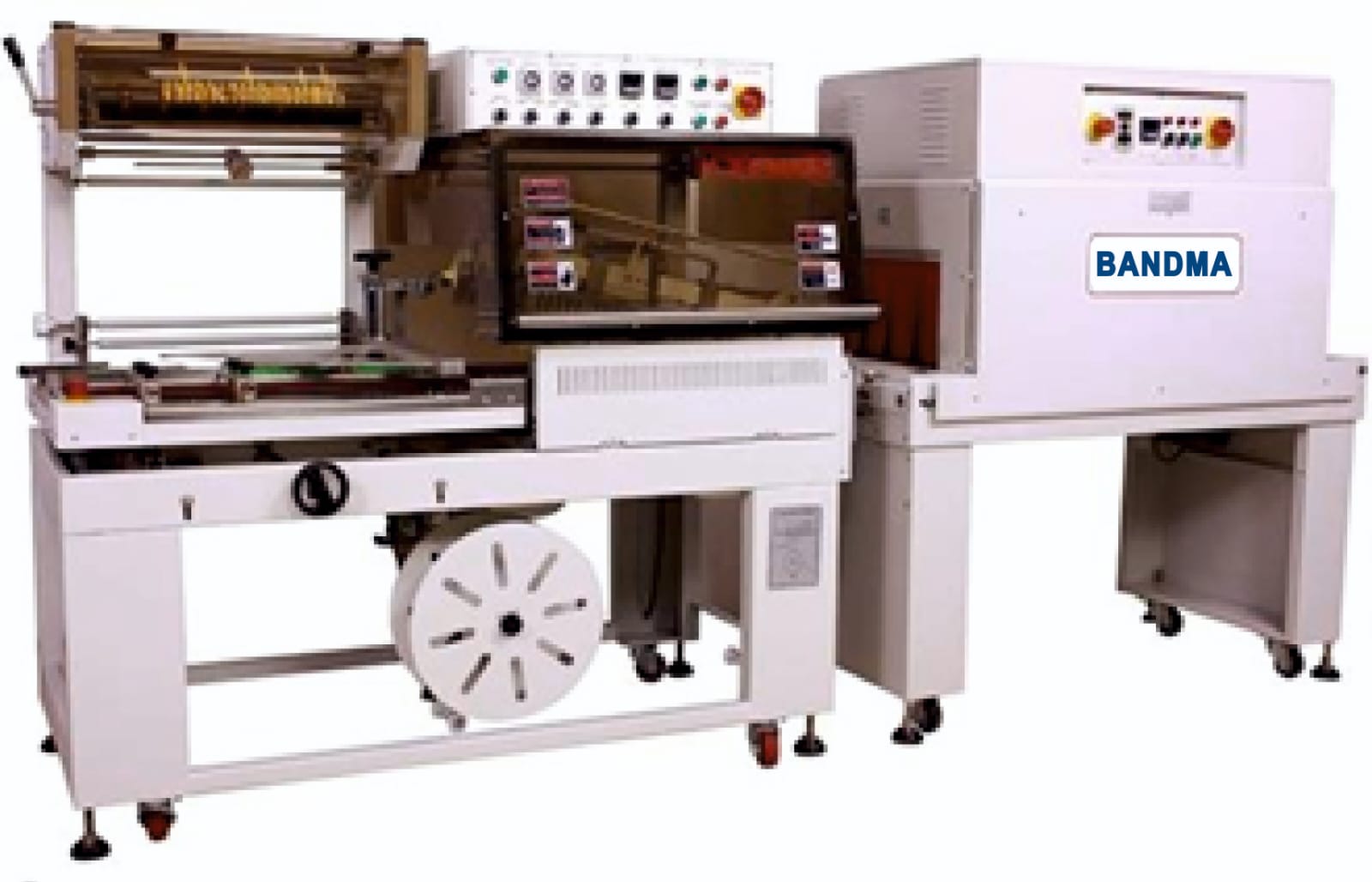
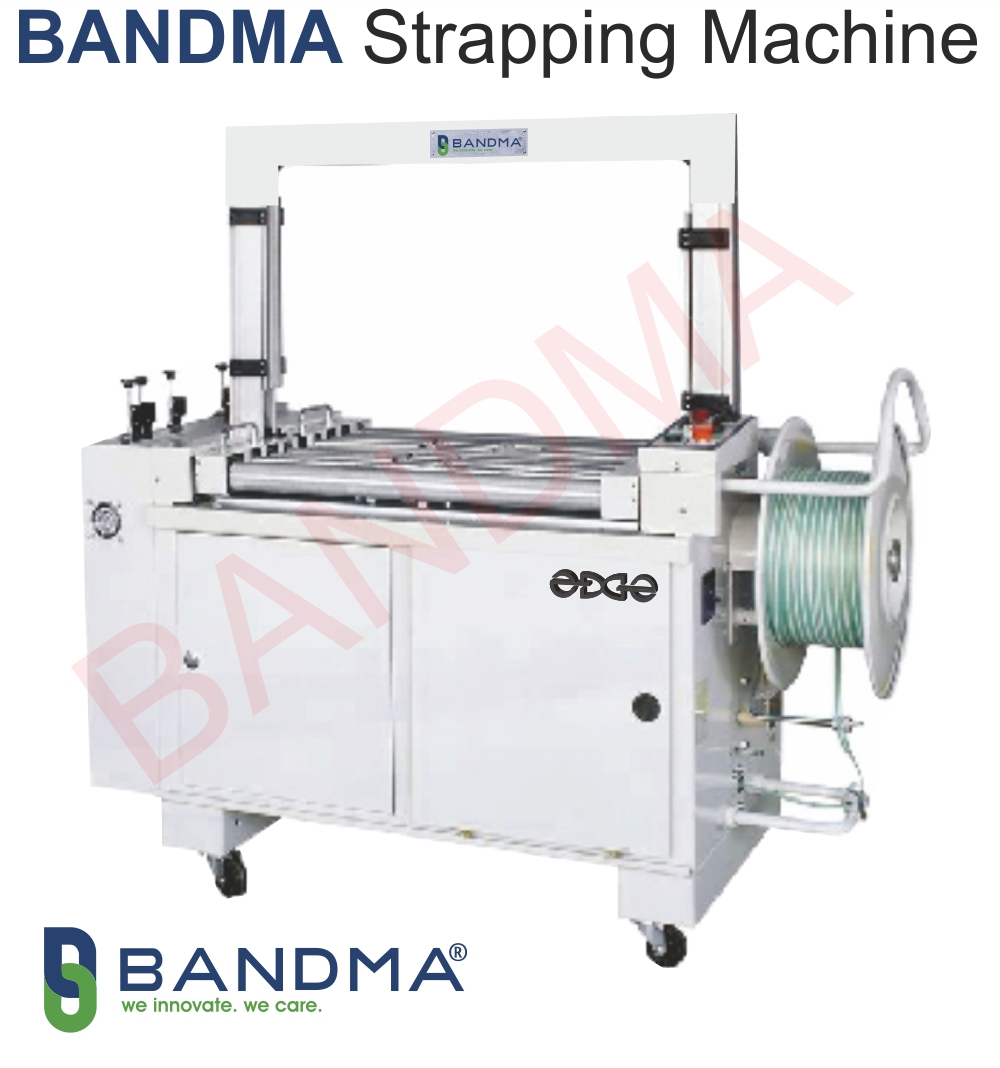
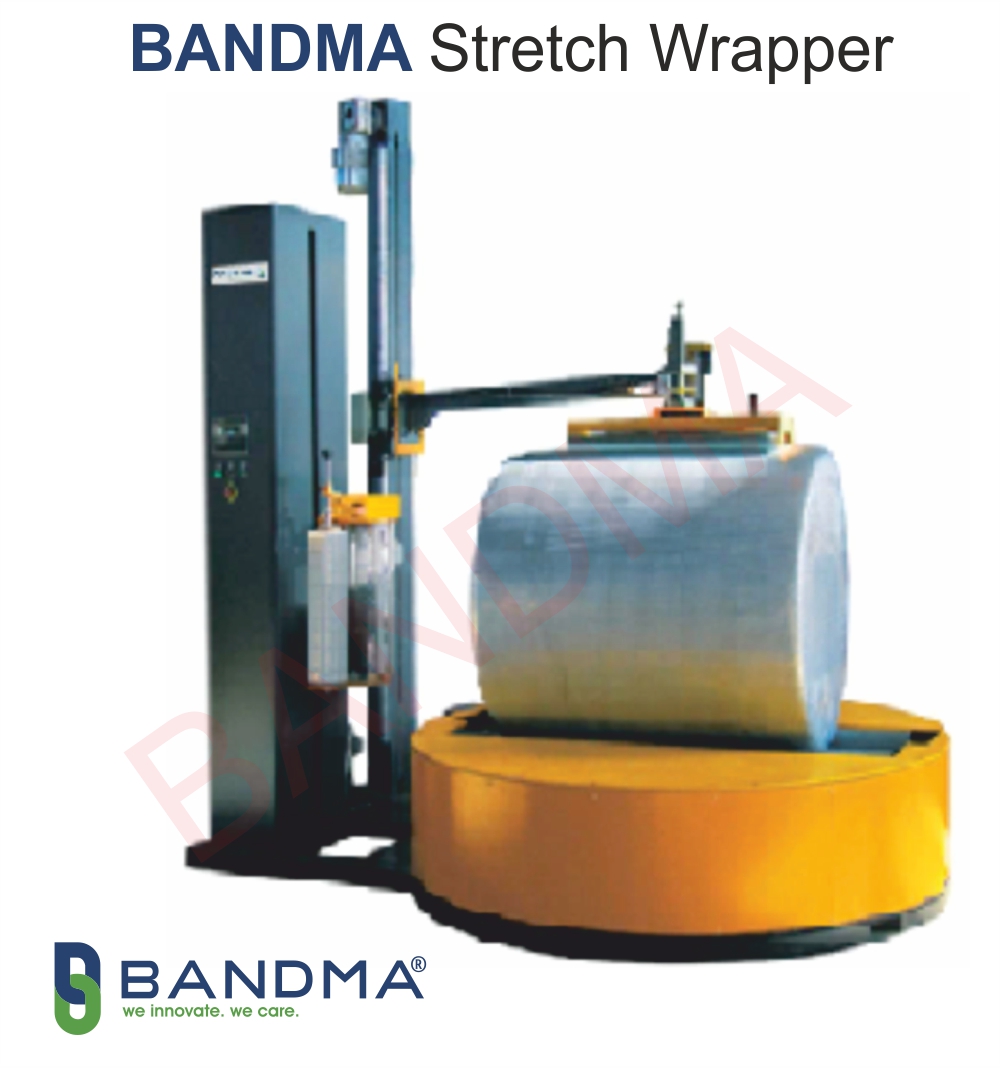
Palletising automation is most effective when it is designed as part of a complete end-of-line solution integrated with the conveyor system, stretch wrapper, and strapping machines that precede it. Bandma's end-of-line engineering team works with your floor layout and throughput targets to design a palletising system that fits your operation today and scales with your growth.
Contact Bandma to assess your palletising operation and find the right automation starting point.
Bandma - We innovate. We care.