








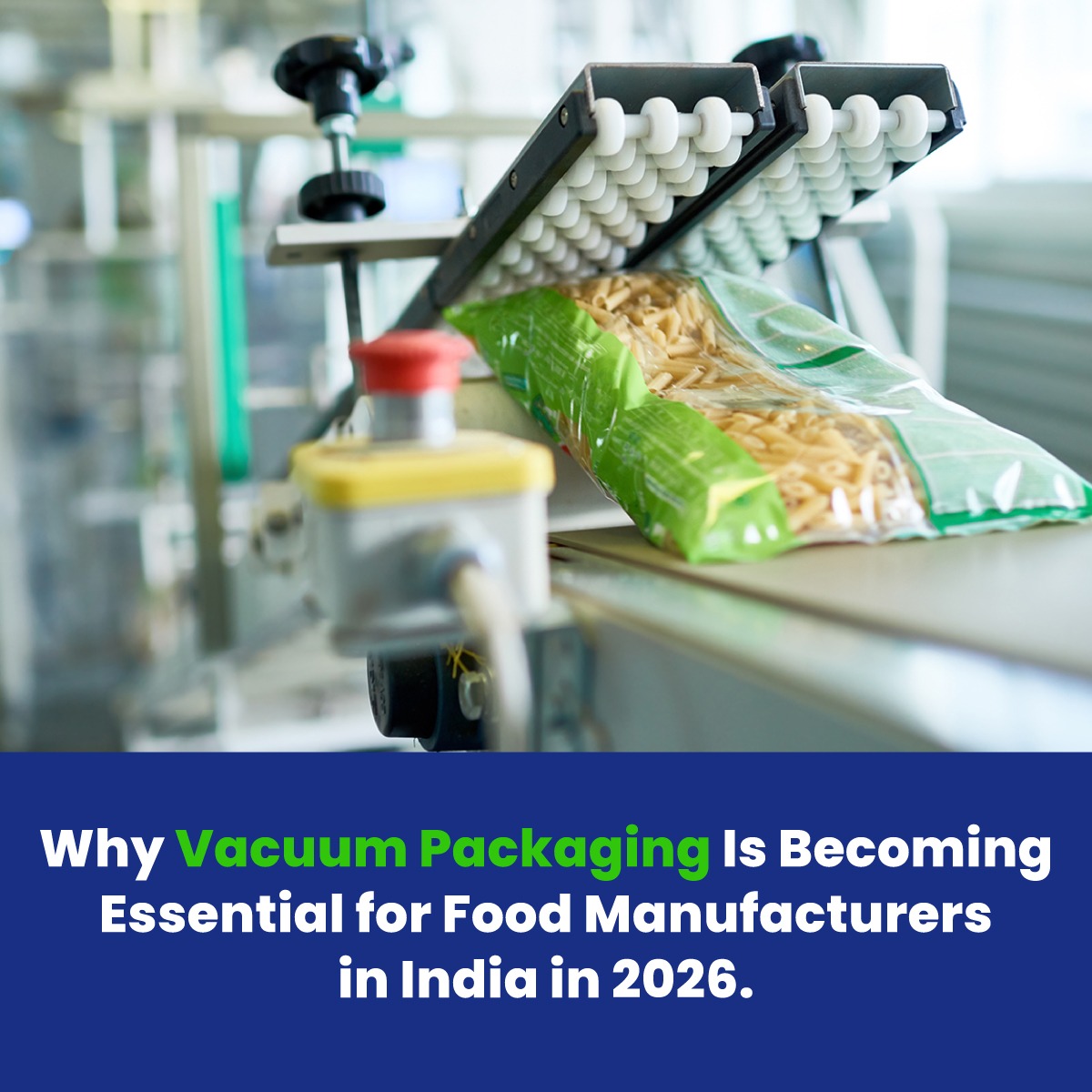
A decade ago, vacuum packaging in India was associated with premium export products: processed meats, specialty cheeses, high-value seafood destined for international markets. Domestic food manufacturers largely continued with standard pouches, shrink wrapping, and traditional sealing methods.
That picture has changed significantly. In 2026, vacuum packaging is moving from a premium option to a baseline expectation across a wide range of Indian food categories, and manufacturers who have not yet evaluated it are starting to feel the competitive and commercial pressure of that shift.
Here is why it is happening now, and what it means for food manufacturers across India.
Shelf Life Is Now a Commercial Requirement, Not a Bonus
Modern trade buyers large grocery chains, quick-commerce platforms, and institutional food buyers have become significantly more precise about shelf life requirements at the point of delivery.
A product arriving at a distribution centre with less than a specified remaining shelf life is rejected. No negotiation. The cost of that rejection, logistics, replacement stock, and relationship damage falls entirely on the manufacturer.
Vacuum packaging extends the shelf life of perishable and semi-perishable food products by removing oxygen from the pack. Without oxygen, the aerobic bacteria responsible for spoilage cannot grow at their normal rate. For products like processed meats, paneer, ready-to-cook vegetables, cheese, and cooked foods, the shelf life extension from vacuum packaging is not marginal; it is measured in multiples.
For manufacturers supplying modern trade or e-commerce channels where delivery timelines are longer and shelf life requirements are stricter, this extension has become a commercial necessity.
Food Safety Standards Are Tightening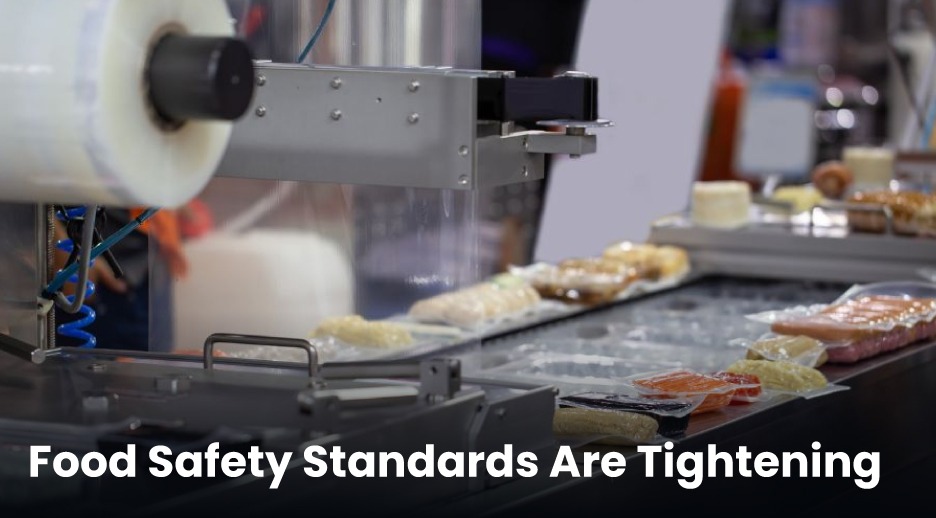
FSSAI's regulatory framework has strengthened consistently over the past three years. Packaging standards, traceability requirements, and hygiene documentation expectations have all moved in one direction toward greater rigour.
Vacuum packaging supports food safety compliance in a direct way. A hermetically sealed, oxygen-free pack is tamper-evident, contamination-resistant, and far easier to audit than a traditionally sealed pouch. For manufacturers pursuing FSSAI licensing upgrades, export certifications, or institutional supply approvals, vacuum packaging supports the documentation and process standards those certifications require.
Consumer Expectations Have Shifted
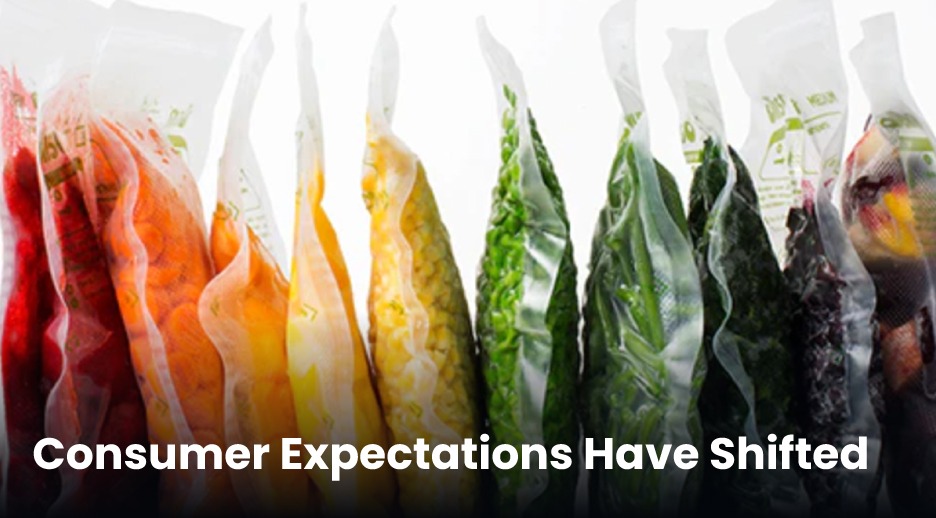
The Indian consumer buying packaged food in 2026 is materially different from the consumer of five years ago. Urban buyers in particular are reading labels, checking packaging integrity, and making purchase decisions based on visible packaging quality.
A vacuum-sealed pack communicates freshness, hygiene, and quality in a way that a standard sealed pouch does not. In a retail environment where two competing products sit side by side, packaging presentation influences the purchase decision, and vacuum packaging consistently presents better.
The Technology Has Become Accessible
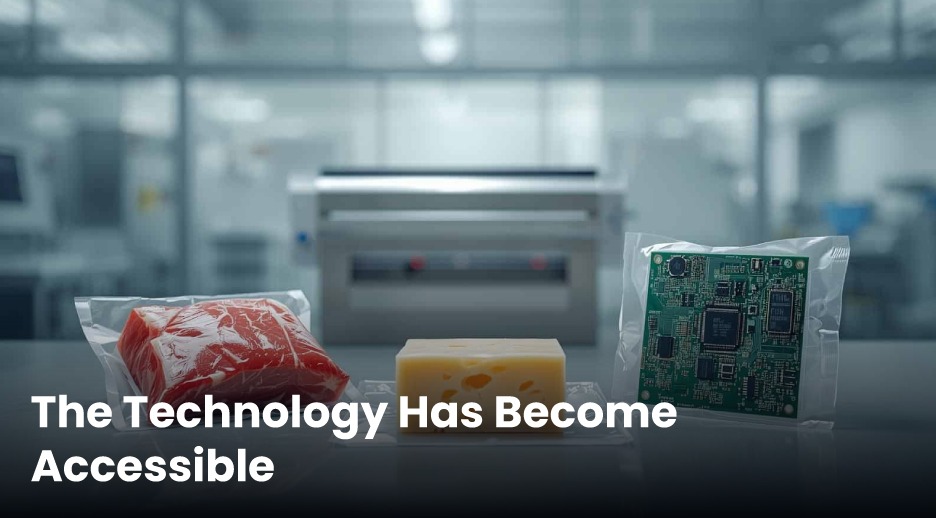
Vacuum chamber machines have historically been associated with large-scale industrial food processing. That is no longer the case.
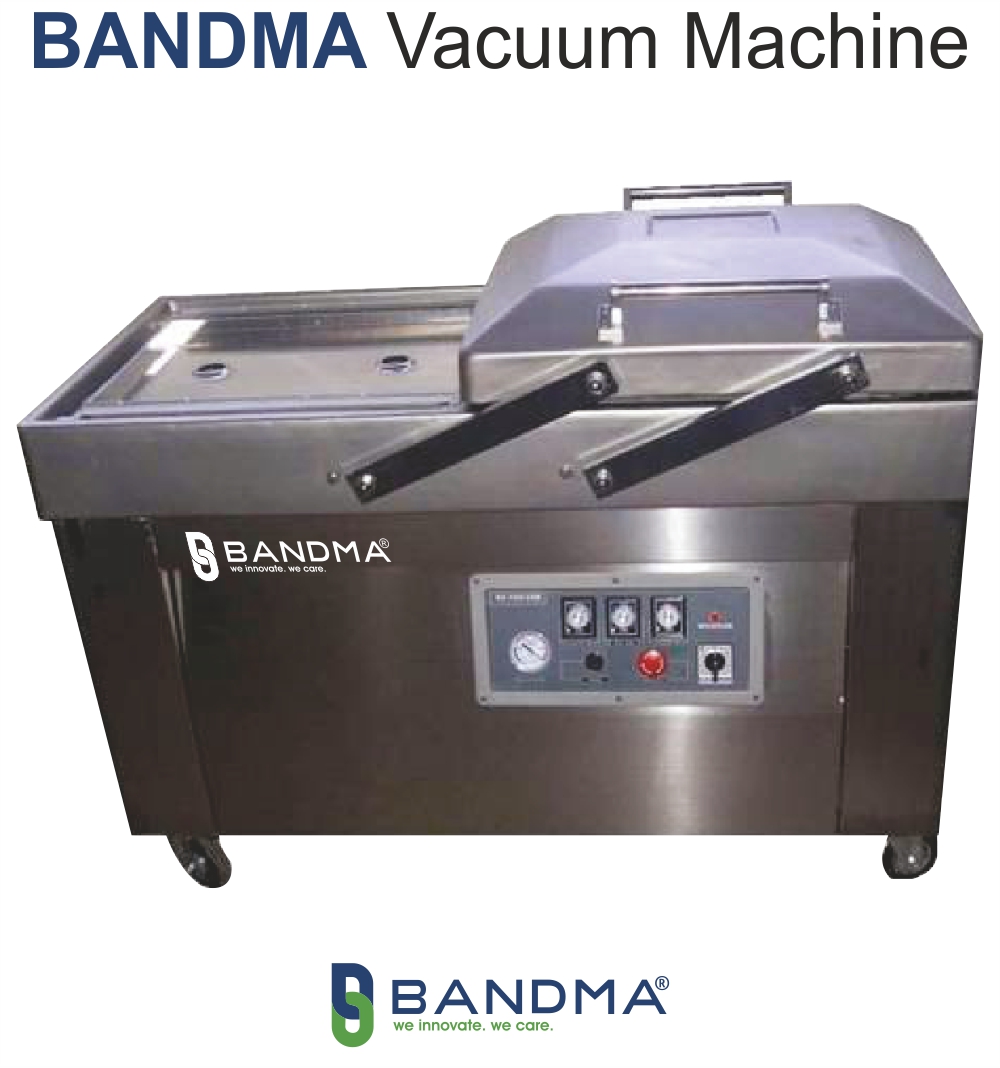
Compact vacuum chamber machines suitable for small and medium food manufacturers are now available at price points that make the investment viable for facilities producing as few as a few hundred packs per day. The payback comes through reduced spoilage, fewer retailer rejections, and the ability to access modern trade, export, and institutional channels that were previously out of reach due to shelf life limitations.
For larger operations, fully automatic vacuum packaging lines integrate with upstream filling and downstream labelling and coding systems to create a seamless, high-speed packaging flow.
What Bandma Offers
Bandma supplies vacuum chamber machines suited to Indian food manufacturing environments, from compact single-chamber models for smaller operations to larger dual-chamber configurations for higher-volume production.
If shelf life, food safety compliance, or retail channel access is a current challenge for your facility, vacuum packaging is worth a serious evaluation in 2026.
Contact Bandma to discuss which vacuum packaging configuration fits your products and your production volume.
Bandma - We innovate. We care.