


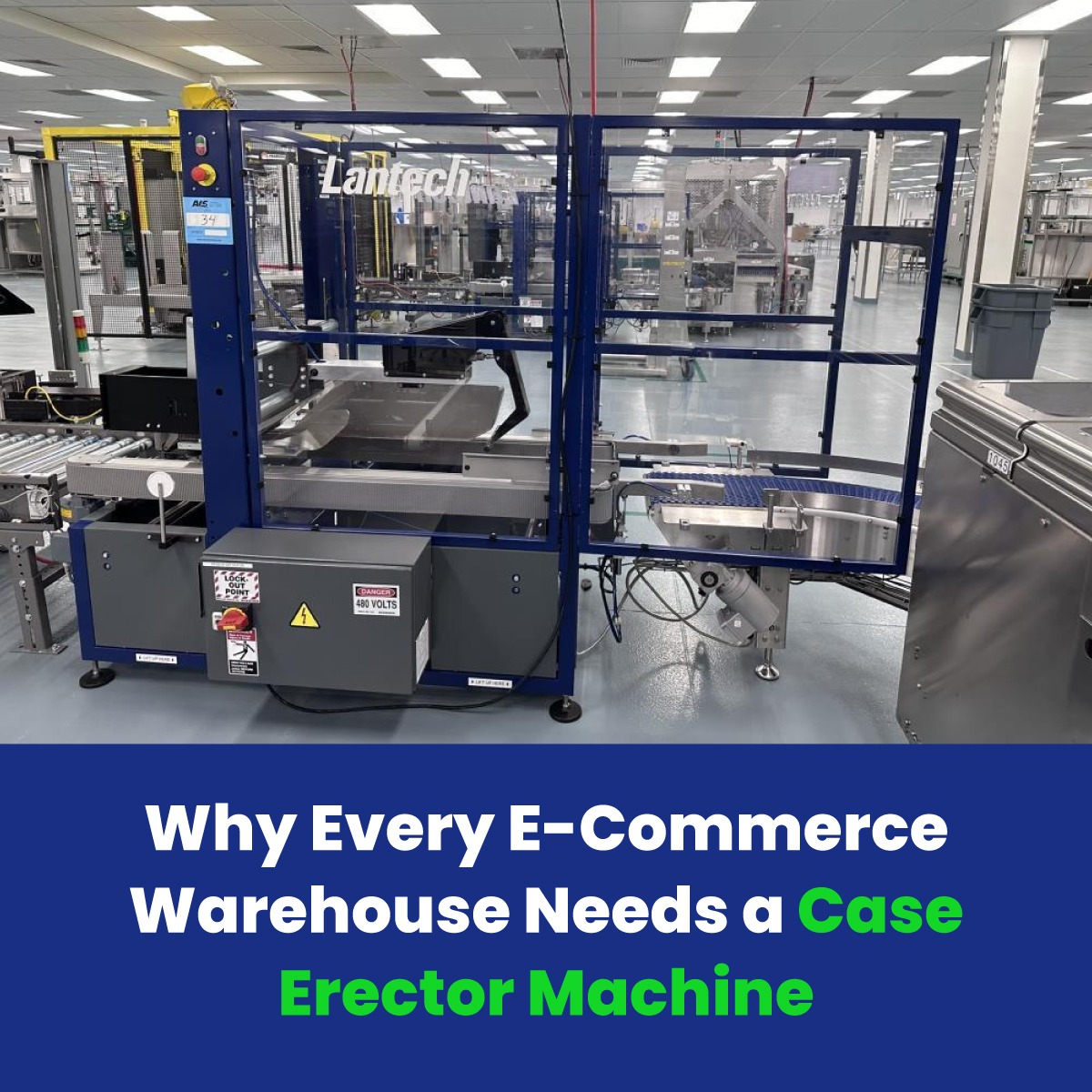
Ask anyone who has worked a peak season in an e-commerce fulfilment warehouse what the bottleneck was, and the answer is rarely picking or packing. It is box erection — the deceptively slow, physically demanding task of taking a flat-packed carton, folding the base flaps, and taping it ready to fill.
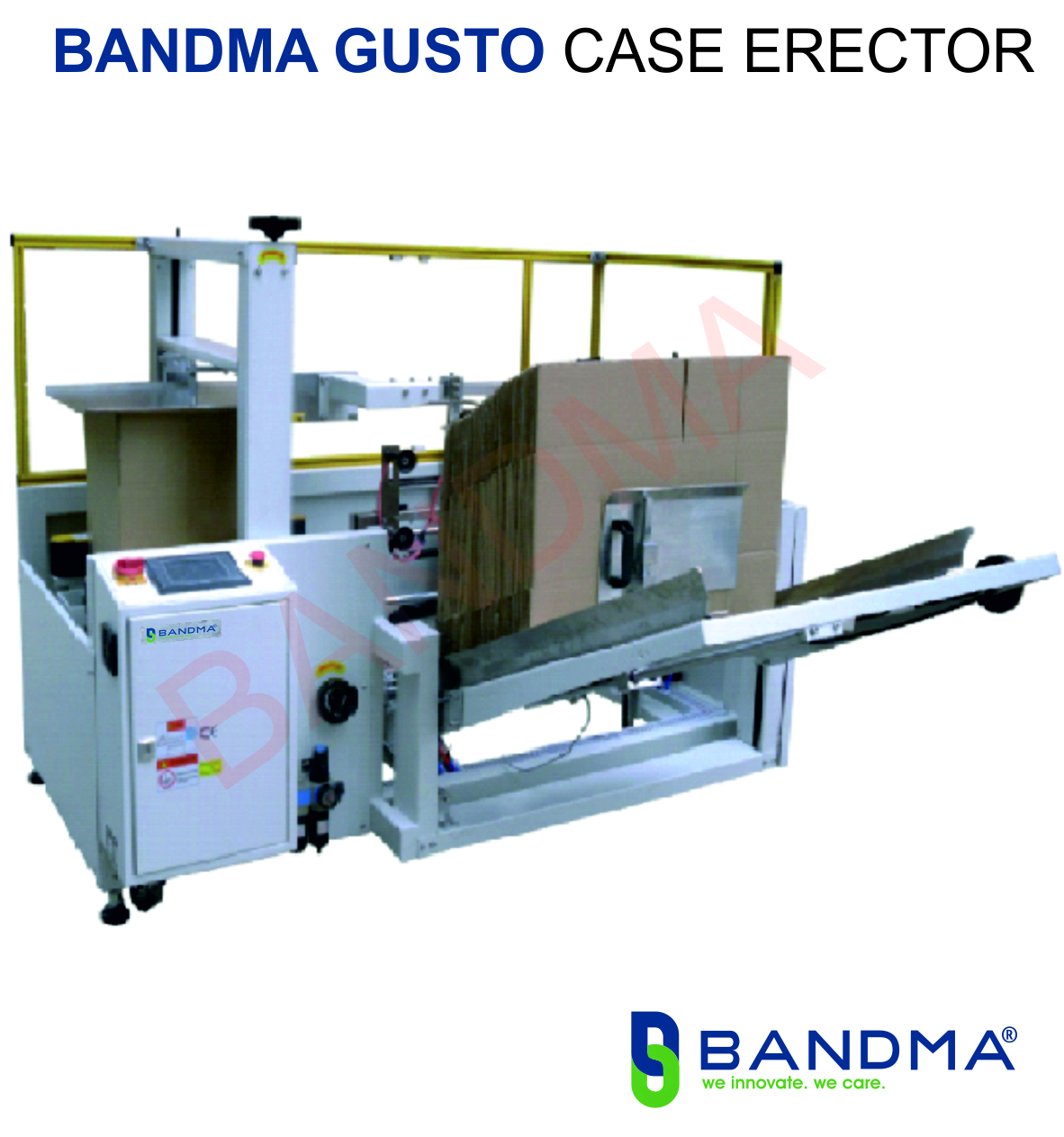
A case erector machine does this automatically. It takes flat-packed blanks from a magazine, forms them into open-top boxes, seals the bottom, and places them onto a conveyor ready for filling — at a rate no manual team can match.
The Manual Box Erection Problem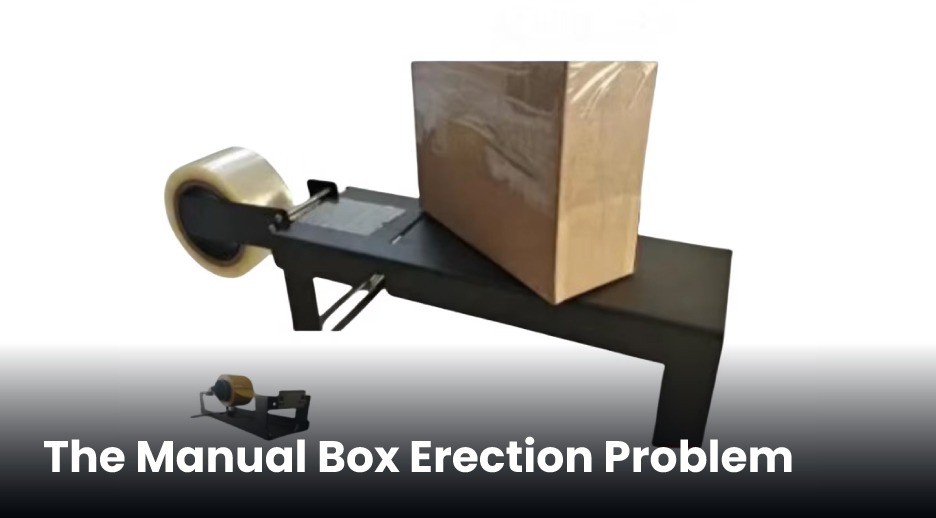
Manual box erection has three interconnected problems: speed, consistency, and ergonomics.
Speed: An experienced operator can erect and tape roughly 6 to 8 boxes per minute. A Bandma automatic case erector processes 10 to 30 cases per minute depending on the model — a 3x to 5x improvement from a single machine with no operator required.
Consistency: Manually erected boxes vary in squareness and tape alignment. Out-of-square boxes jam downstream conveyors, cause labelling errors, and — critically — cannot be palletised efficiently. A machine produces identical, square boxes every time.
Ergonomics: Erecting boxes all day involves repetitive bending, twisting, and lifting. It is a significant contributor to repetitive strain injuries in warehouse environments and a major reason for operator sick leave during peak seasons.
How a Case Erector Works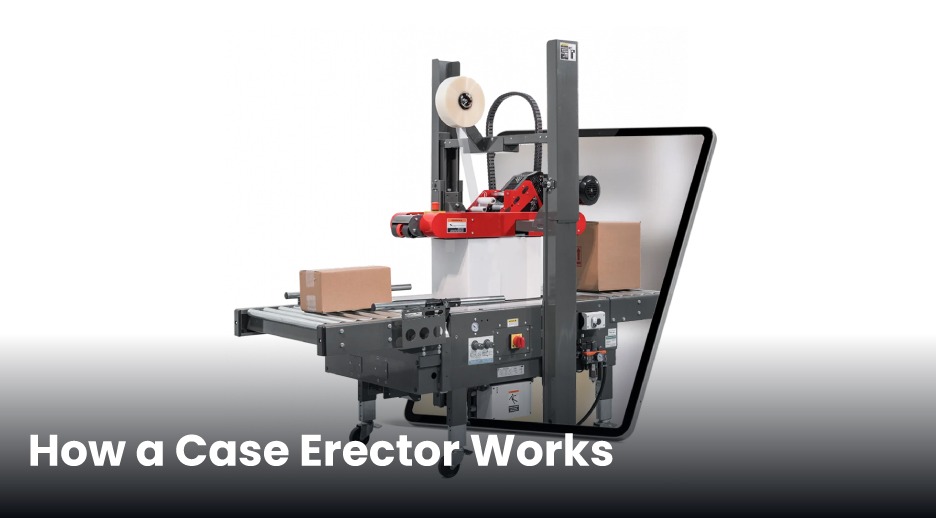
Flat-packed carton blanks are loaded into the machine's magazine — typically a vertical stack that the operator refills when low. The machine's suction cups pick one blank, square it, and fold the side panels. The bottom flaps are folded and sealed with hot-melt glue or tape. The formed, sealed case is then placed onto the outfeed conveyor, ready to receive product.
The entire cycle takes between 2 and 6 seconds depending on case size and machine speed. No operator is required at the machine during normal production.
E-Commerce Specific Considerations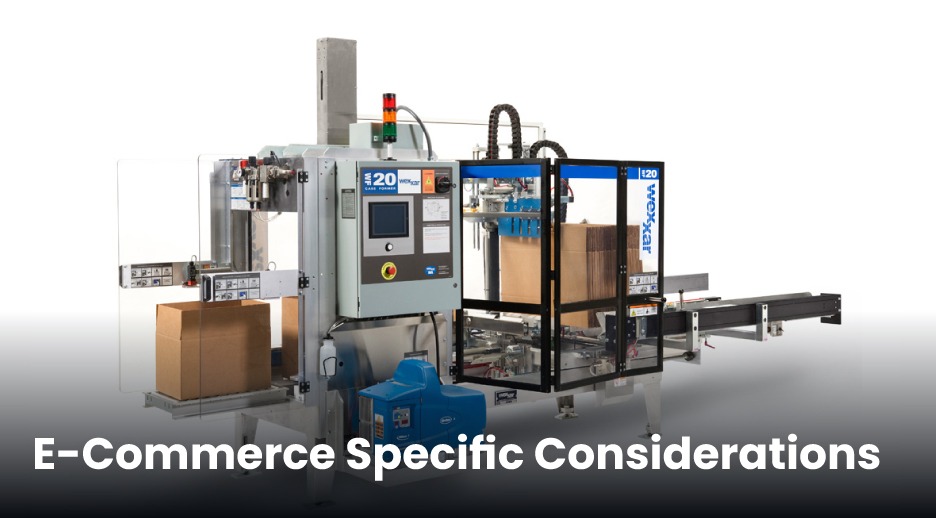
E-commerce warehouses face a challenge that traditional manufacturers do not: extreme box size variety. A typical fulfilment centre may run 15 to 50 different carton sizes. A case erector must either be quickly adjustable (for sites that batch by size) or continuously adjustable via servo-driven automatic changeover (for sites that mix sizes on the same line).
Bandma's case erector range includes models with tool-free size changeover in under 3 minutes — critical for operations running frequent size changes throughout the day.
Integration with the Broader Fulfilment Line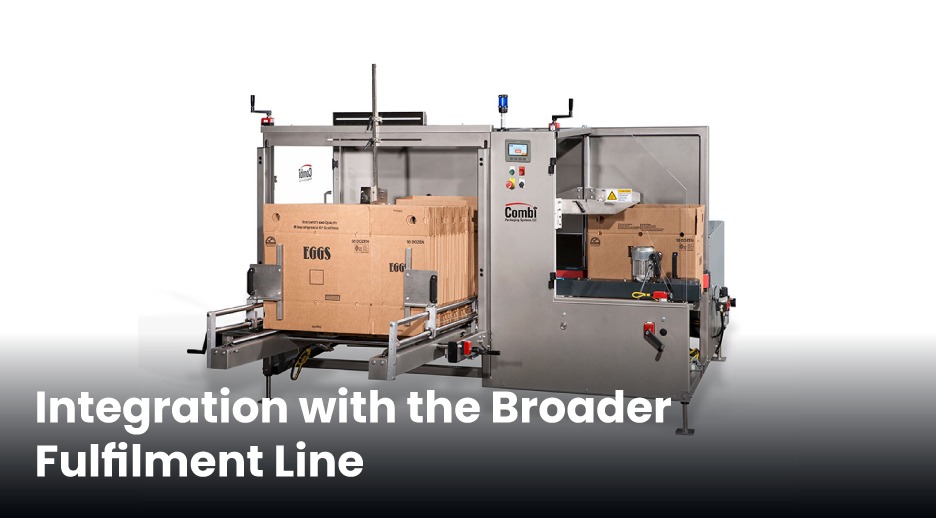
A case erector is most valuable when integrated upstream of the filling station and downstream of the box size selection step. In sophisticated operations, the warehouse management system tells the case erector which box size to form based on the order being processed — eliminating manual size selection entirely.
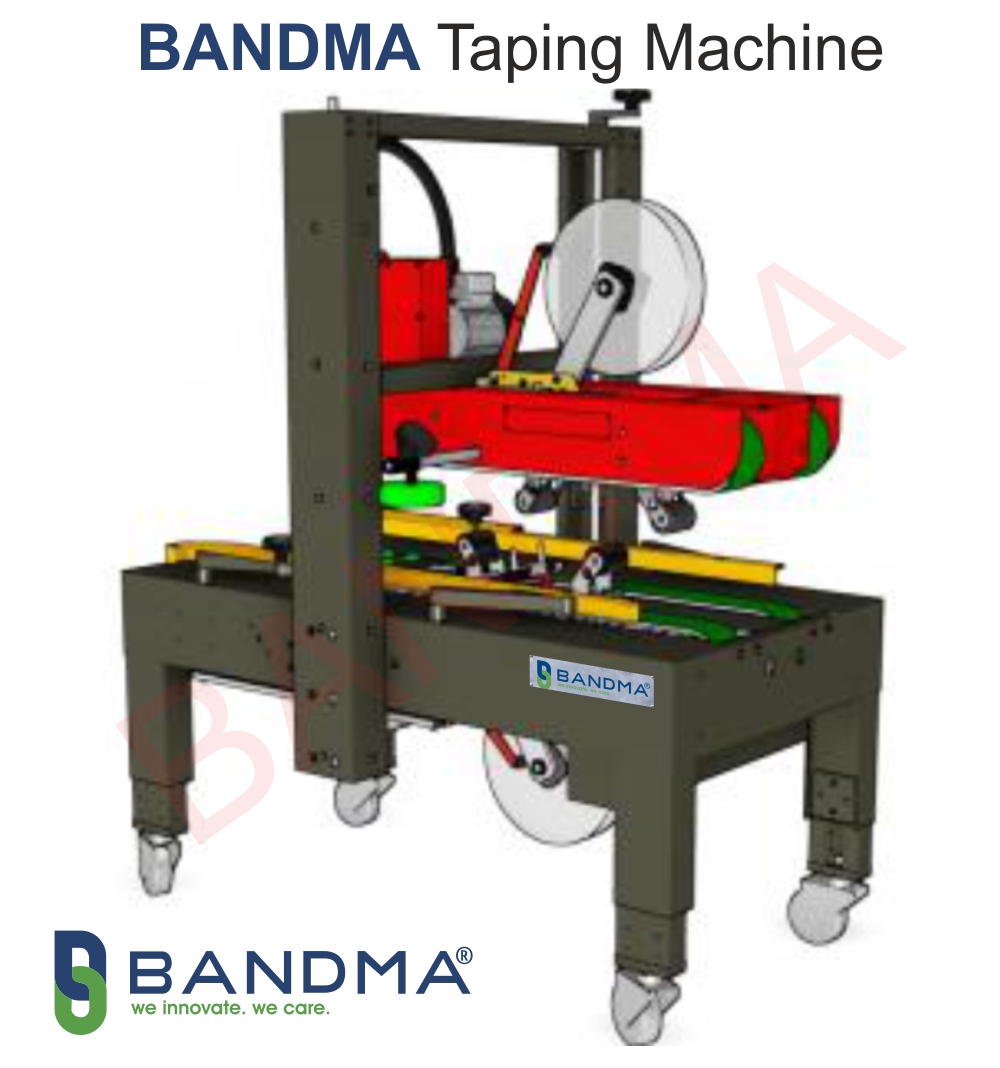
Paired with a taping machine or case sealer at the end of the line, a case erector creates a fully automated box-handling flow: flat blanks in, sealed, filled cases out.
Return on Investment
At 300 cases per hour, replacing manual erection with a Bandma case erector typically saves 1 to 2 full-time operators per shift. At 3 shifts and current warehouse labour rates, the payback period is typically 12 to 24 months — often shorter during periods of rapid volume growth when adding headcount is slow and expensive.
The ergonomic benefit — fewer musculoskeletal injury claims — is a real but harder-to-quantify additional return that many of Bandma's customers report after installation.
Contact Bandma to discuss which case erector configuration fits your carton range and line speed.