
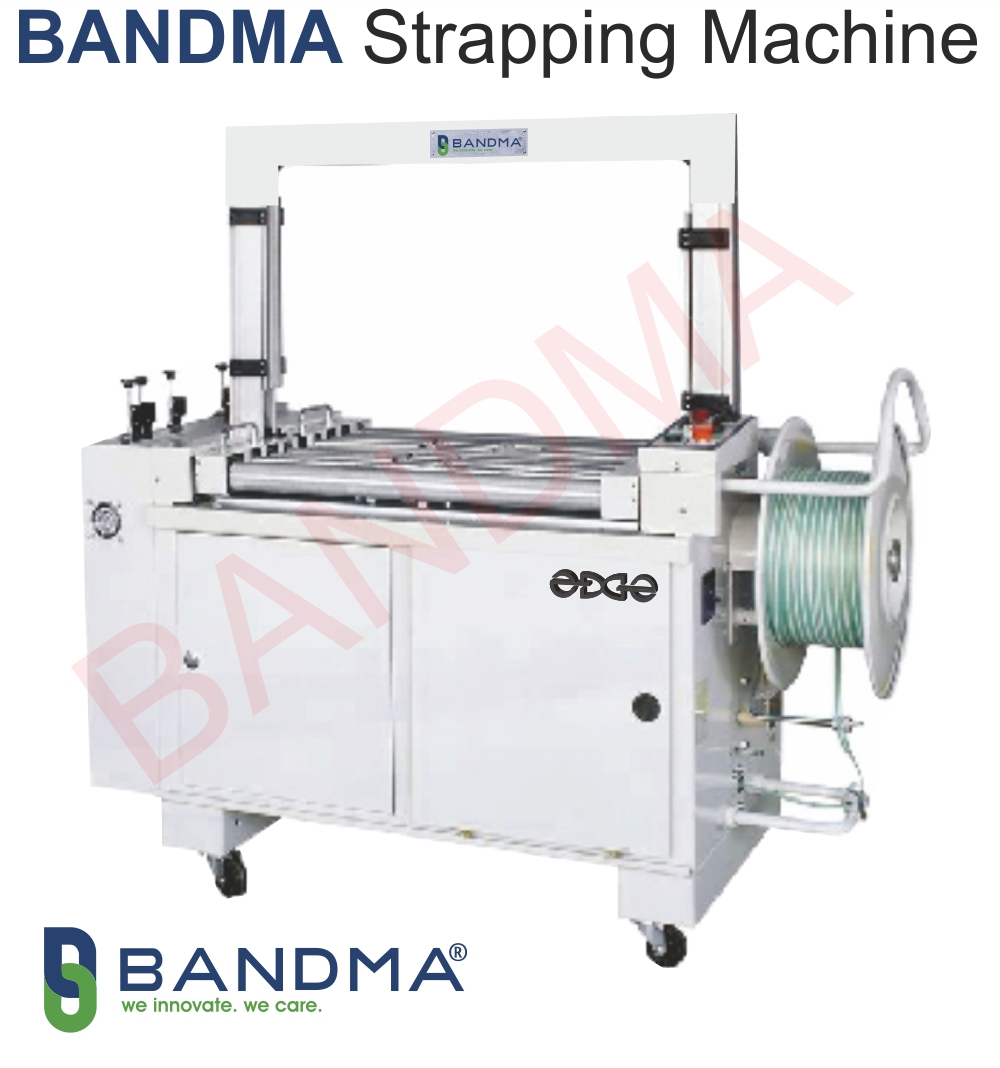
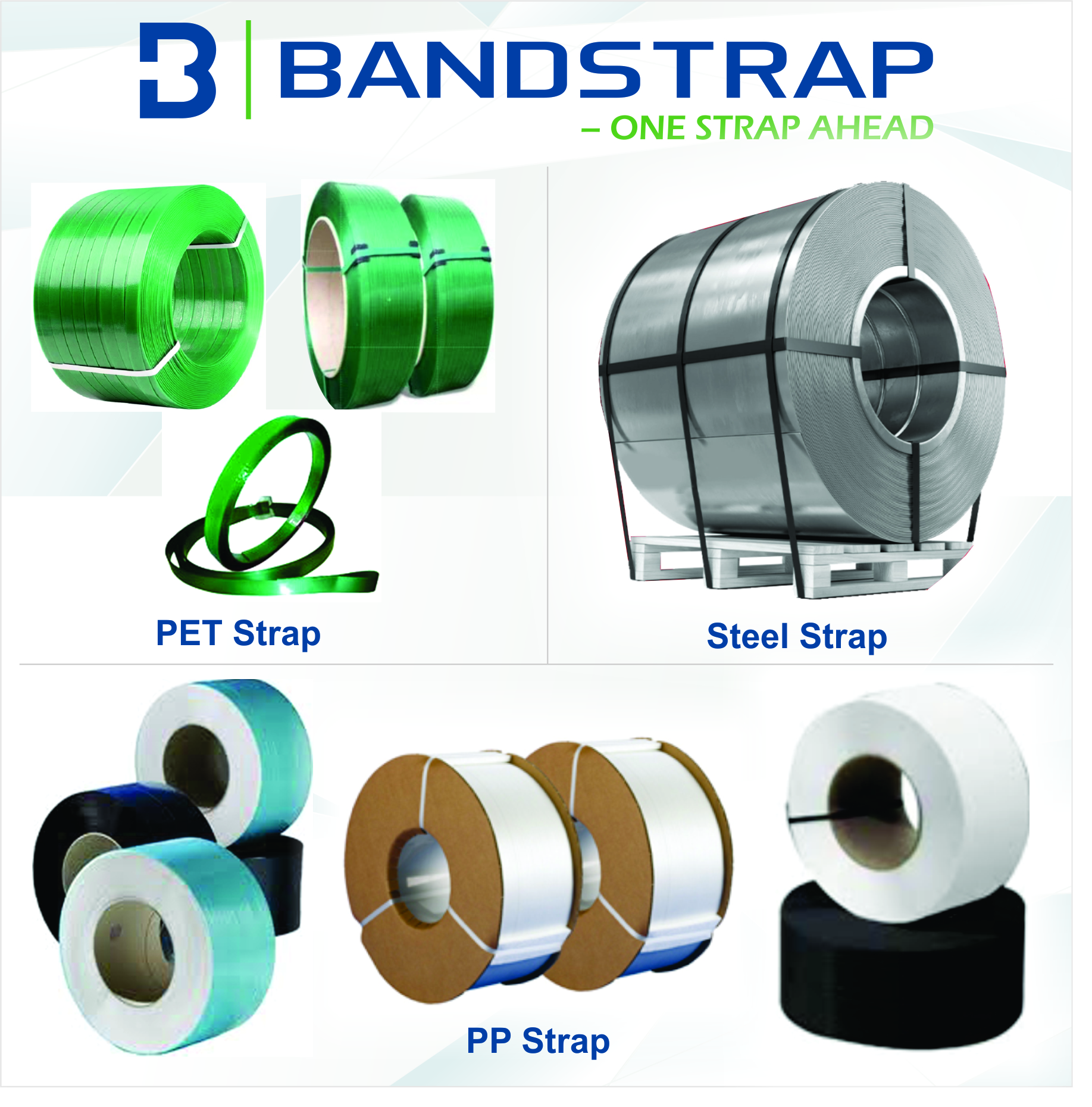
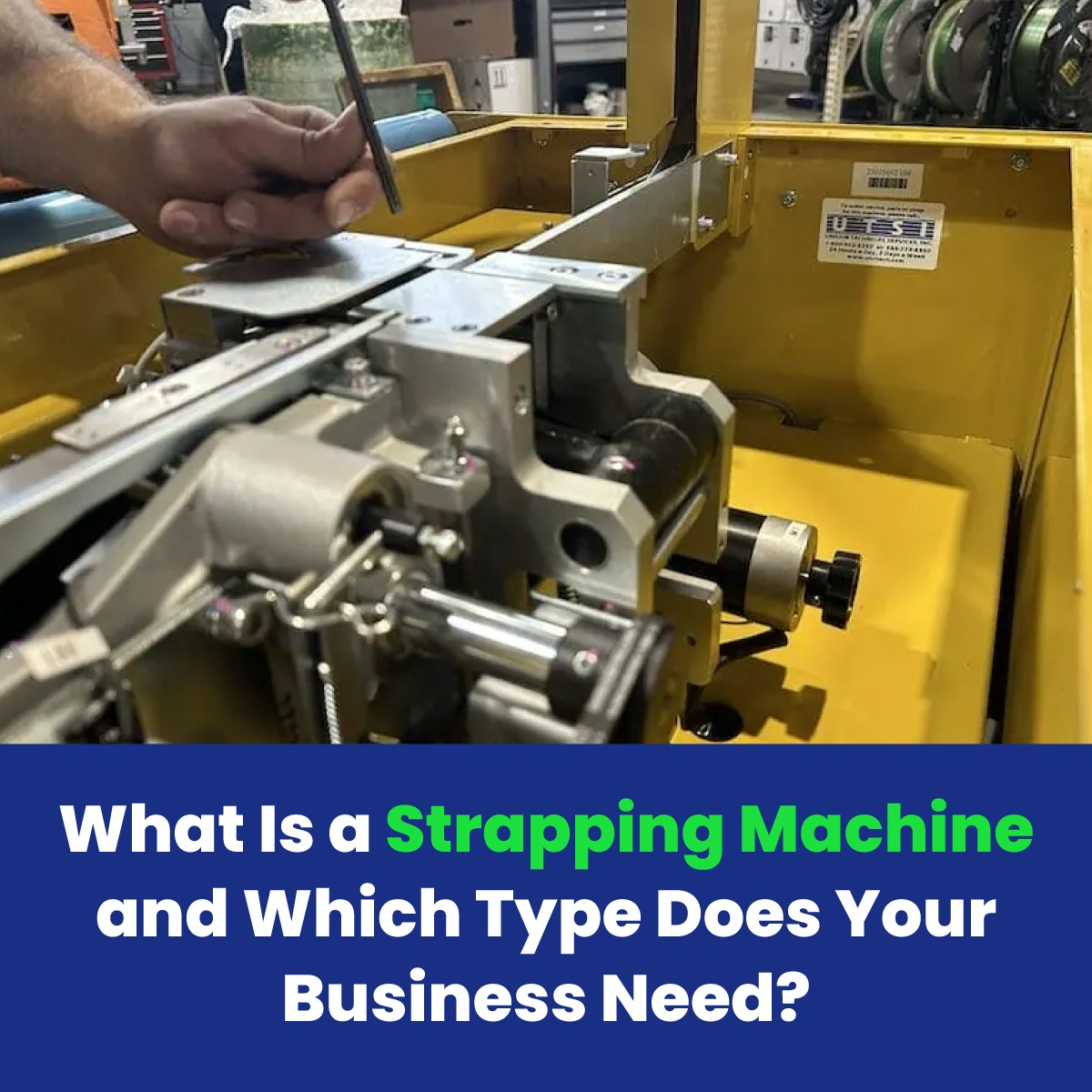
A strapping machine applies a strapping typically made from polypropylene (PP), polyethylene terephthalate (PET), or steel around a package or load, then tensions it, seals it, and cuts it automatically. The result is a secure bond that holds products together during storage and transit.
What sounds simple gets complicated quickly when you factor in load weight, production speed, strap material, and how much operator involvement you want. Here is a plain-language breakdown.
Manual Strapping Tools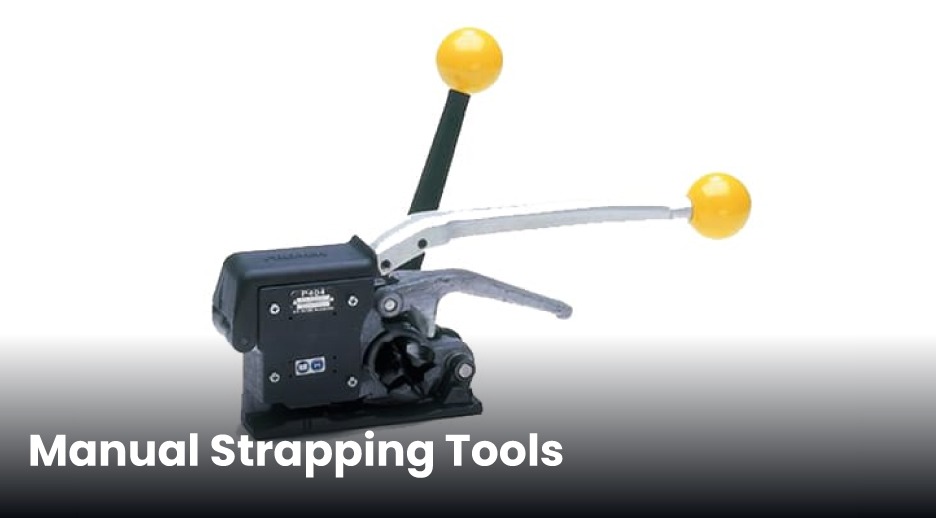
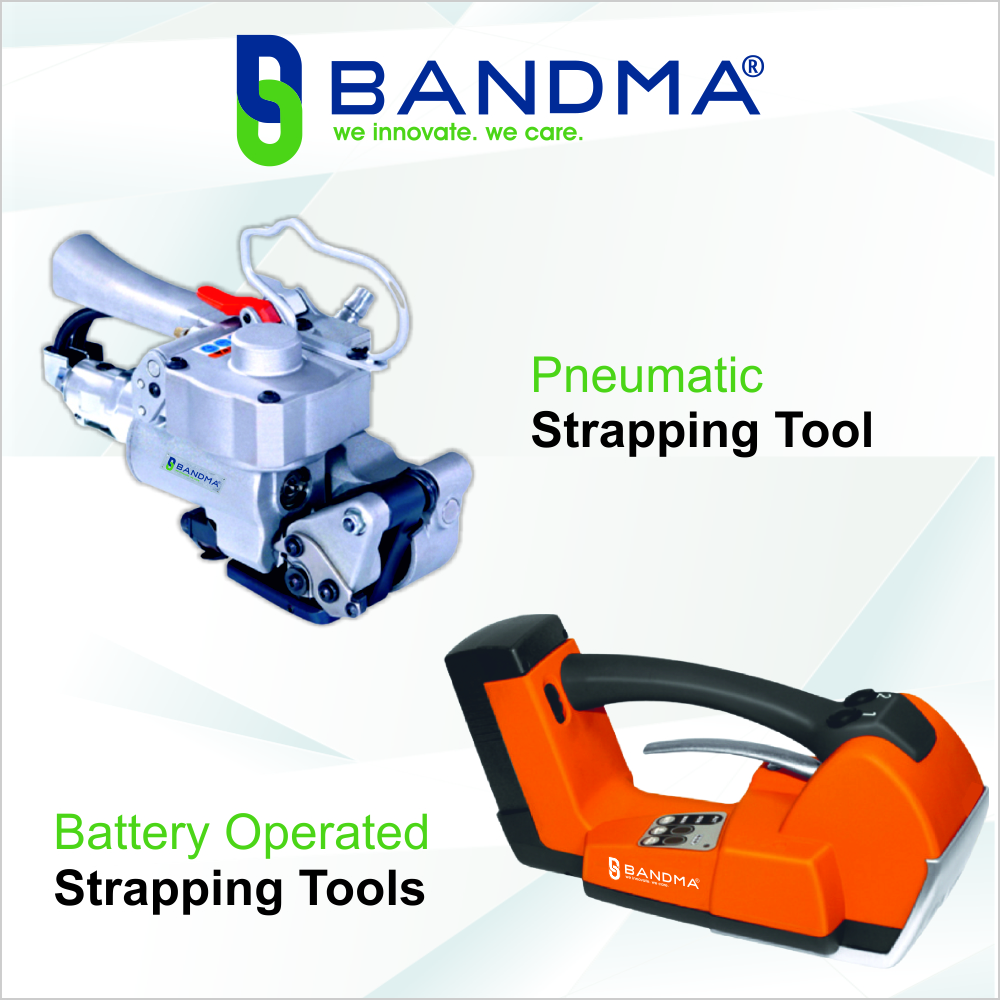
A handheld strapping tool feeds, tensions, and seals the strap by hand. It costs very little and requires no installation. For businesses dispatching fewer than 80 to 100 packages a day, this is often the most practical option. The limitation is consistency of results depends on the operator, and it does not scale.
Semi-Automatic Strapping Machines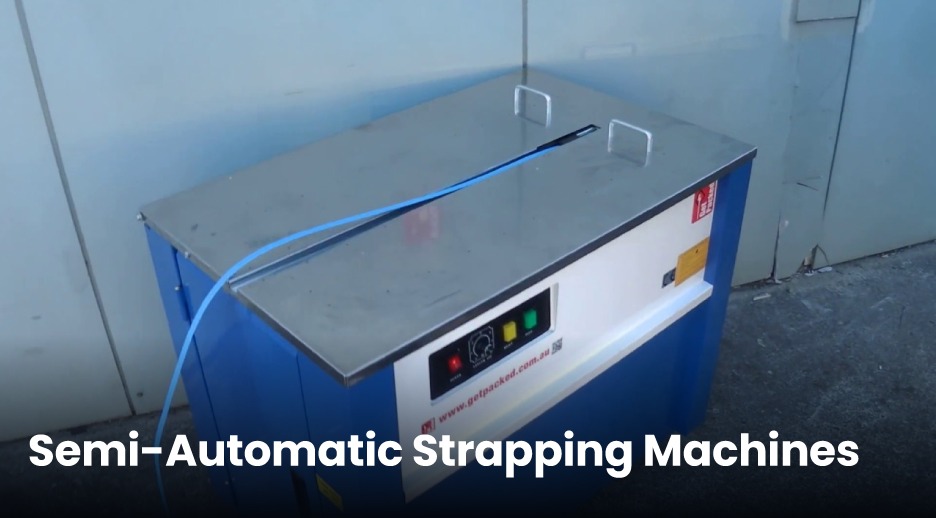
The operator feeds the strap around the package and inserts the leading end into the machine. The machine then automatically tensions, seals, and cuts. It is faster than manual and produces consistent results. Most semi-automatic machines can strap 15 to 25 packages per minute.
These machines are the most common choice for small and medium manufacturers in India. They are affordable, easy to learn, and handle a wide range of package sizes with simple adjustments.
Fully Automatic Strapping Machines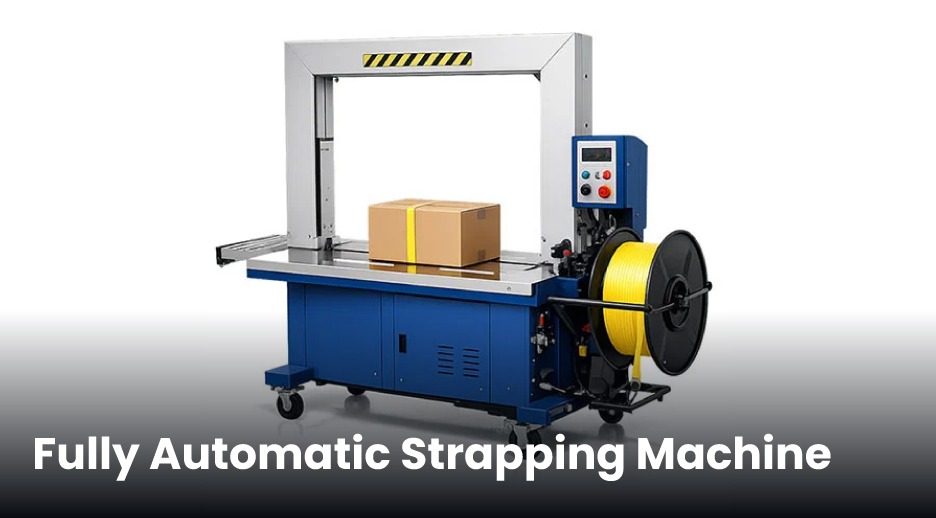
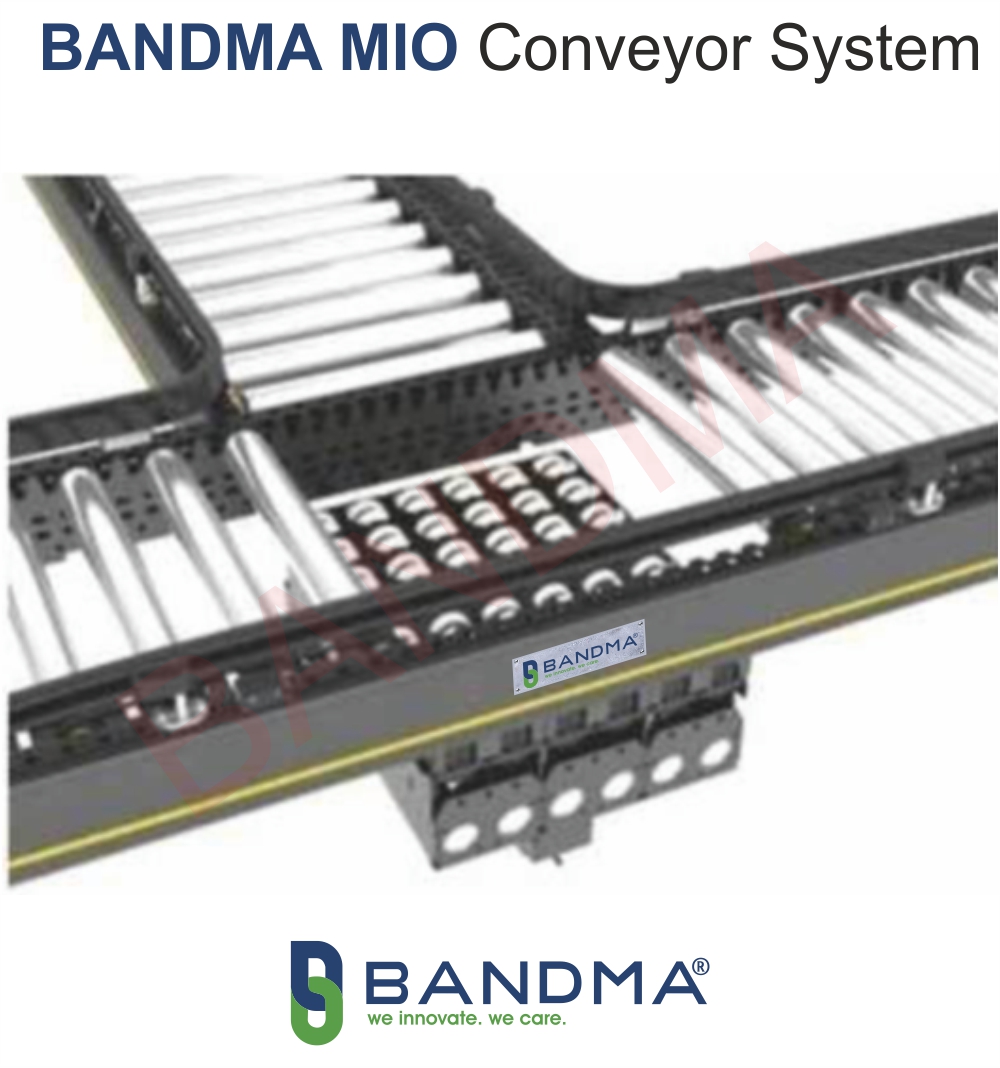
Integrated into a conveyor line, a fully automatic strapping machine requires no operator involvement. Packages enter the strapping arch and exit strapped, without stopping. Speeds of 40 to 60 packages per minute are standard.
These machines are the right choice for high-volume operations, typically businesses strapping over 1,000 packages per shift or anywhere the line runs multiple shifts and labour costs are a primary concern.
Offline vs Inline
Offline machines are standalone units that operators bring packages to. Inline machines are integrated into the production line and strap packages as they pass through on a conveyor. Inline machines require more planning during installation, but eliminate manual handling between steps.
Choosing the Right Strap Width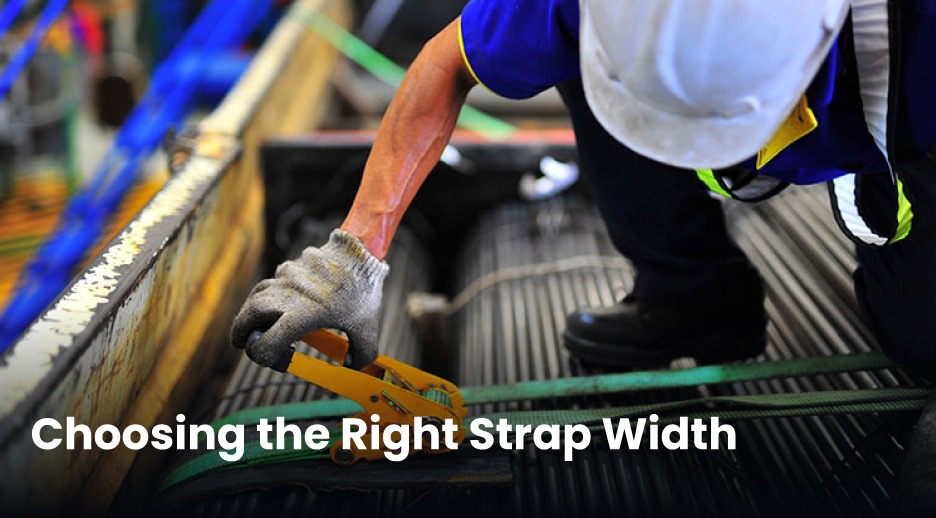
Strap width directly affects how much load a strap can safely carry. Common widths are 9 mm for light cartons, 12 mm for medium loads, and 15.5 mm for heavy industrial applications. The machine and the strap must be matched; a machine specified for a 12 mm strap will not run 9 mm reliably.
The One Question That Simplifies the Decision
Ask: how many packages per shift do you strap today, and how many do you expect to strap in three years? If the answer is under 500, semi-automatic is the right starting point. Above 1,000, the economics of a fully automatic machine start to make sense. Between 500 and 1,000, the answer depends on your labour cost and how much variability you have in package sizes.
Bandma offers semi-automatic and fully automatic strapping machines across the full range of strap widths, along with Bandstrap PP and PET strapping in bulk supply. Contact us to specify the right combination for your line.