

The label on a product is the most legally scrutinized element of its packaging. It carries the net weight declaration, the manufacturing date, the batch number, the FSSAI licence number, the MRP, and often the barcode that links the product to every downstream inventory system.
Getting labels wrong, misaligned, missing, or with incorrect information creates compliance failures, retail rejection, and in food and pharma, potential regulatory action. A labelling machine addresses all of these problems at once.
What a Labelling Machine Actually Does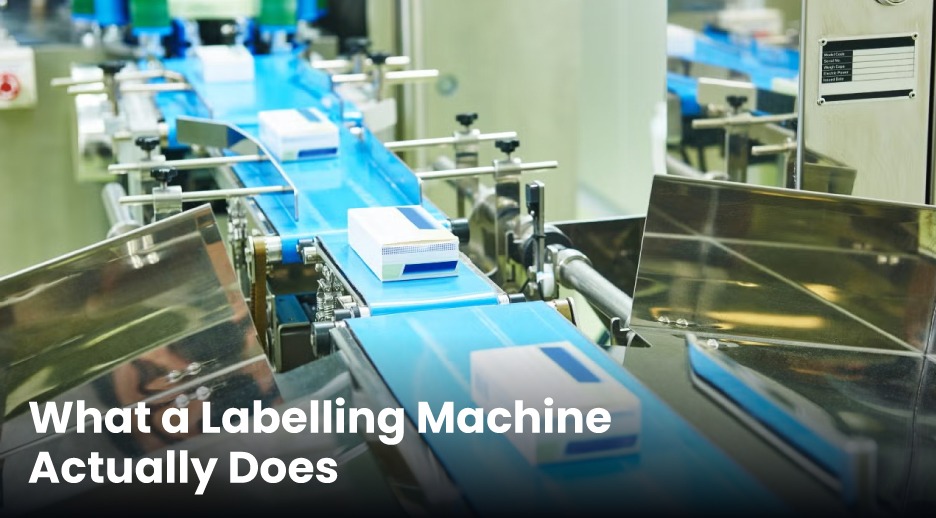
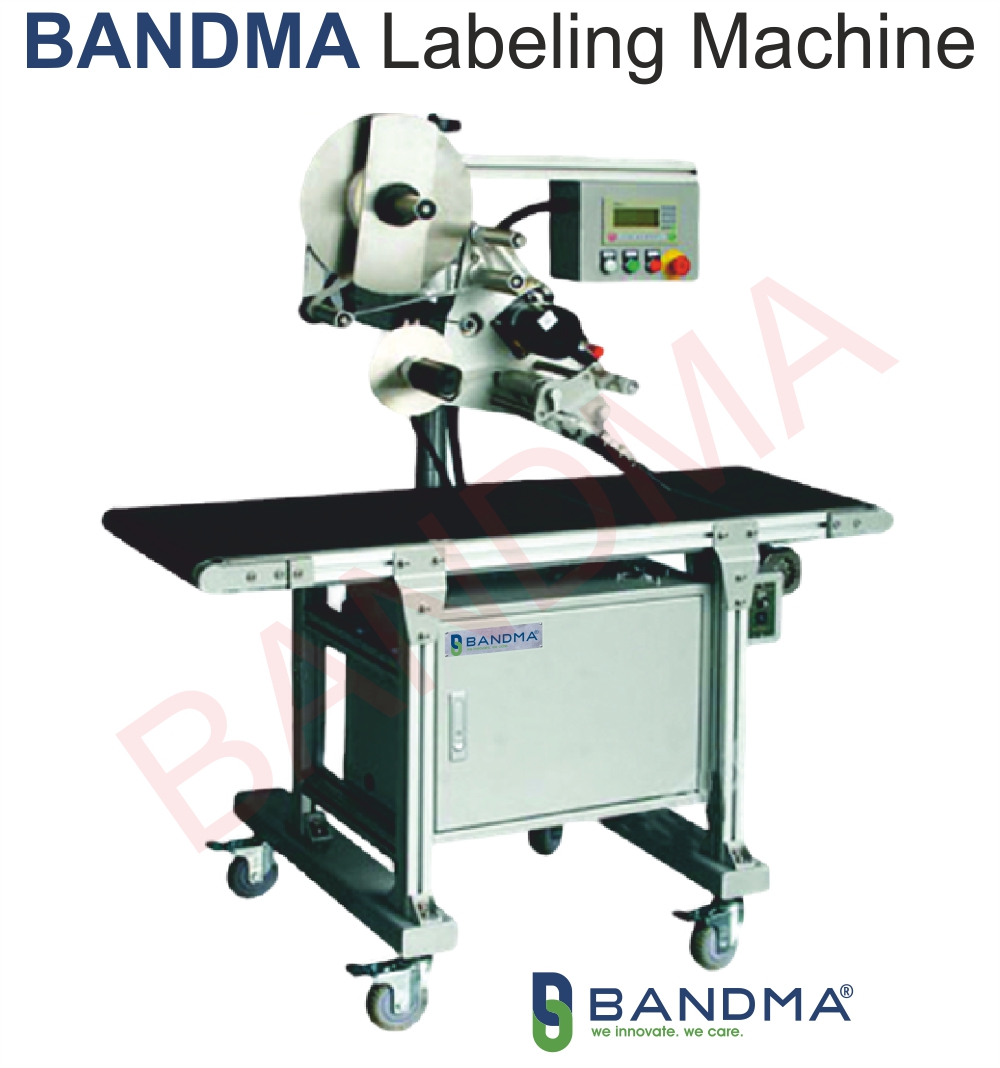
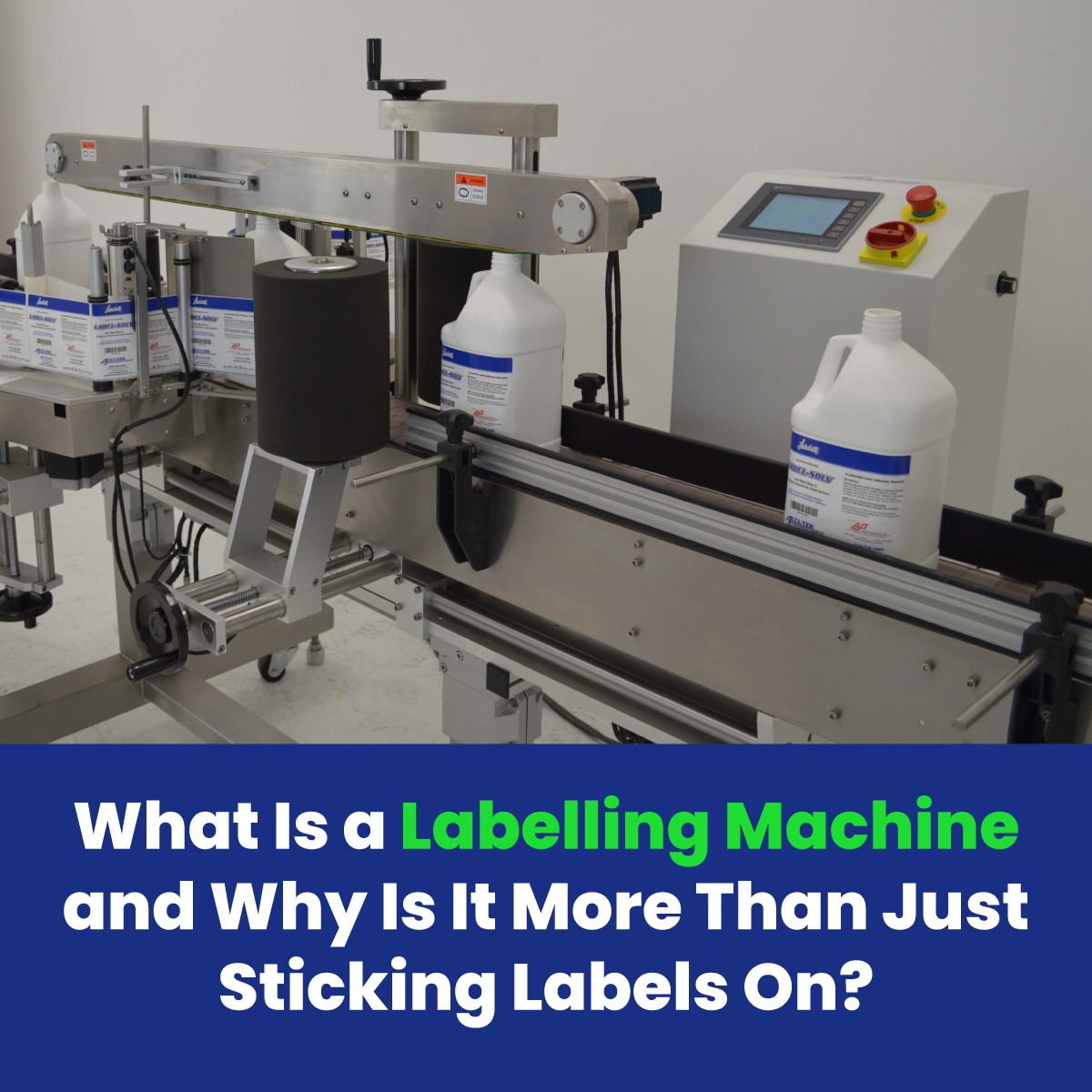
A labelling machine takes pre-printed labels from a reel, peels them from the backing paper, and applies them to products passing on a conveyor accurately, consistently, and at speed. The label position is controlled precisely, which is not possible when applying labels by hand at any meaningful volume.
More advanced models integrate with a printer to print variable data batch number, date, MRP, and barcode directly onto the label at the moment of application. This eliminates the need to pre-print different label versions for different batches and reduces label inventory complexity.
Types of Labelling Machines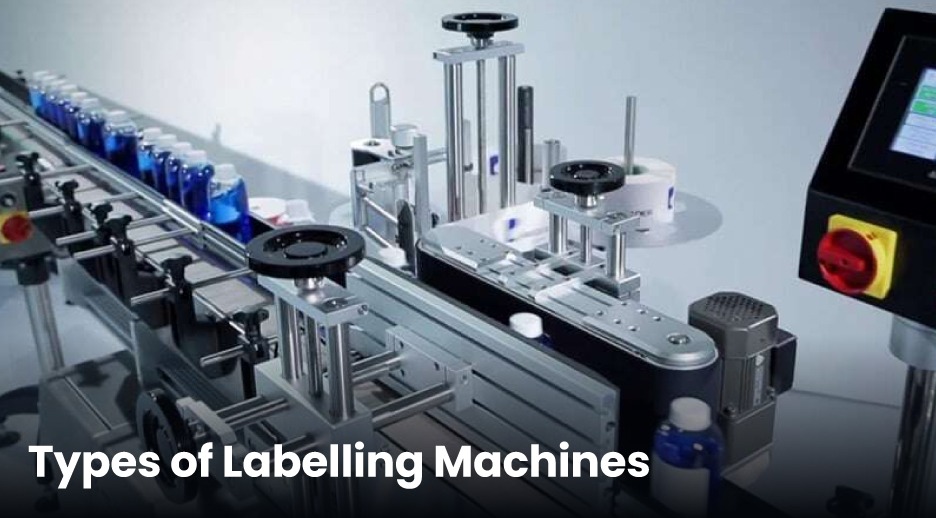
Single-sided labellers apply one label to one face of a product, typically for bottles, jars, and cartons, where only one panel requires a label.
Wrap-around labellers apply a single label that wraps around a cylindrical container, such as a bottle or tin. The label serves as both the product information carrier and the tamper-evidence seal.
Top and bottom labellers apply labels to both the top and bottom faces simultaneously, common in retail shelf-ready packaging, where the product is scanned from below on a checkout conveyor.
Print-and-apply labellers combine an industrial thermal printer with the application mechanism. They are essential when variable data changes by batch or by order.
The Compliance Dimension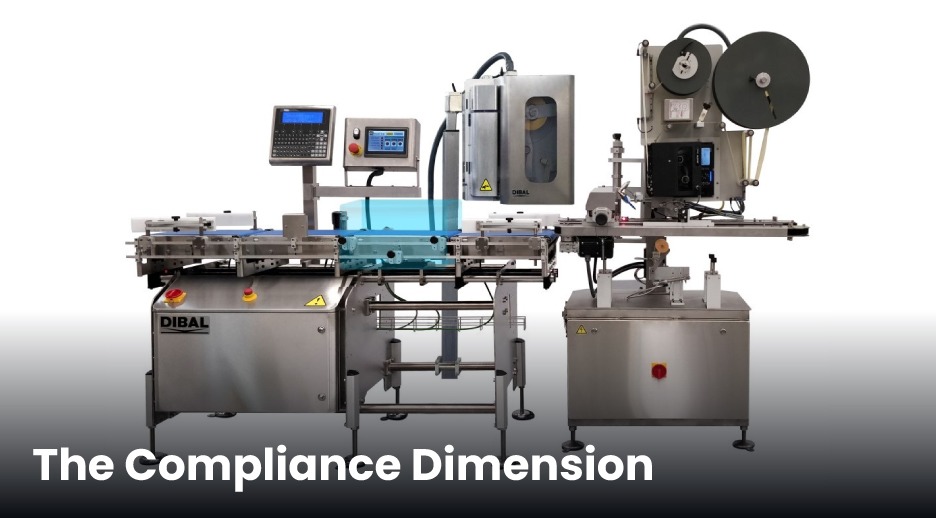
Under FSSAI regulations, food labels must meet specific size, content, and placement requirements. For packaged commodities, the Legal Metrology Act imposes additional requirements on net weight declarations. A labelling machine that applies labels to a defined position every time makes it straightforward to demonstrate compliance during inspections.
For export products, labelling requirements vary by destination market and are enforced strictly at the port. Mislabelled export goods are rejected, creating costly delays and damaged commercial relationships.
When Does a Labelling Machine Make Business Sense?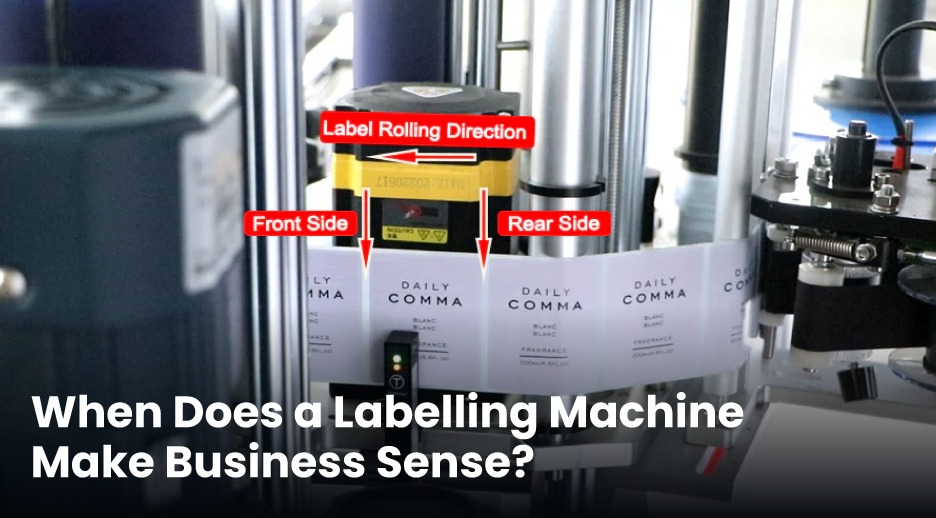
At below 200 units per day, hand labelling is manageable. Between 200 and 500 units per day, a semi-automatic label dispenser pays for itself quickly in labour saved and rejects avoided. Above 500 units per day, a fully automatic inline labelling machine is almost always the correct investment.
The secondary calculation is compliance risk. If your products are subject to regulatory labelling requirements and almost all food, pharma, and consumer goods products, the cost of a labelling machine is small compared to the cost of a single compliance failure.
Bandma supplies labelling machines across the full range of configurations. Contact us to discuss which type fits your product, your volume, and your compliance requirements.