


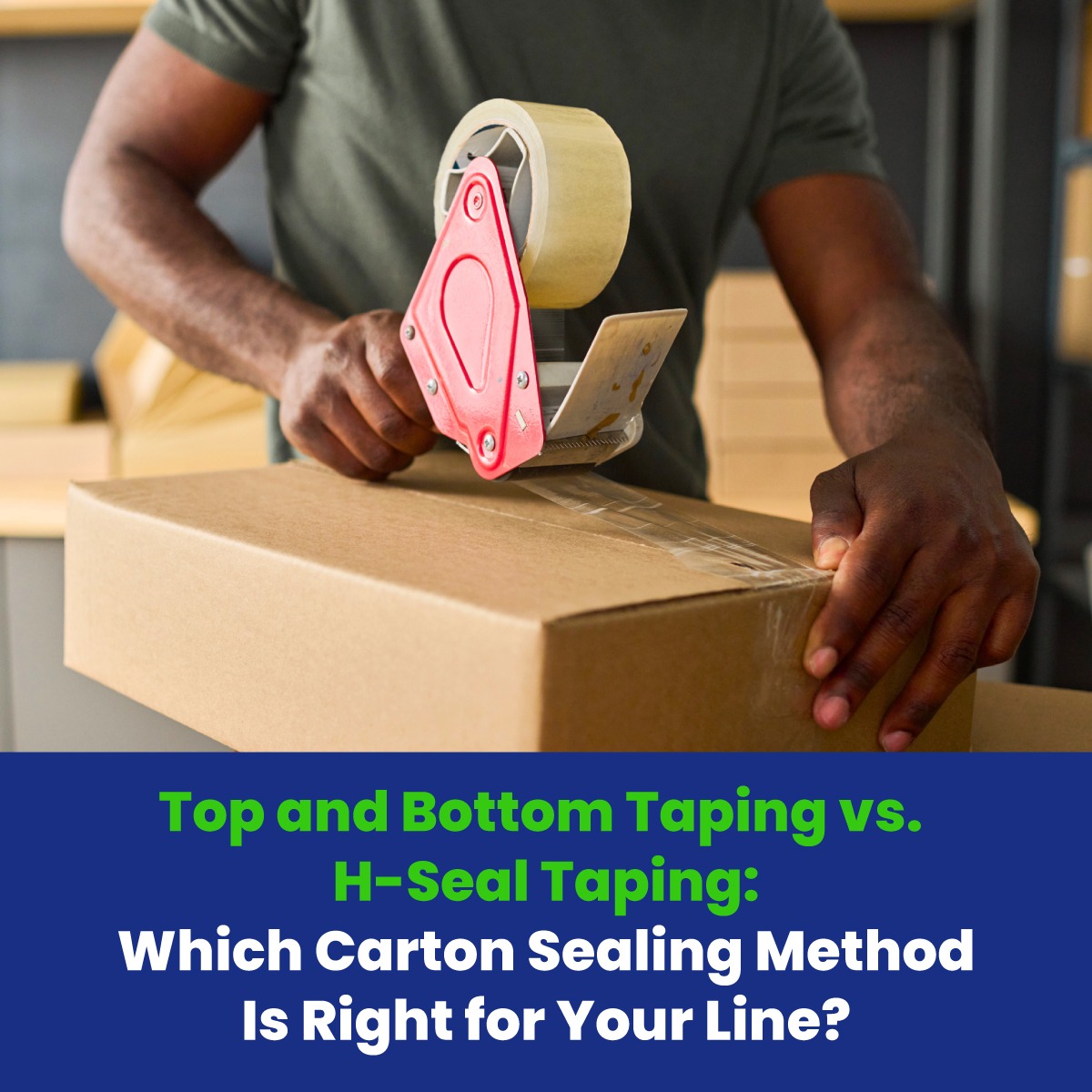
There is a question that comes up in almost every conversation Bandma has with production managers evaluating their carton sealing process.
We are taping cartons, but are we doing it the right way?
It sounds simple. But carton sealing is one of those steps in secondary packaging where small decisions create large consequences. The method you choose affects carton strength, seal integrity, tape consumption, line speed, and ultimately how your products arrive at the customer's end.
Two sealing methods dominate secondary packaging lines in India: Top and Bottom taping and H-Seal taping. Both are widely used. Both have clear advantages. And both are wrong for certain applications, which is where the confusion begins.
This guide explains both methods clearly, compares them directly, and helps you identify which one your line actually needs.
What Is Top and Bottom Taping?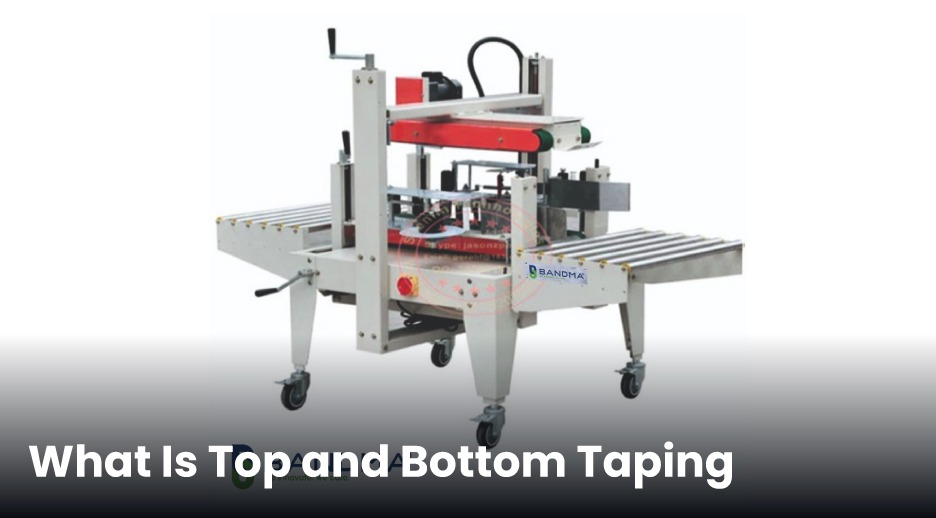
Top and bottom taping is the most straightforward carton sealing method. A strip of tape is applied along the centre seam of the top flaps, and another strip is applied along the centre seam of the bottom flaps.
The result is two clean tape lines, one on top, one on bottom, running along the length of the carton.
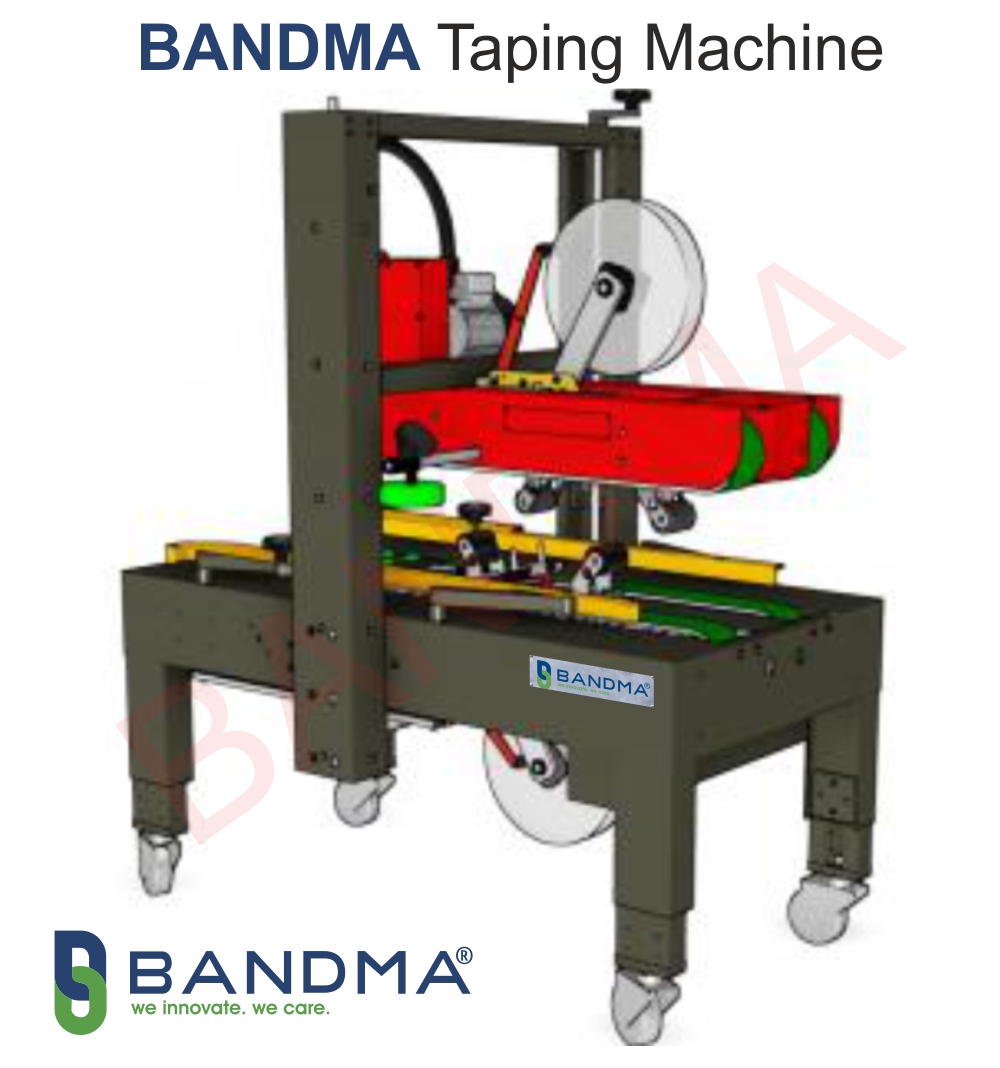
This is the method used by the majority of semi-automatic and automatic taping machines. The carton passes through the machine, and the tape is applied to both faces in a single pass. No operator intervention is needed once the carton enters the machine.
Where it works best:
Standard FMCG cartons with uniform dimensions. Light to medium loads where the carton itself carries most of the structural load. High-speed packaging lines where throughput is the primary concern. Products where a clean, professional appearance matters for retail or export presentation.
Top and bottom taping is fast, consistent, and economical on tape. For the majority of secondary packaging applications in India, it is the correct method.
What Is H-Seal Taping?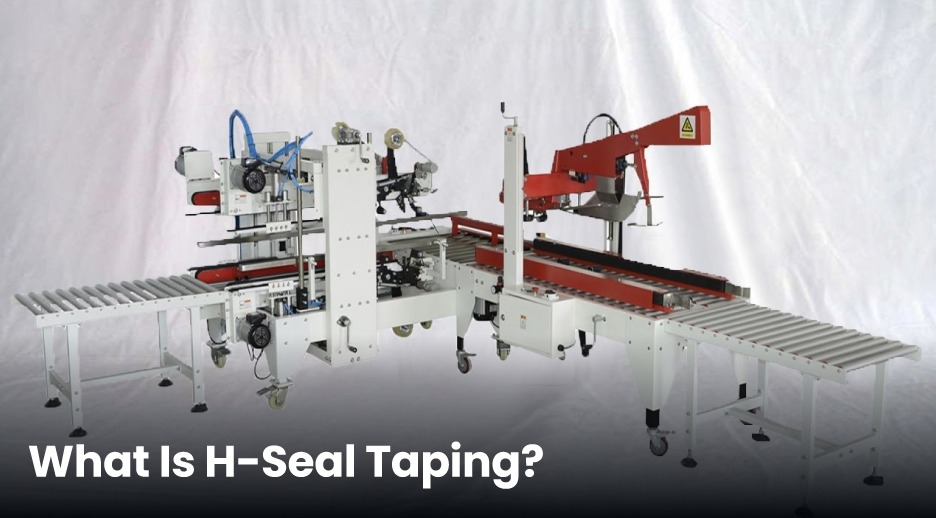
H-seal taping applies tape in an H-shaped pattern across the carton. In addition to the centre seam tape on the top and bottom, tape is also applied across the side flap edges, the short strips that run perpendicular to the main seam, sealing the four corners of both the top and bottom faces.
When viewed from above, the pattern resembles the letter H, hence the name.
H-seal taping requires either a more advanced taping machine with additional tape heads, or a two-pass process where the carton is sealed along the centre seam first, and the side strips are applied separately.
Where it works best:
Heavier loads where carton flaps are under greater stress. Products that will be stacked multiple layers high in storage or transit. Export cartons that will travel long distances or change hands multiple times. Applications where the contents create outward pressure on the carton walls. Industries like automotive components, industrial goods, and heavy consumer products where load integrity is critical.
H-seal taping uses significantly more tape than top and bottom sealing but provides a meaningfully stronger carton, particularly at the corners, which are the first point of failure under compression or impact.
The Direct Comparison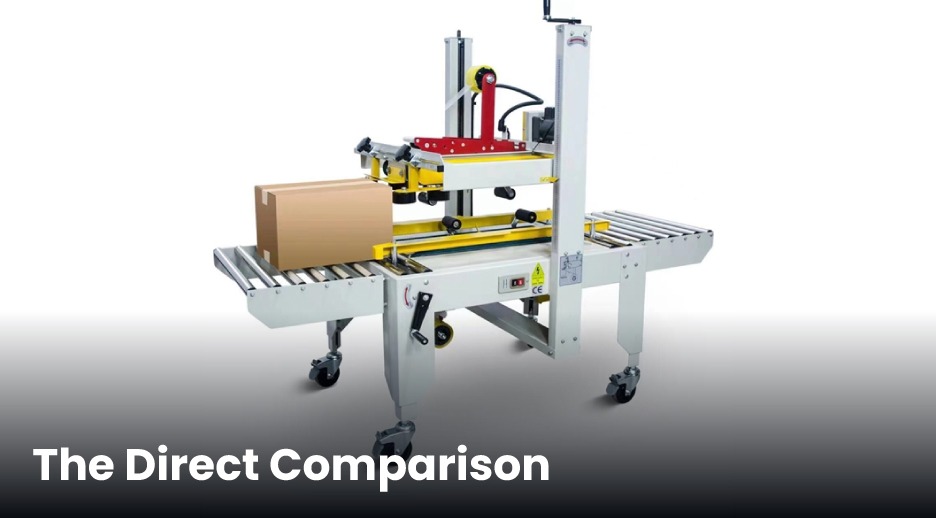
- Seal Strength
Top and bottom taping seals the centre seam reliably but leaves the side flap edges unsealed. Under compression from stacking or lateral pressure from contents shifting in transit, the unsealed edges can begin to separate.
H-seal taping eliminates this weakness by anchoring the flap edges. The result is a carton that maintains its shape and integrity under significantly higher loads and more demanding handling conditions.
If your cartons are regularly arriving at distributors or customers with open corners or separated flaps, H-seal taping is almost certainly the correct response. - Tape Consumption
Top and bottom taping is materially more economical. A standard taping machine applies two strips per carton: one top, one bottom. H-seal taping applies four additional strips, roughly doubling tape consumption per carton.
At high volumes, this difference is significant. For a facility sealing 1,000 cartons per shift, the tape cost difference between the two methods is worth calculating before making a decision. - Line Speed
Top and bottom taping is faster. The carton passes through the machine in a single, continuous motion. H-seal taping, depending on the machine configuration, may require additional passes or a more complex machine setup, both of which reduce throughput compared to centre-seam taping alone.
For lines where throughput is the primary constraint, this is an important factor. - Machine Requirements
Standard semi-automatic and automatic taping machines perform top and bottom sealing. H-seal taping requires either a machine with additional side-taping heads or a separate process step.
If your current machine only supports top and bottom taping and H-seal is what your application requires, a machine upgrade may be necessary, not just a process change. - Appearance
Top and bottom taping produces a cleaner visual result for retail-facing cartons. H-seal taping is functional rather than decorative; it prioritises strength over appearance. For export cartons, industrial shipments, or products that will be unpacked in a warehouse rather than a retail environment, this distinction rarely matters.
How to Decide: Three Questions Worth Asking
Question 1: What happens to your cartons after they leave your facility?
If cartons go directly to a retailer's shelf or a final customer, appearance and speed matter more. Top and bottom taping is likely sufficient.
If cartons move through multiple warehouses, travel long distances by road, or are stacked heavily during transit, the additional structural strength of H-seal taping may prevent damage claims that cost far more than the extra tape.
Question 2: Are you currently experiencing carton failures in transit?
If distributors or customers regularly report open corners, separated flaps, or cartons arriving in poor condition and your product and inner packaging are sound, the problem is almost always at the carton seal. H-seal taping is the most direct solution.
Question 3: What is your carton load weight?
As a general guide:
Below 10 kg per carton, top and bottom taping is sufficient for most applications. Between 10 to 20 kg per carton, evaluate based on transit distance and stacking height. Above 20 kg per carton, H-seal taping is strongly recommended.
These are starting points, not absolute rules. The correct answer depends on your specific carton specification, load configuration, and distribution chain.
The Role of the Taping Machine in Seal Quality
Regardless of which method is right for your application, the quality of the seal depends heavily on the machine performing it.
A well-calibrated taping machine applies tape with consistent pressure, correct alignment, and the right tape length every time. An improperly maintained or incorrectly set machine regardless of method, produces weak seals, wasted tape, and cartons that fail in transit.
Key machine factors that affect seal quality:
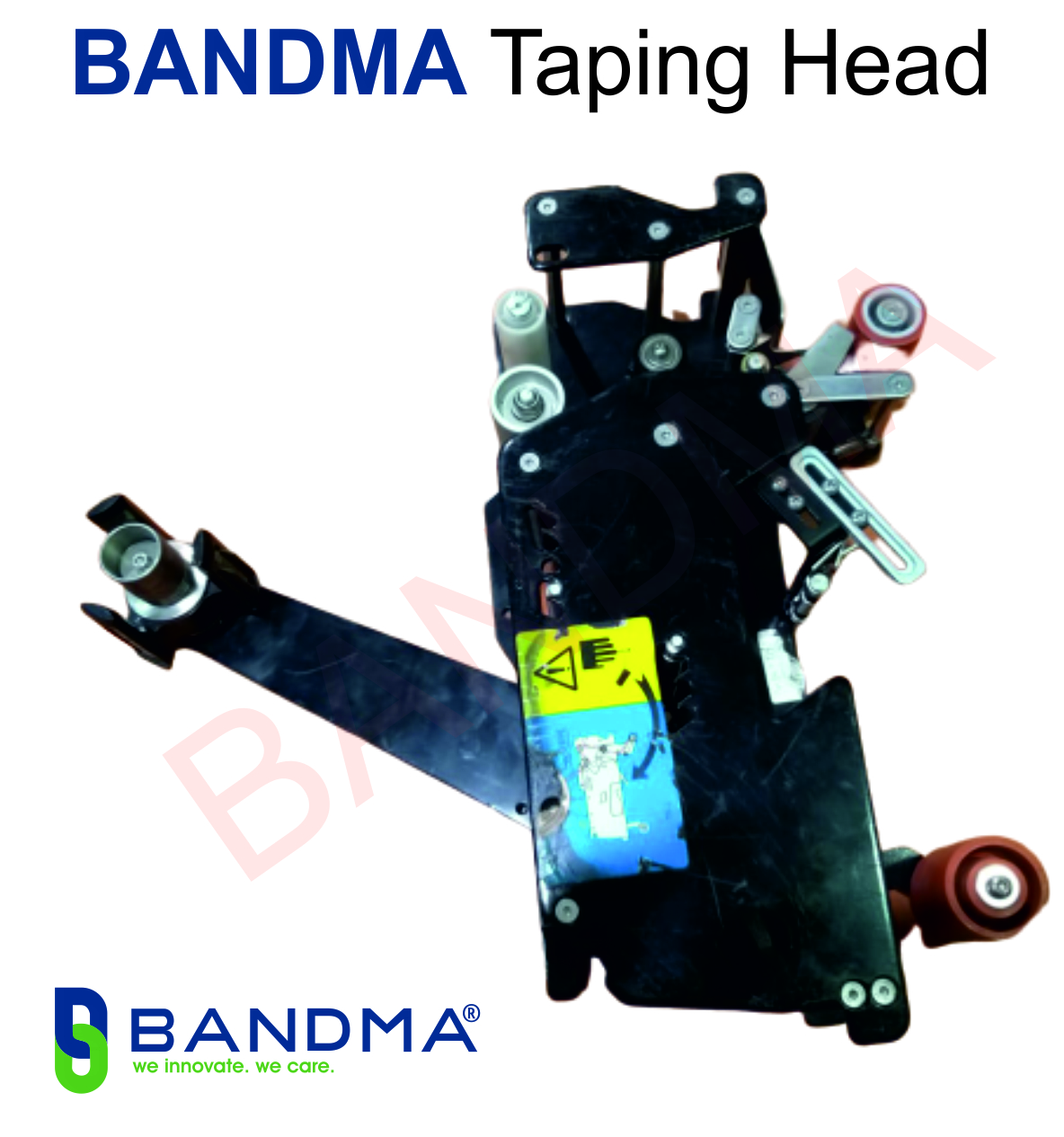
Roller pressure: The pressure rollers that press the tape onto the carton surface must be correctly set for your carton material. Too little pressure produces weak adhesion. Too much can damage lighter cartons or cause tape wrinkling.
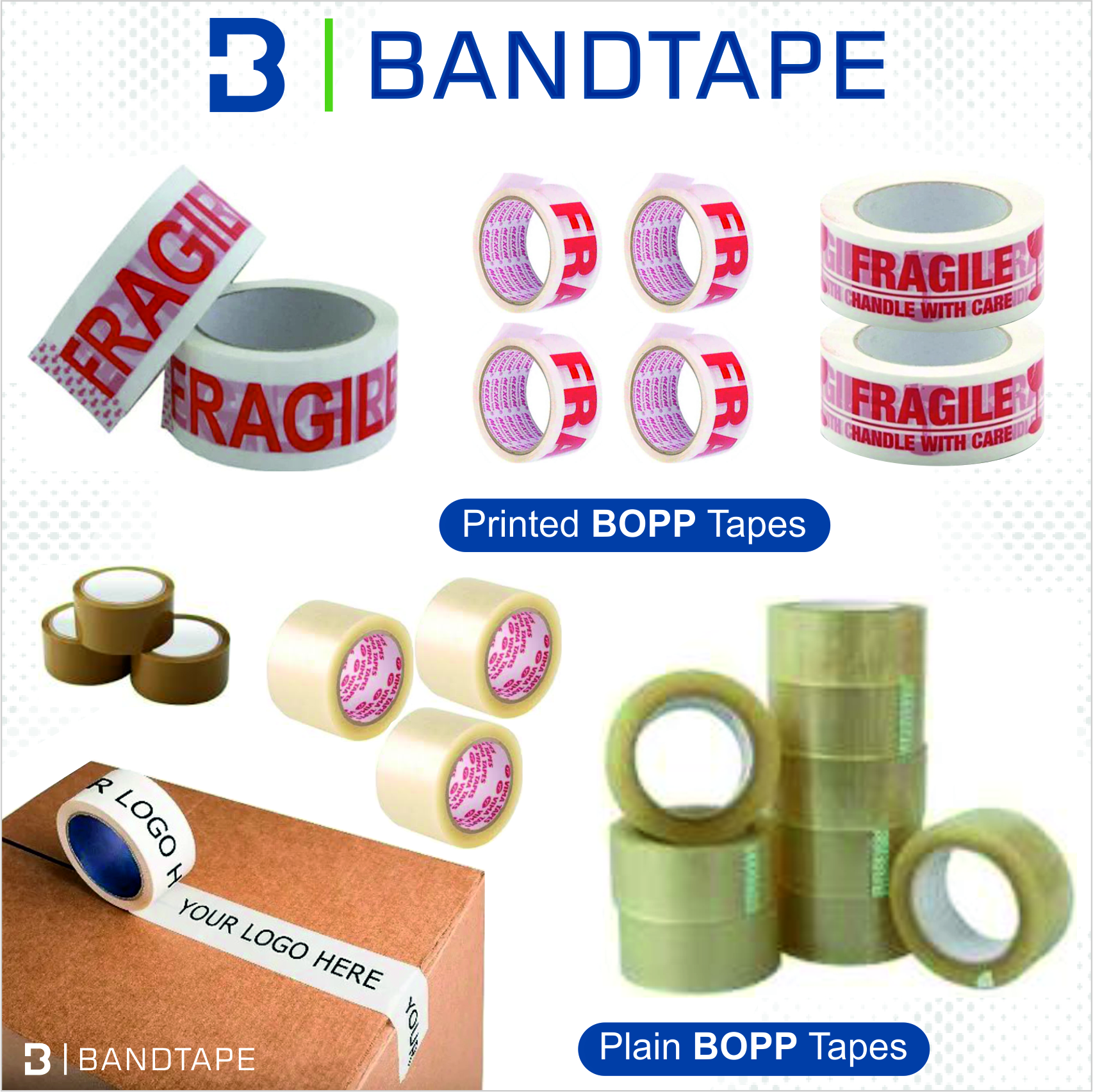
Tape grade: The tape used must be appropriate for the carton surface, the weight of the load, and the ambient conditions. Standard BOPP tape performs differently in a 20-degree warehouse and a 42-degree summer dispatch area. Bandma's Bandtape range includes grades suited to Indian climate conditions across both standard and demanding applications.
Blade condition: The tape cutting blade must be sharp and clean. A dull or contaminated blade produces ragged cuts that weaken the seal end and create an untidy appearance.
Flap alignment: The machine's side guides must be correctly set to keep the carton centred as it passes through. A carton that enters the machine at an angle will receive misaligned tape, and a misaligned seal is weaker than a correctly placed one.
Routine preventive maintenance of your taping machine, including roller inspection, blade replacement, and guide alignment checks, is the lowest-cost way to ensure consistent seal quality regardless of which method you use.
Quick Reference: Which Method Is Right for You?
Load below 10 kg, retail-facing, high speed required: Top and Bottom taping.
Load 10 to 20 kg, mixed distribution, moderate transit: evaluate both; Top and Bottom taping with correct tape grade often sufficient.
Load above 20 kg, long-distance transit, heavy stacking, industrial or export: H-Seal taping.
Frequent corner failures or flap separation complaints: H-Seal taping regardless of weight.
What Bandma Offers
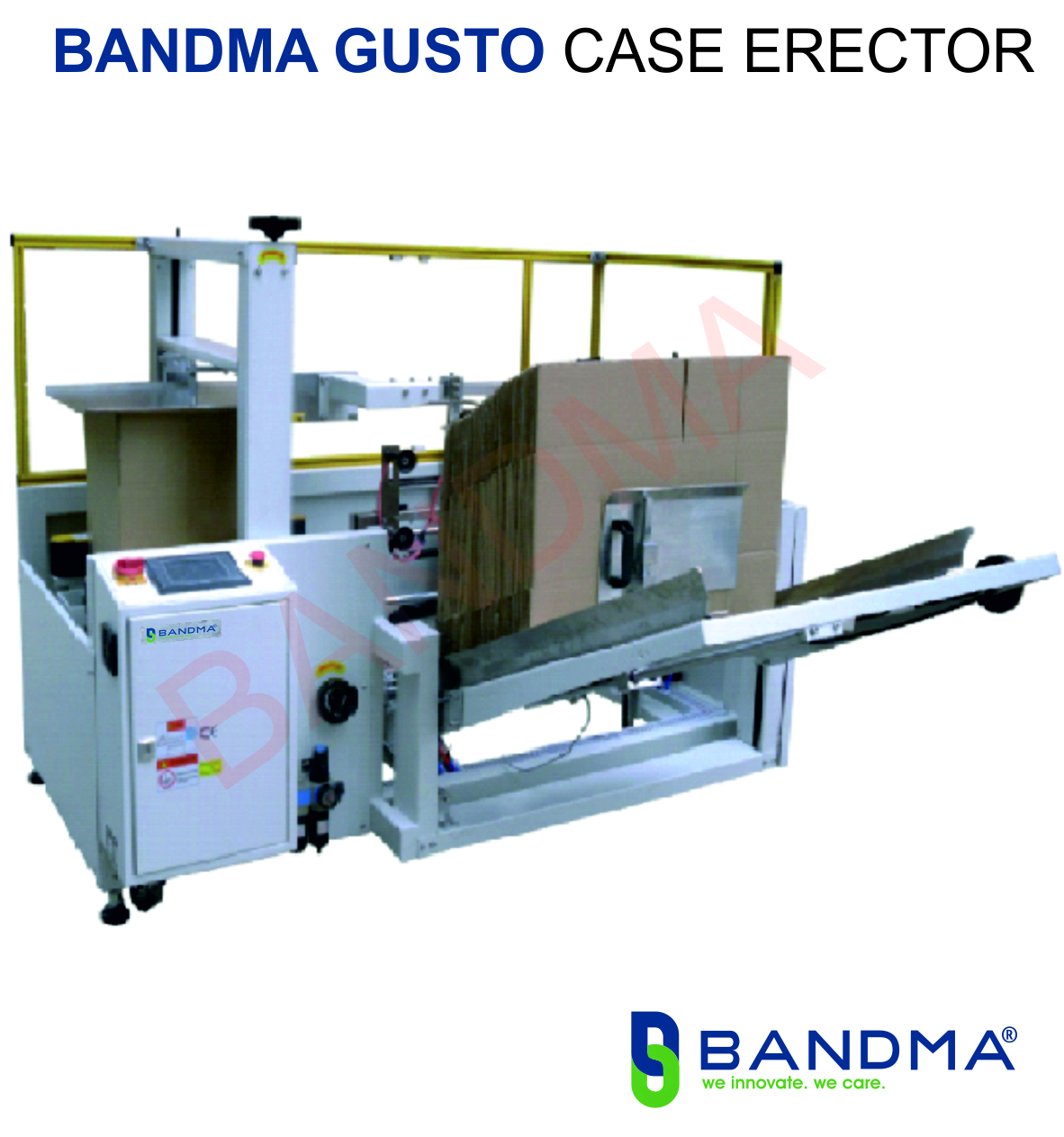
Bandma supplies taping machines across the full range from simple semi-automatic models for lower-volume operations to high-speed automatic machines for integrated packaging lines. Models are available for both top and bottom sealing and H-seal configurations, and Bandma's technical team can advise on the right machine for your carton dimensions, load weights, and throughput requirements.
Bandma's Bandtape range provides BOPP tape in the widths and grades suited to both sealing methods, available in bulk supply for consistent availability across shifts and seasons.
If your carton sealing is producing transit damage, inconsistent seal quality, or tape waste that is affecting your packaging costs, the solution begins with matching the right method and the right machine to your specific application.
Contact Bandma to discuss your carton sealing requirements and find the right configuration for your line.
Bandma- We innovate. We care.