
If there’s one complaint almost every production or dispatch manager shares, it’s this:
“Material dispatch ho jata hai theek se, par damage fir bhi ho jata hai transit me.”
And most of the time, the root cause is simply improper pallet wrapping.
In many factories, stretch film is applied manually. Operators pull the film with uneven tension, overlap randomly, leave gaps, and try to wrap faster when trucks are waiting outside. The pallet may “look” wrapped, but during bumpy transport, vibration, tilt, and sudden braking can easily loosen the load.
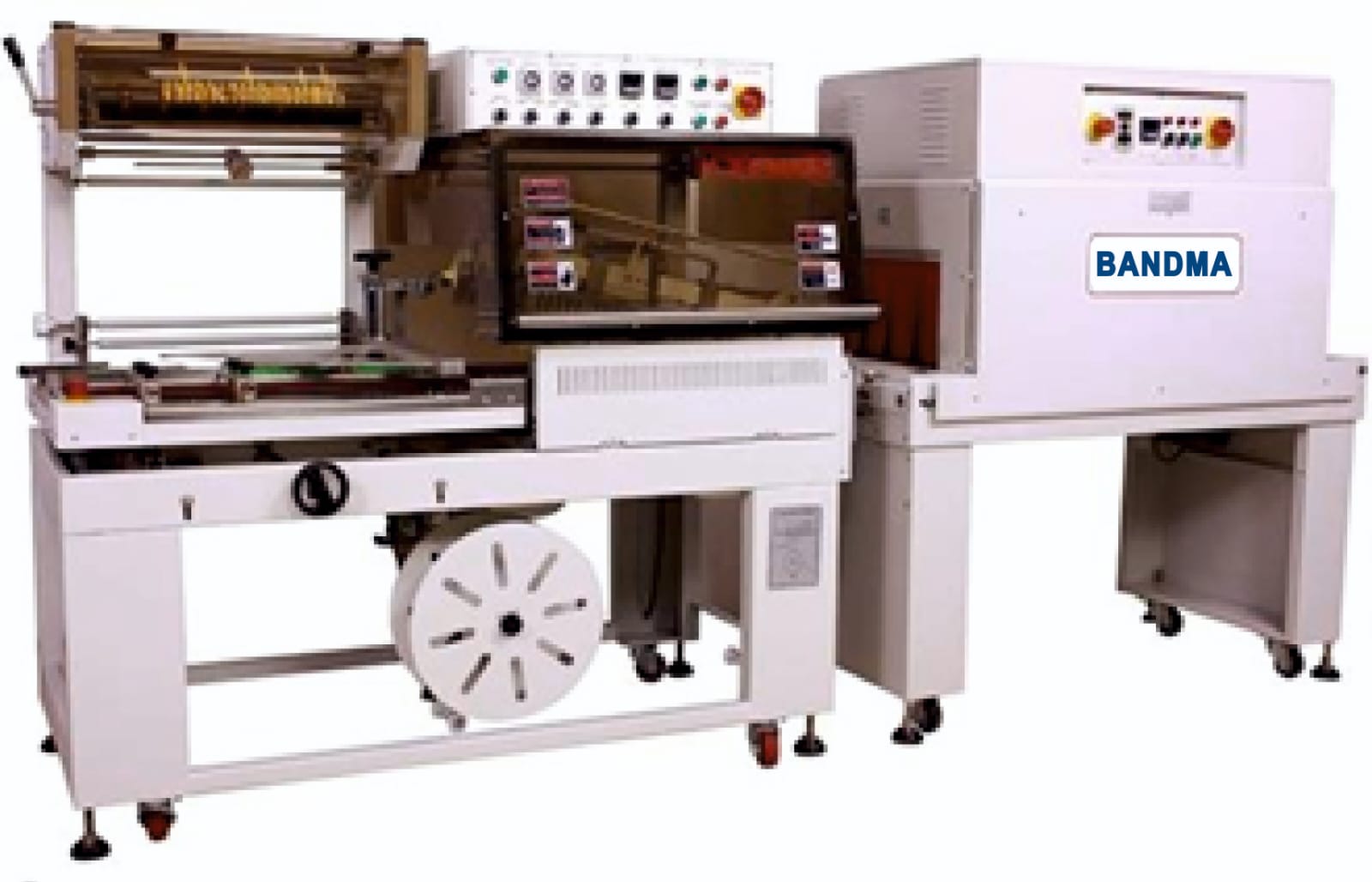
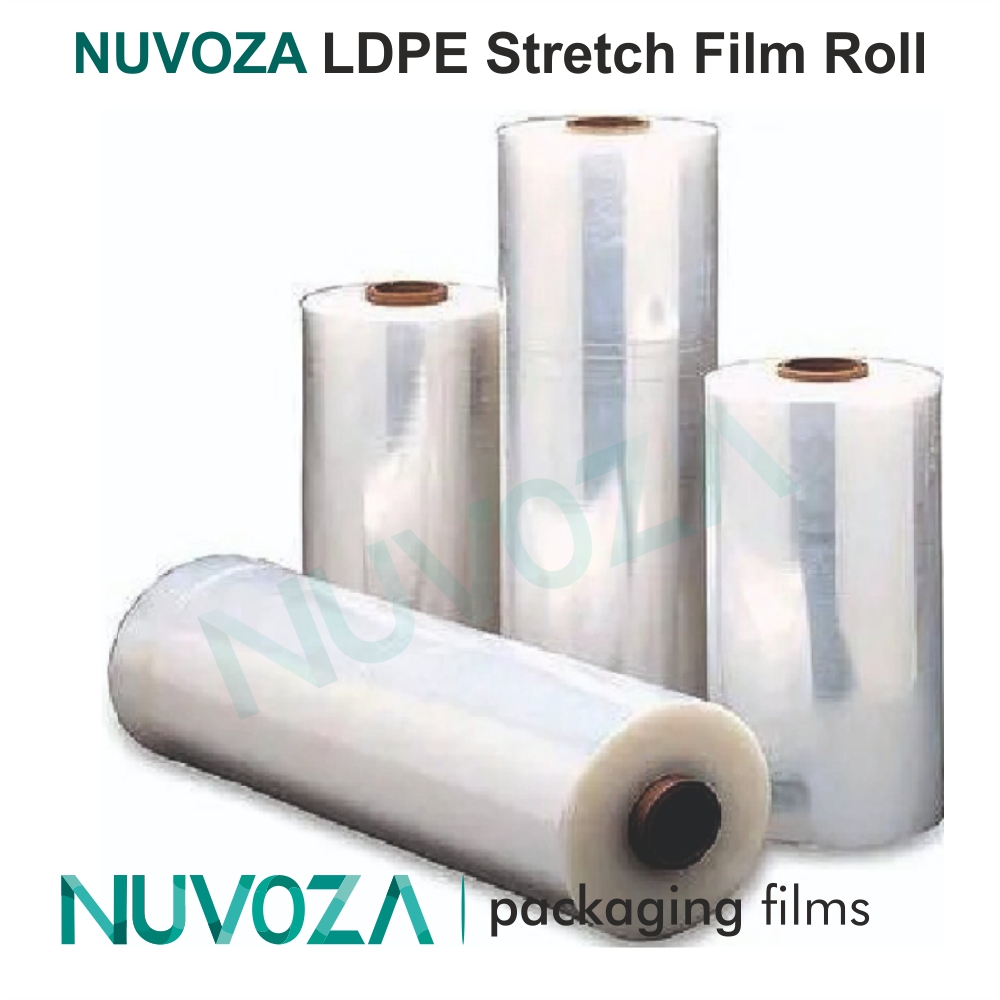
This is exactly where Stretch Wrapping Solutions, from manual to fully automatic, start making a clear difference.
Why Transit Damage Still Happens (Even When the Product Is Good)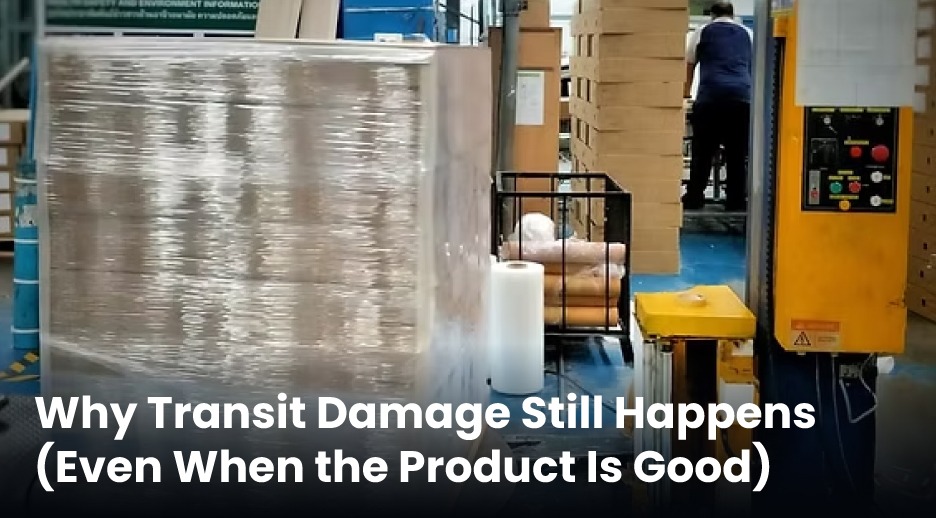
Most industries assume damage is happening because of poor handling, bad roads, or logistics issues. But in reality, 90% damage occurs because the load was not stabilized properly before dispatch.
Common issues include:
Film tension is too low or too high
Inconsistent wrapping pattern
Top layers left loose
Wrong film thickness
No proper base locking
Pallet is not stabilized before forklift movement
When the load is not unitized correctly, even the best packaging material cannot save the shipment.
How Stretch Wrapping Helps Protect Your Products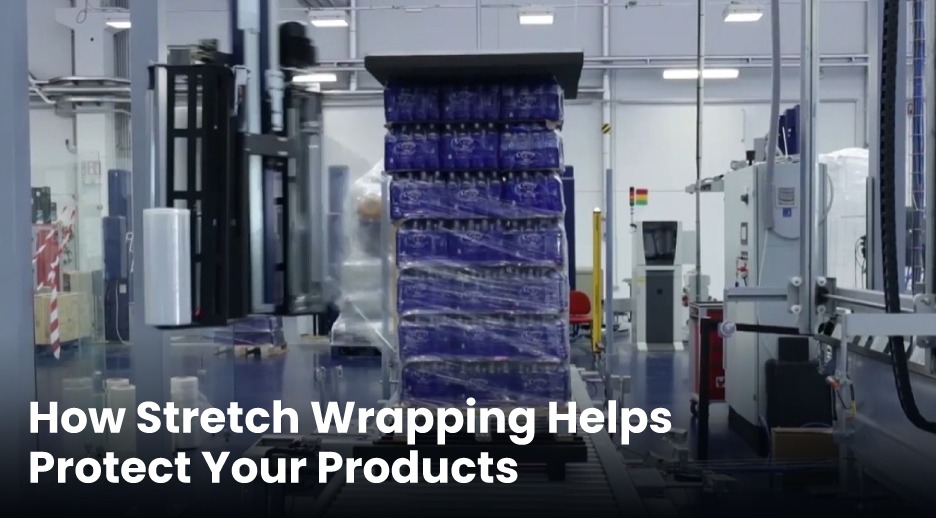
Stretch wrapping works on a simple principle:
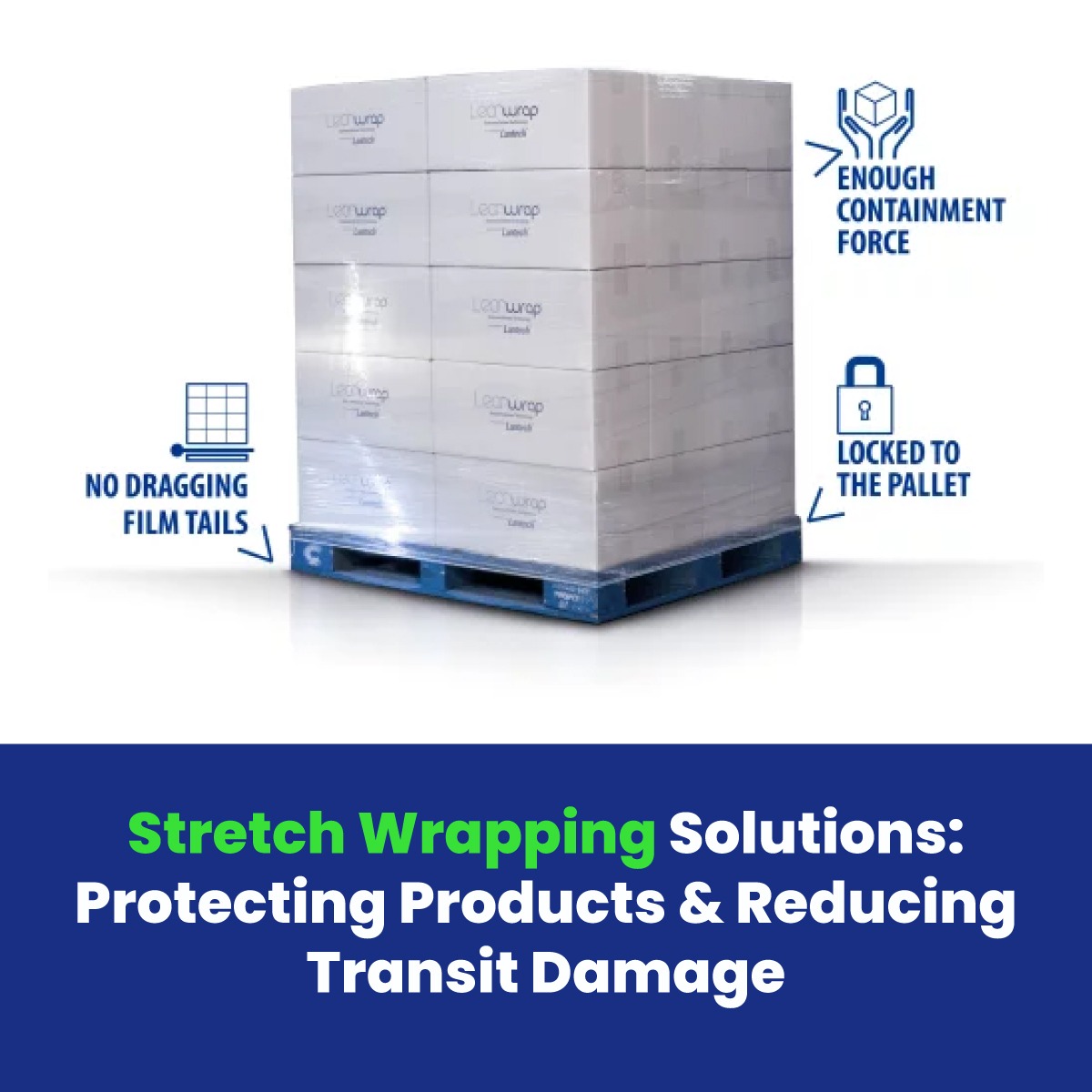
Stabilize the load so every box behaves like a single unit.
A well-wrapped pallet prevents:
Shifting during transport
Falling or collapsing
Moisture or dust exposure
Tampering
Edge or corner damage
And when the wrapping is done by a machine, every pallet gets the exact level of stretch, tension, and pattern needed for safe travel.
Types of Stretch Wrapping Solutions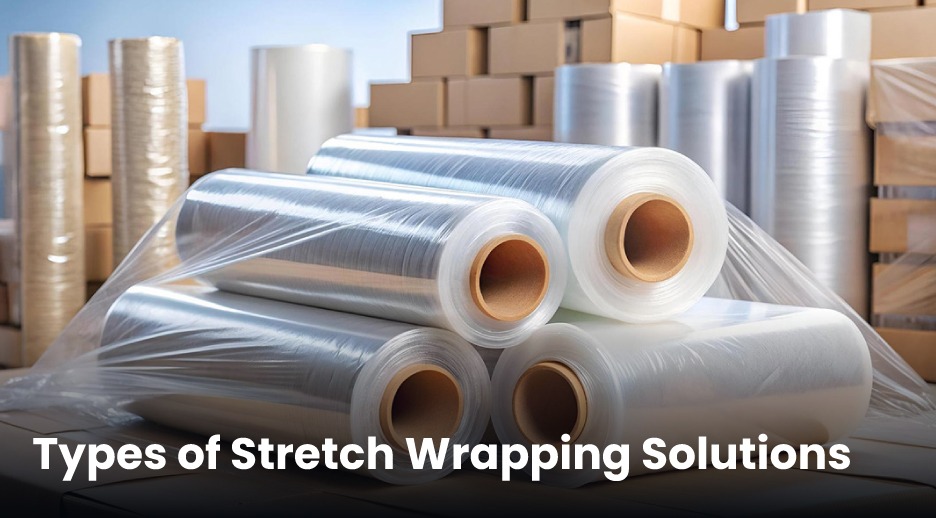
Depending on your production flow, there are three major types of systems:
- Manual Stretch Wrapping (Basic Level)
Suitable for low volumes, but depends entirely on operator skill.
Best for: Small warehouses, low movement, irregular dispatch. - Semi-Automatic Stretch Wrappers
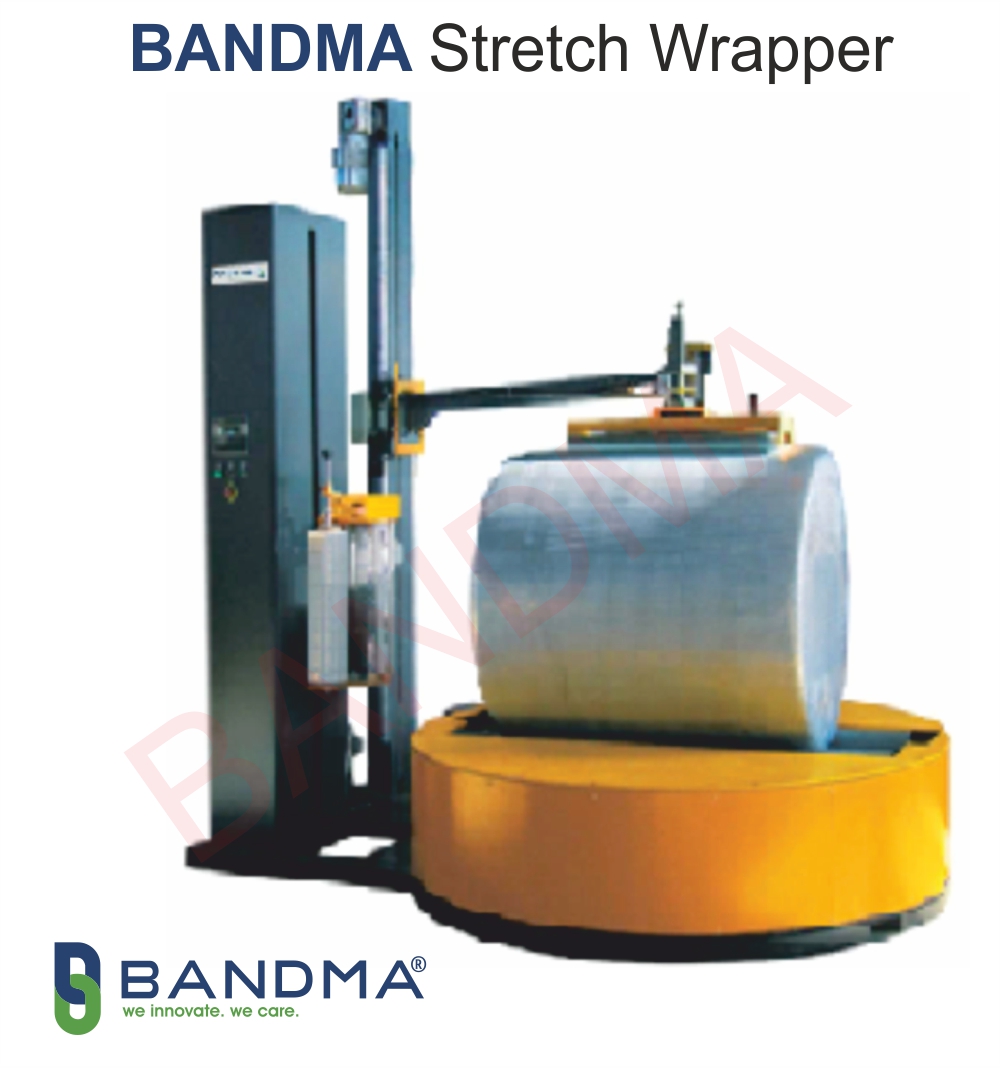
Most common in manufacturing and FMCG facilities.
Machines like turntable wrappers or arm wrappers ensure:
Consistent tension
Uniform wrapping pattern
Higher stability
Lower film usage
Best for: Medium to high dispatch loads.
- Fully Automatic Stretch Wrapping Systems
These are integrated directly into the line—no operator required
Benefits:
Zero-touch pallet wrapping
High-speed throughput
Film auto-cut and clamp
Ideal for 24×7 operations
Best for: High-output factories, heavy pallets, warehouses with conveyors.
How Much Stretch Film Waste Can You Actually Reduce?
Most factories waste 20–40% stretch film without realizing it.
Machines control:
Tension
Pre-stretch ratio
Layer count
Film overlap
This means less film, stronger wrap.
Many companies recover their machine investment in 4–8 months just through film savings alone.
Where Stretch Wrapping Makes the Biggest Impact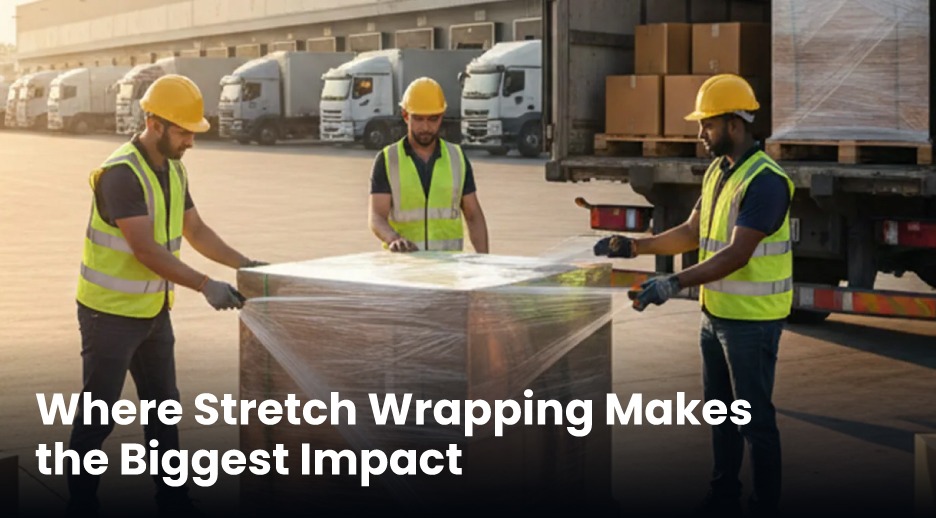
Industries facing issues like box damage, pallet shifting, or high returns benefit the most:
Food & beverage
Pharma
Tiles & ceramics
Automotive components
FMCG
E-commerce warehouses
Chemical drums
Printing & packaging
If your pallets are tall, heavy, unstable, or have mixed boxes, a wrapping machine becomes even more important.
Signs That Your Factory Really Needs Stretch Wrapping Solutions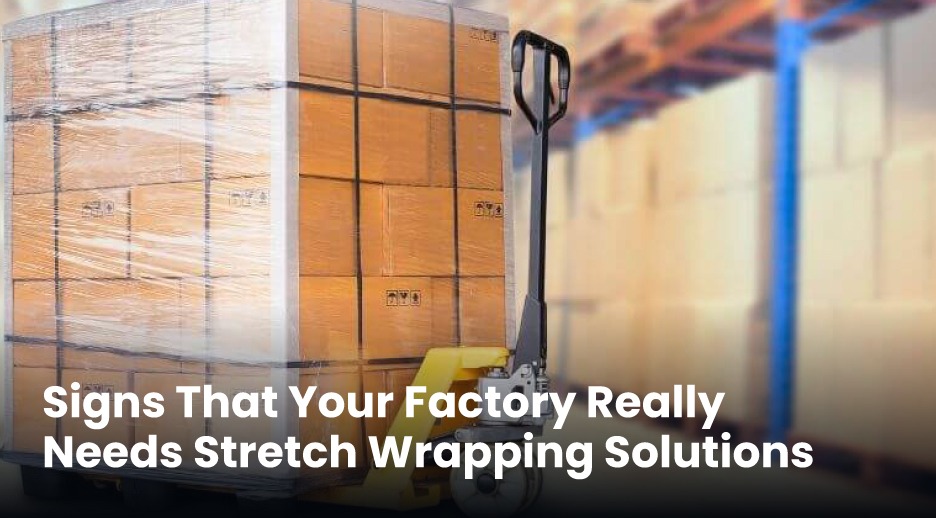
Your facility is ready for an upgrade if you notice:
Frequent damage claims from distributors
Pallets leaning during storage
Forklift operators complaining about unstable loads
Film usage increasing month after month
Your team re-wrapping pallets before final dispatch
Slow manual wrapping slowing down truck loading
These are everyday indicators that manual wrapping is costing you more than it seems.
Conclusion: Stable Pallets = Safer Shipments = Fewer Losses
Transit damage is not a “logistics problem”—it starts at your factory.
A stable pallet is your first line of protection, and stretch wrapping is the most reliable way to achieve that stability.
Whether you choose semi-automatic or fully automatic, a proper wrapping solution ensures:
Stronger load stability
Reduced film waste
Faster dispatch
Lower return rates
Better customer experience
If your products are reaching customers damaged—or your team is wrapping manually even with growing dispatch volume—this is the right time to shift to a machine-driven solution.