

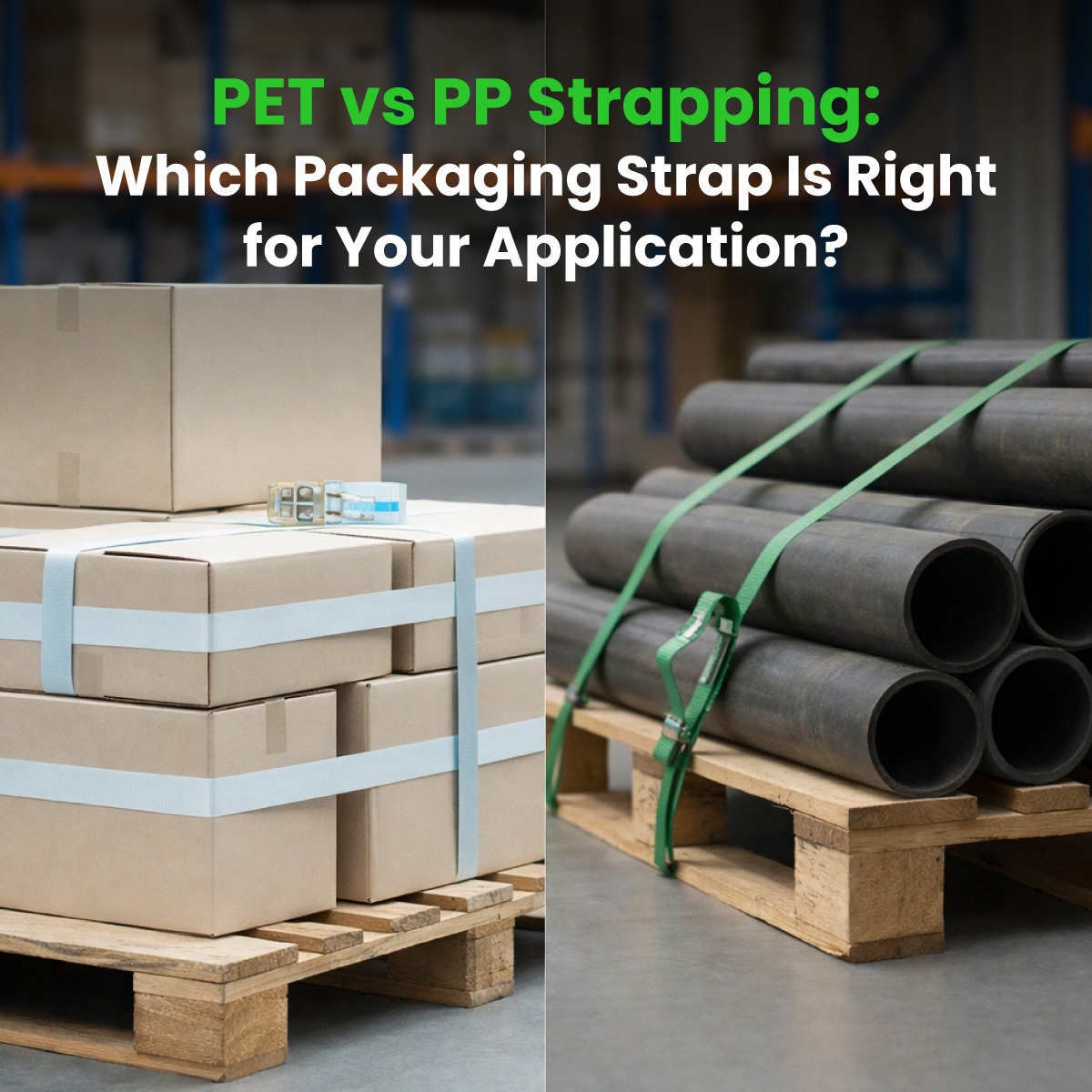
Choosing the right strapping material plays a critical role in packaging safety, cost efficiency, and load stability. Among the most commonly used materials in industrial packaging are PET (Polyester) strapping and PP (Polypropylene) strapping. While both serve the same basic purpose—securing goods for storage and transport—their performance, strength, and applications are very different.
Understanding the difference between PET and PP strapping helps manufacturers select the right solution for their specific packaging needs and avoid unnecessary failures, breakage, or excess cost.
What Is PP (Polypropylene) Strapping?
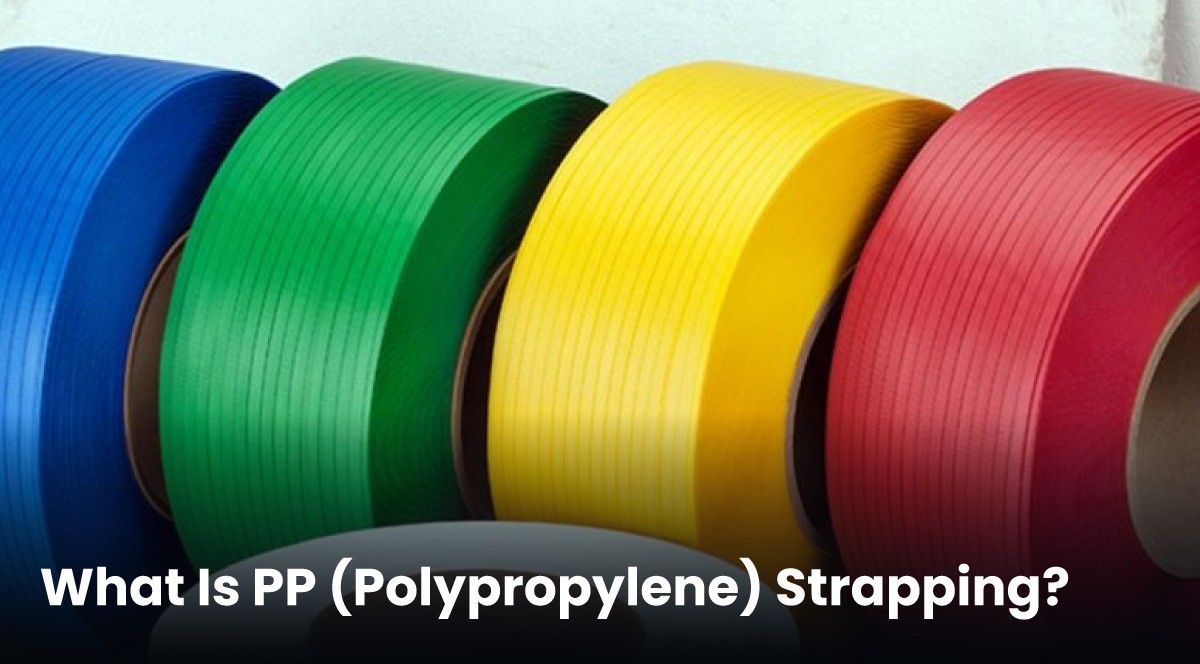
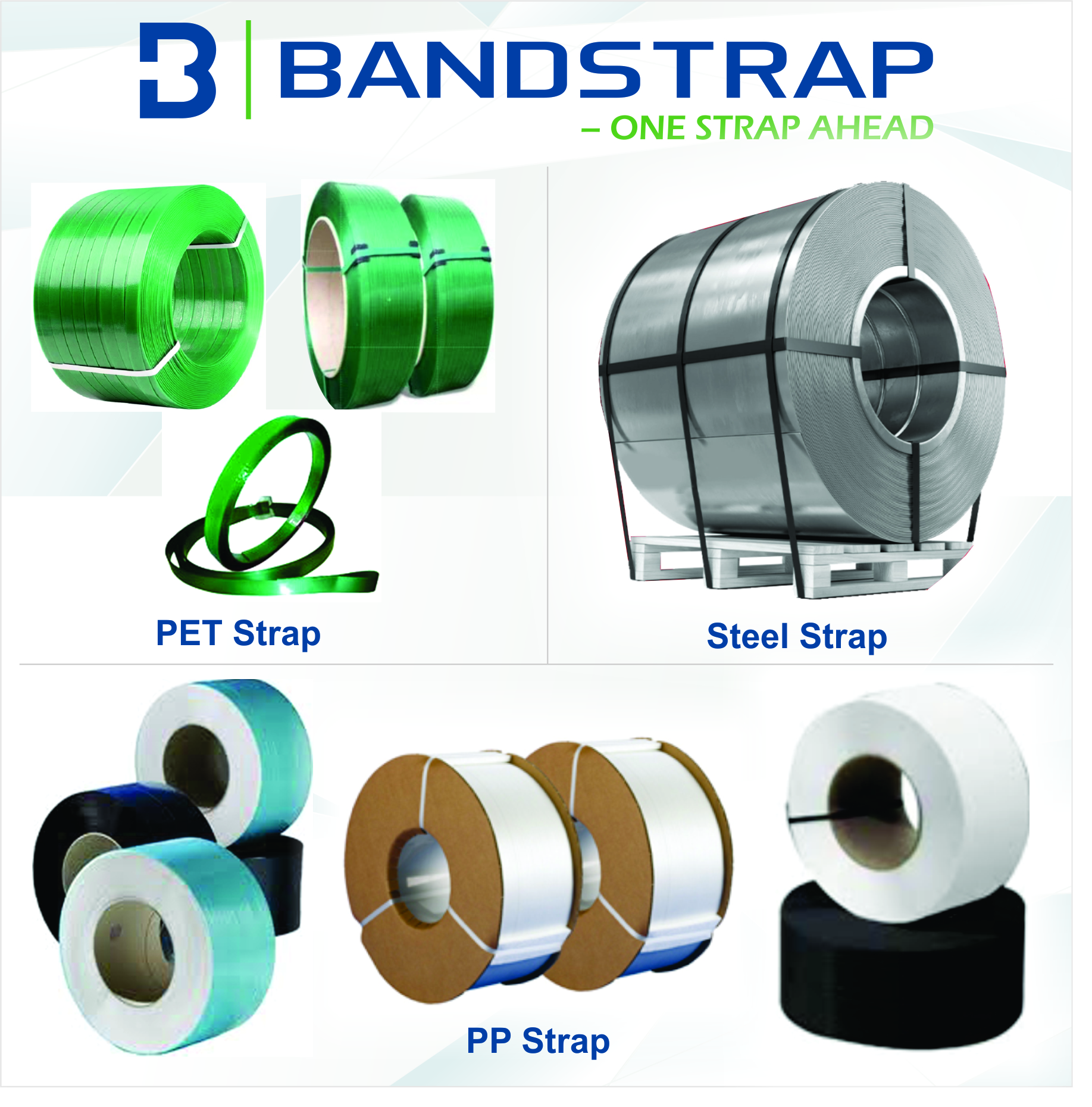
PP strapping is a lightweight, flexible plastic strap commonly used for light to medium-duty packaging. It is widely adopted in industries where loads are not extremely heavy and where cost efficiency is a priority.
Key Characteristics of PP Strapping
- Lightweight and flexible
- Cost-effective
- Available in multiple widths and colors
- Suitable for manual, semi-automatic, and automatic strapping machines
Common Applications - Carton boxes
- Newspaper bundles
- FMCG packaging
- E-commerce shipments
- Light warehouse loads
PP strapping works best in controlled environments where loads are stable and not exposed to high tension or impact during transport.
What Is PET (Polyester) Strapping?
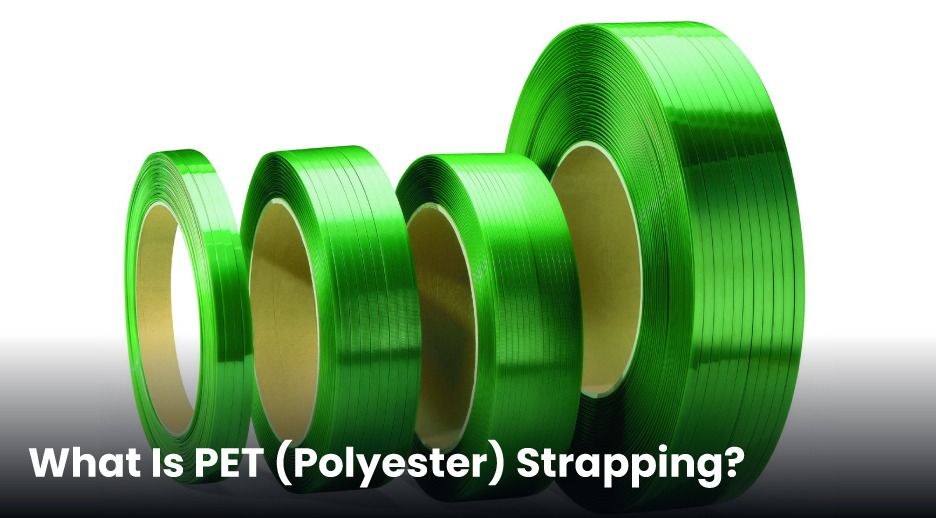
PET strapping is designed for heavy-duty and high-tension applications. It is often used as a safer and more cost-effective alternative to steel strapping, offering excellent strength and elasticity.
Key Characteristics of PET Strapping
- High tensile strength
- Excellent load retention
- Shock and impact resistance
- Weather-resistant
- Maintains tension over time
Common Applications - Palletized loads
- Brick and tile industries
- Metal and steel products
- Construction materials
- Heavy corrugated boxes
PET strapping is ideal for industries where load stability during long-distance transport is critical.
PET vs PP: Key Differences Explained
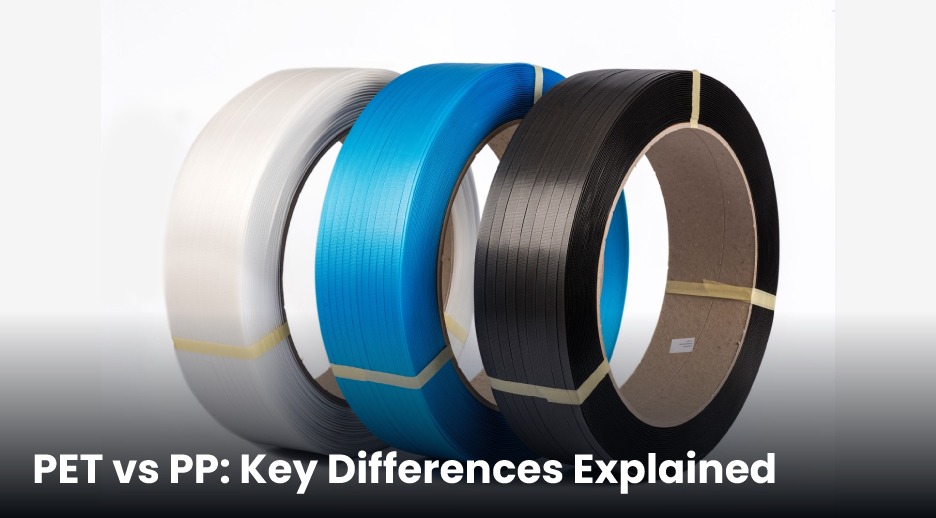
Feature | PP Strapping | PET Strapping |
Strength | Low to medium | High |
Load Retention | Moderate | Excellent |
Flexibility | Very flexible | Semi-rigid |
Cost | Lower | Higher (but long-term efficient) |
Replacement for Steel | No | Yes |
Best for | Light cartons | Heavy pallets |
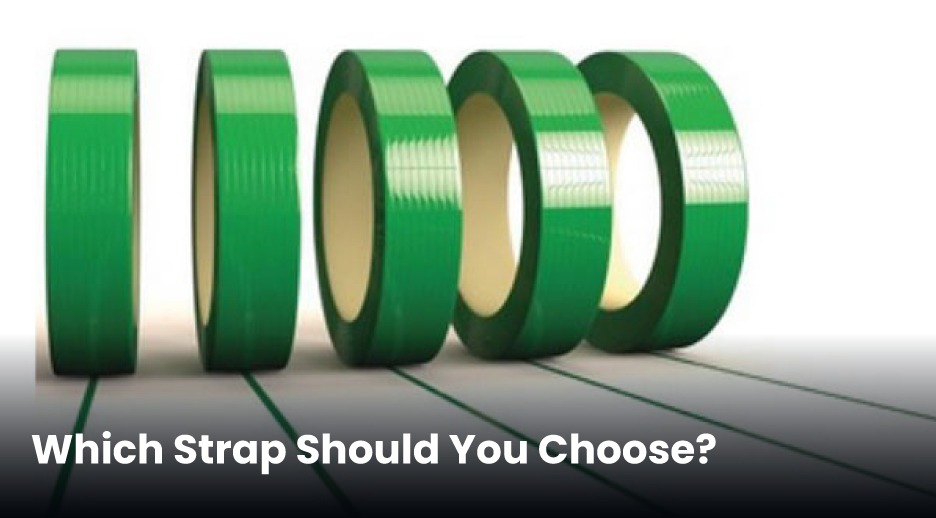
Which Strap Should You Choose?
Choose PP Strapping If:
- You pack lightweight cartons
- Cost is your primary concern
- Loads are handled gently
- You use manual or semi-automatic machines
Choose PET Strapping If: - You handle heavy or palletized loads
- Products face vibration during transport
- Load safety is critical
- You want an alternative to steel strapping
Selecting the wrong strap can result in product damage, rework, and higher logistics costs.
Machine Compatibility Matters
PP strapping is compatible with:
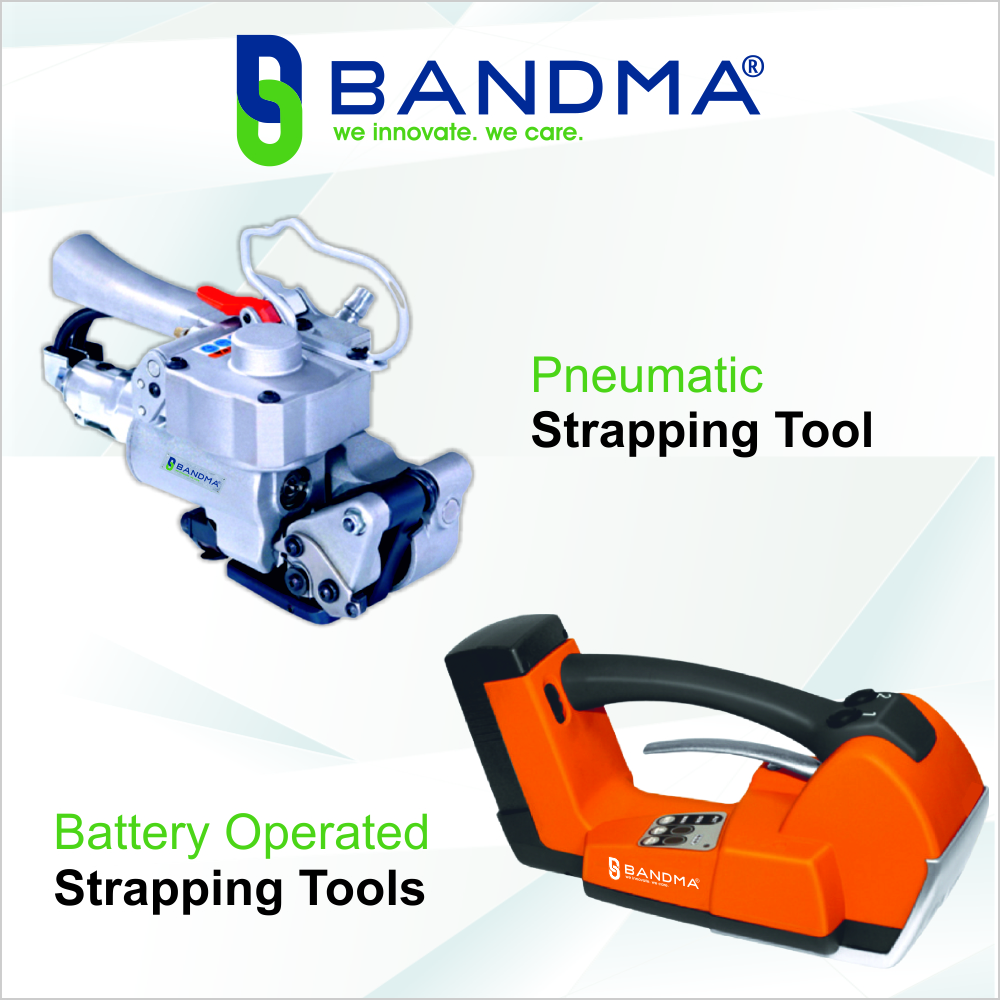
- Manual strapping tools
- Semi-automatic machines
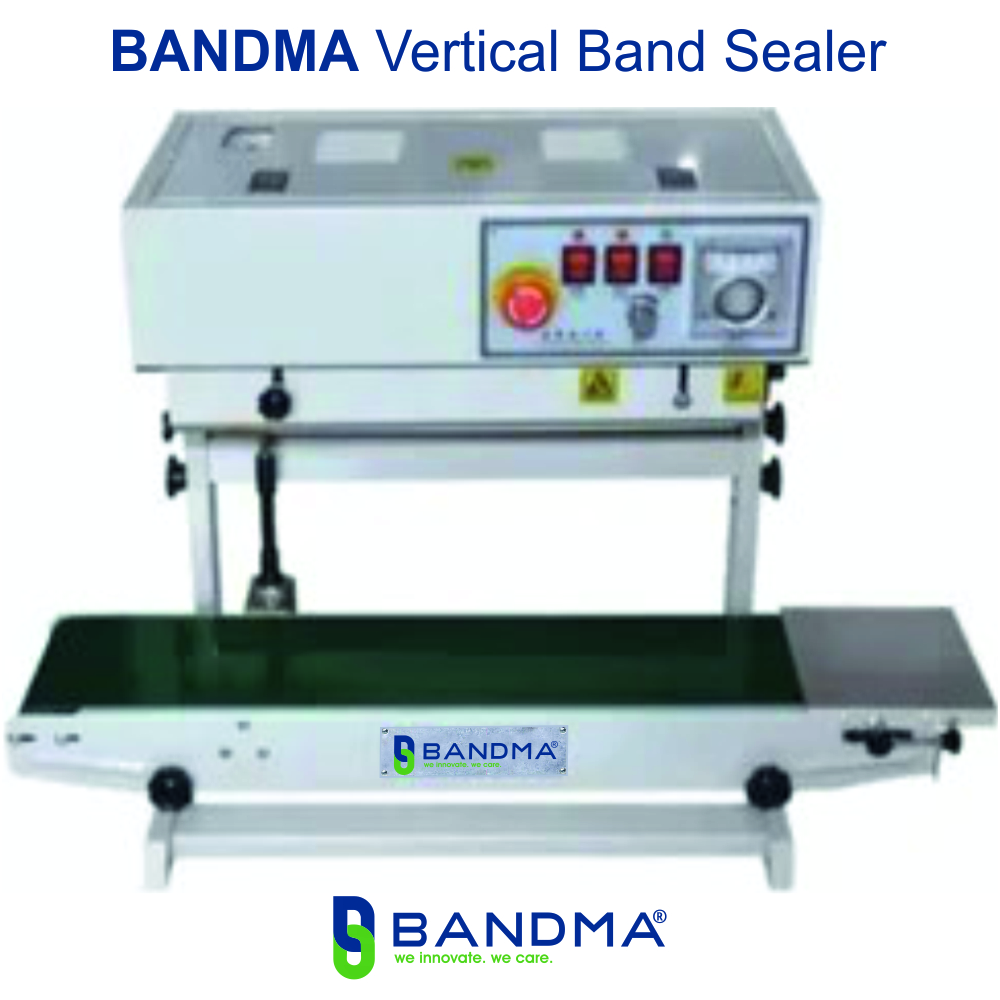
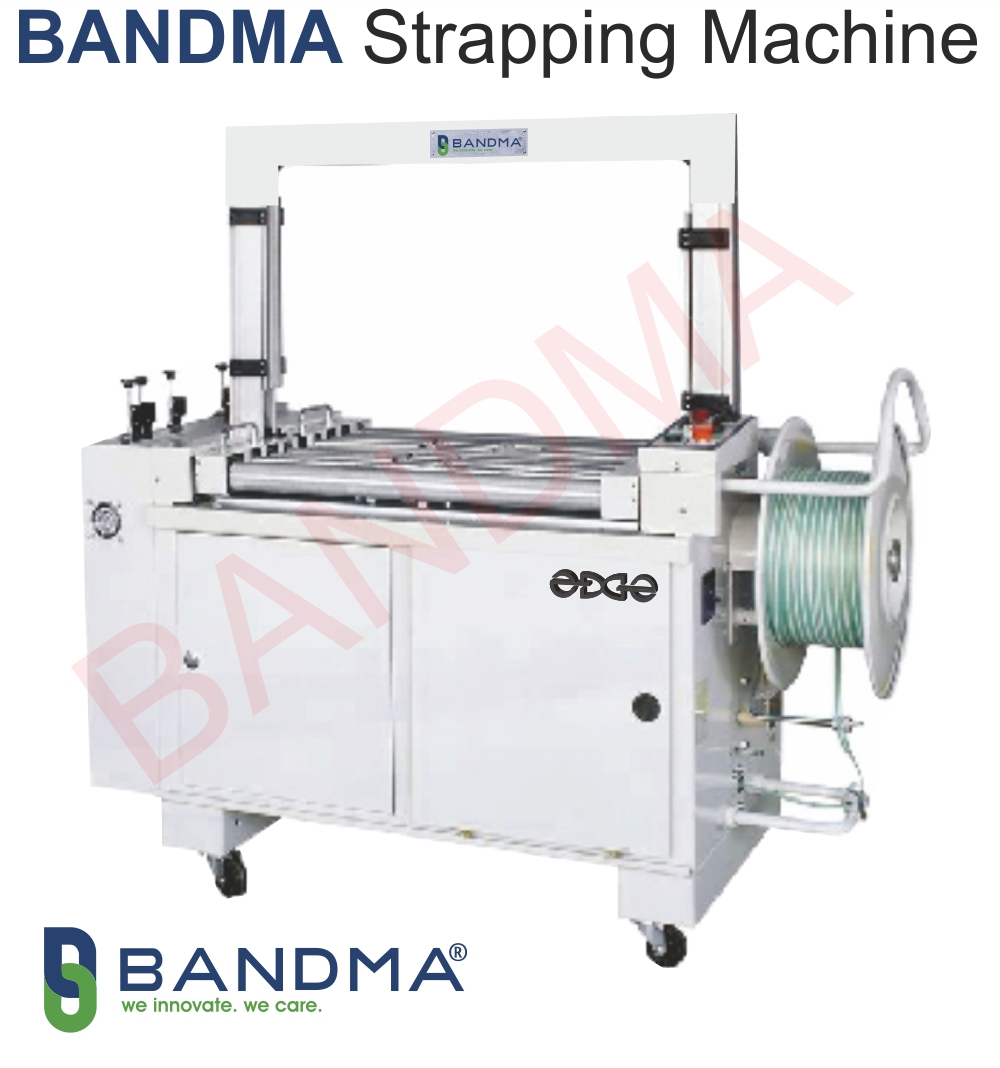
- Fully automatic strapping machines
PET strapping works best with: - Automatic pallet strapping systems
- Heavy-duty strapping machines
- High-tension strapping tools
Always ensure that your strapping machine is designed for the strap type you choose.
Why Manufacturers Are Switching to PET Strapping
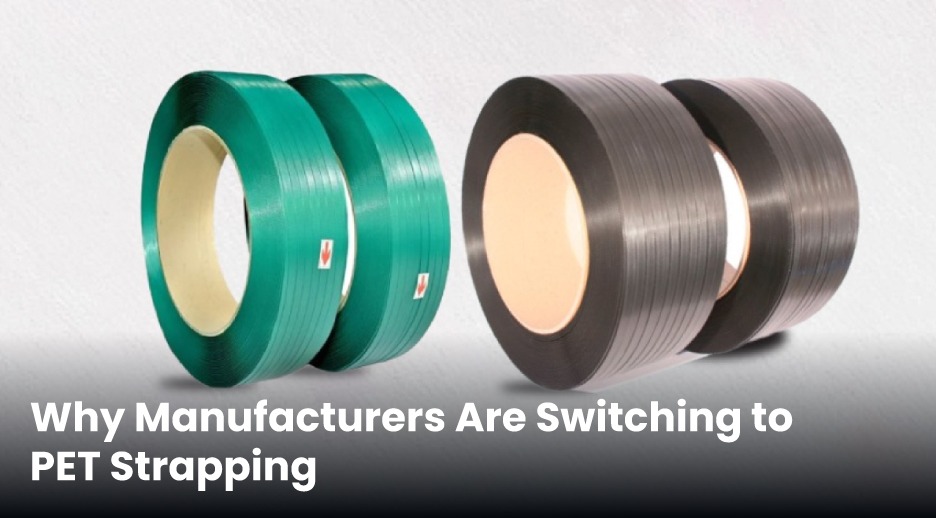
Many industries are shifting from steel to PET strapping because it:
Is safer for operators
- Does not rust
- Absorbs shock loads
- Reduces injury risk
- Lowers long-term cost
PET offers the strength of steel with the flexibility of plastic, making it a preferred choice for modern industrial packaging.
Conclusion
Both PET and PP strapping have their place in industrial packaging. The right choice depends on load weight, transport conditions, machine type, and budget. While PP strapping is ideal for lightweight applications, PET strapping delivers unmatched strength and reliability for heavy-duty packaging.
Understanding this difference helps manufacturers improve packaging safety, reduce failures, and optimize operational efficiency.