
















Stretch film is one of the most common consumables in any dispatch or warehouse operation. It looks simple, cheap, and harmless—so most teams don’t track it seriously. But when monthly usage is reviewed, production managers instantly notice one thing:
“We are using too much stretch film… but we don’t know why.”
Film wastage usually doesn’t happen because of one big issue.
It’s a combination of small habits, inconsistent wrapping methods, and equipment gaps that slowly increase your cost without anyone noticing.
Let’s break down the most common reasons behind excessive film usage—and how to control it without affecting pallet safety.
- Inconsistent Manual Wrapping Is the Biggest Reason for Waste
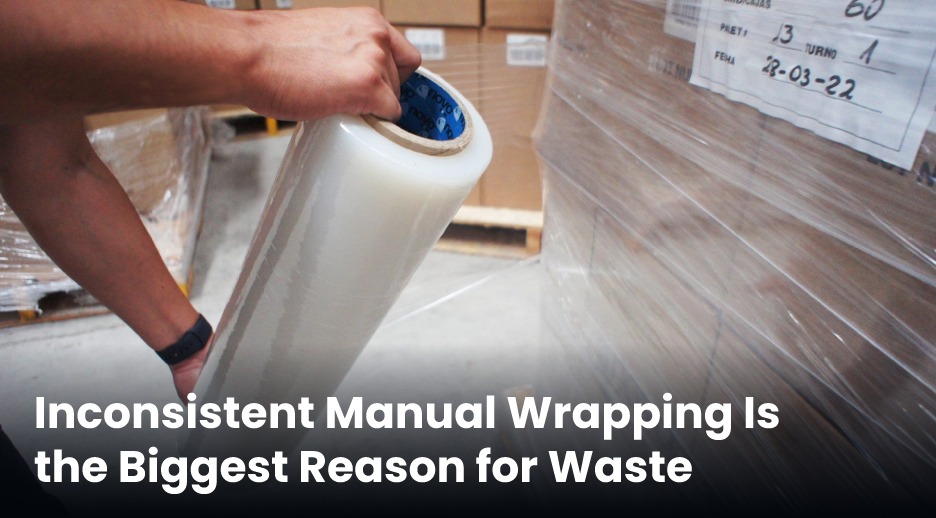
When wrapping is done manually, every operator has a different style:
Some pull extra film “just to be safe”
Some feel more layers = better protection
Some wrap too tight, which tears the film
Some wrap too loose, which requires re-wrapping
This inconsistency creates two serious problems:
film wastage and unstable pallets.
The Fix:
Create a standard wrapping pattern:
Fixed number of bottom wraps
Fixed number of middle rotations
Fixed top wrap pattern
Training operators on tension control
Even small standardization reduces usage by 15–20% instantly.
- The Wrong Film Thickness = Hidden Waste

Fact:
Most factories use thicker film than they actually need.
Why?
Because the film was purchased based on price, not the load requirement.
A stable, lightweight pallet may need 17–20 micron film.
A heavy industrial pallet may need 23–30 micron.
Using a thicker film “for every load” sounds safe,
but it wastes money on 80% of pallets that don’t require it.
The Fix:
Match film microns to actual pallet type:
Light goods → 17–20 micron
Consumer cartons → 20–23 micron
Industrial pallets → 23–30 micron
Choosing the right micron often saves 8–12% film cost per pallet.
- Pallets Are Unstable — So Operators Use Extra Film
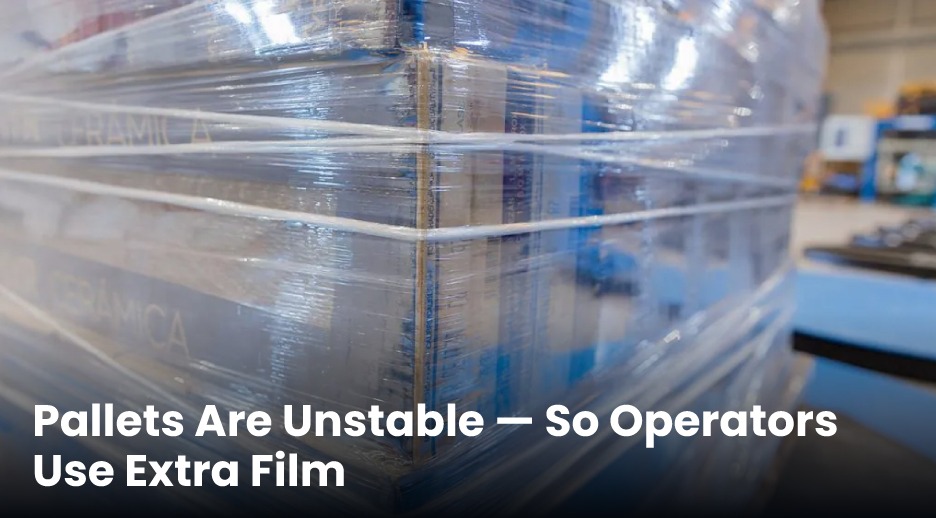
If the load is unstable, operators wrap more film because the pallet itself is weak.
Common causes:
Mixed carton sizes
Crushed cartons
Weak taping or loose flaps
Uneven weight distribution
Overhanging cartons
No corner protection
When the load shifts, operators compensate with film—not with process improvement.
The Fix:
Stabilize the load FIRST:
Use corner boards
Improve carton quality
Use proper case sealing
Stack cartons in interlocking patterns
Use slip sheets for friction
A stable pallet needs 30–40% less film.
- No Pre-Stretch = Guaranteed Waste
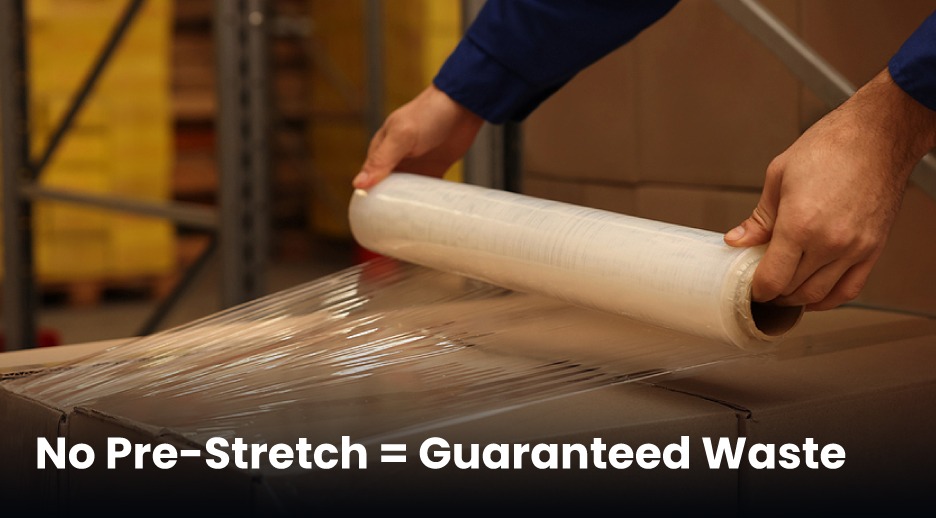
Most factories still stretch film manually, but stretch film is actually designed to be stretched 250–300% before use.
Without pre-stretch:
You use 2–3x more film
Film strength is underutilized
The wrap is weaker than it should be
The Fix:
Use:
Pre-stretch hand dispensers
Semi-automatic wrappers with 150–300% pre-stretch
Automatic machines for consistent output
Pre-stretch alone can reduce usage by 40–50%.
5. No Process Monitoring = Continuous Leakage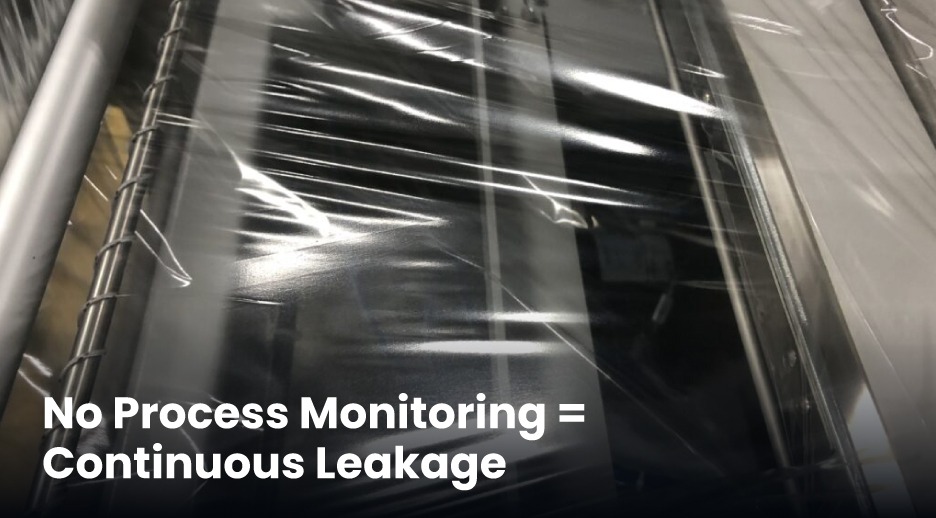
Most companies don’t track:
Film used per pallet
Wrapping cycles
Cost per shipment
Monthly wastage trends
Operator wrapping differences
If you don’t measure it, you can’t reduce it.
The Fix:
Create a simple tracking sheet:
Pallets wrapped per shift
Rolls consumed
Micron used
Average film cost per pallet
This makes wastage visible.
- Re-Wrapping Is Costlier Than You Think
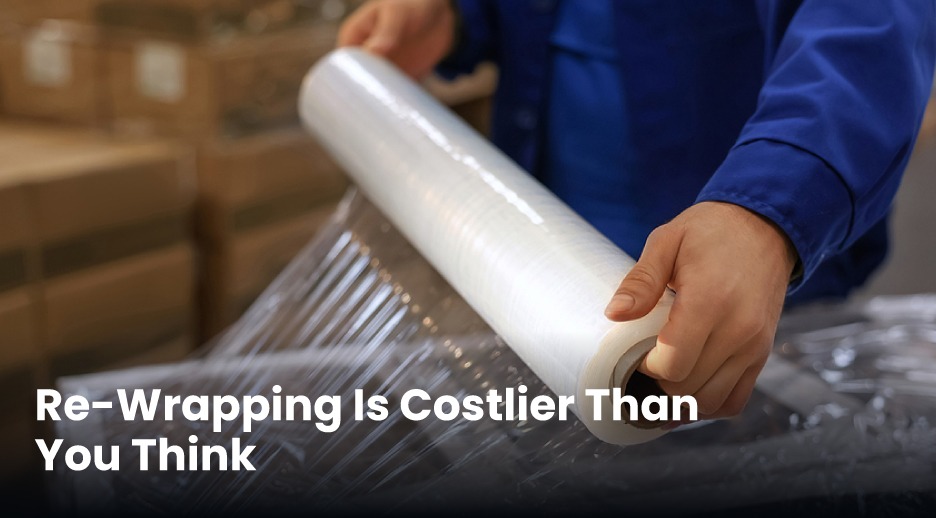
Re-wrapping one unstable pallet may take:
4–6 minutes
Extra film
Extra labour
Extra downtime
If this happens even 5 times a day, monthly consumption goes up significantly.
Rework is silent wastage.
The Fix:
Improve the first wrap quality through:
Better palletizing
Proper film choice
Machine-based wrapping
Clear SOPs
Final Thought
Stretch-film waste doesn’t disappear by changing rolls or negotiating cheaper rates.
It reduces when the entire wrapping process becomes disciplined.
Most factories waste film because of:
Inconsistent manual wrapping
Wrong film selection
Unstable pallets
No pre-stretch
No measurement system
Fix these 3 areas—film choice, load stability, and wrapping consistency—and your consumption will drop immediately without affecting product safety.
At the end of the day, the goal is simple:
Don’t wrap more — wrap smarter.