

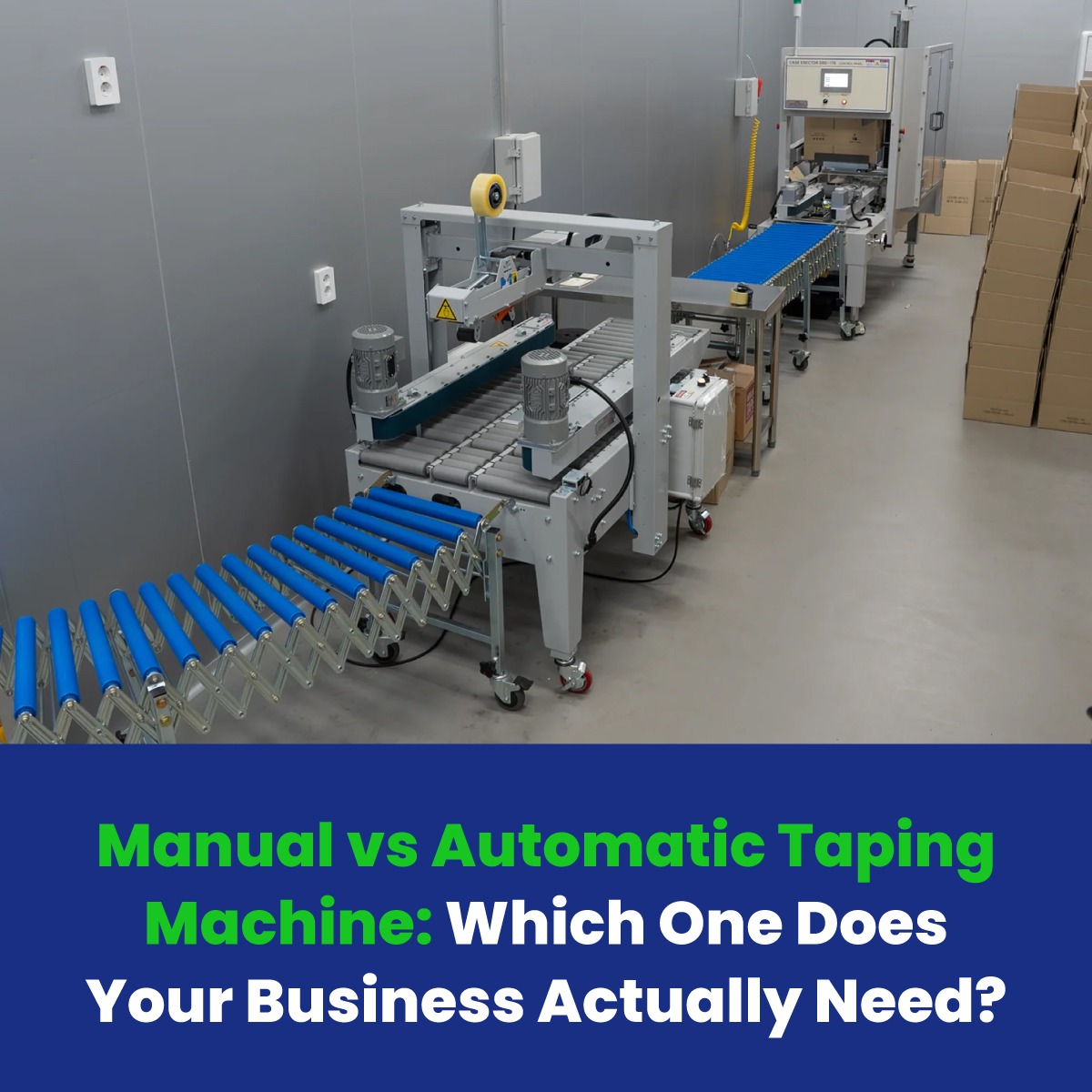
Sealing a carton seems like the simplest step in a packaging line. It is also one of the most expensive to get wrong. A poorly sealed box that opens in transit creates returns, damages customer trust, and often costs far more to deal with than the tape itself.
The choice between a manual, semi-automatic, and fully automatic taping machine comes down to three things: your volume, your box variety, and your labour cost. This post breaks each option down clearly.
The Case for Manual Taping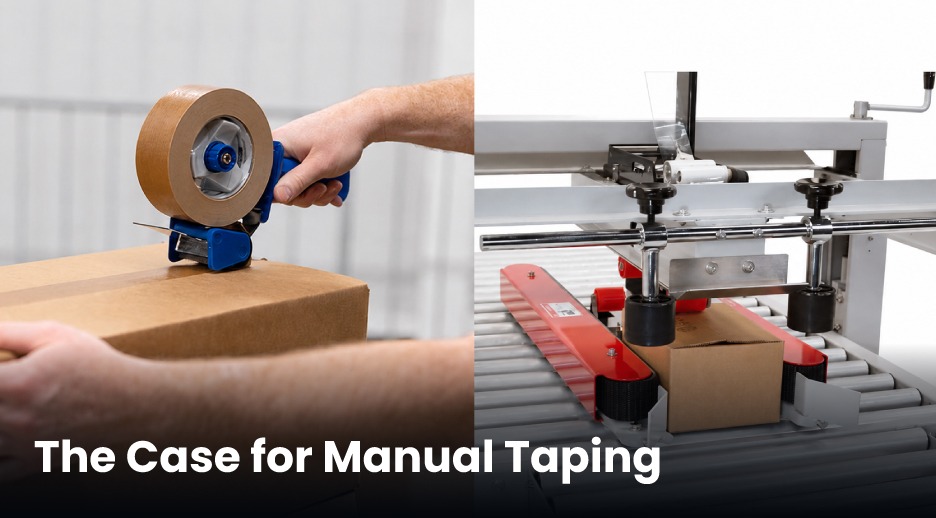
A handheld tape gun or a basic bench-top tape dispenser costs almost nothing and requires zero installation. For businesses shipping fewer than 50 boxes per day, this is often the most practical option. There is no learning curve, no maintenance, and no downtime risk.
The tradeoff is consistency. Manual taping produces variable results depending on the operator. Tape applied too loosely will fail under load; applied unevenly, it looks unprofessional. At higher volumes, operator fatigue also becomes a real factor.
Semi-Automatic Taping Machines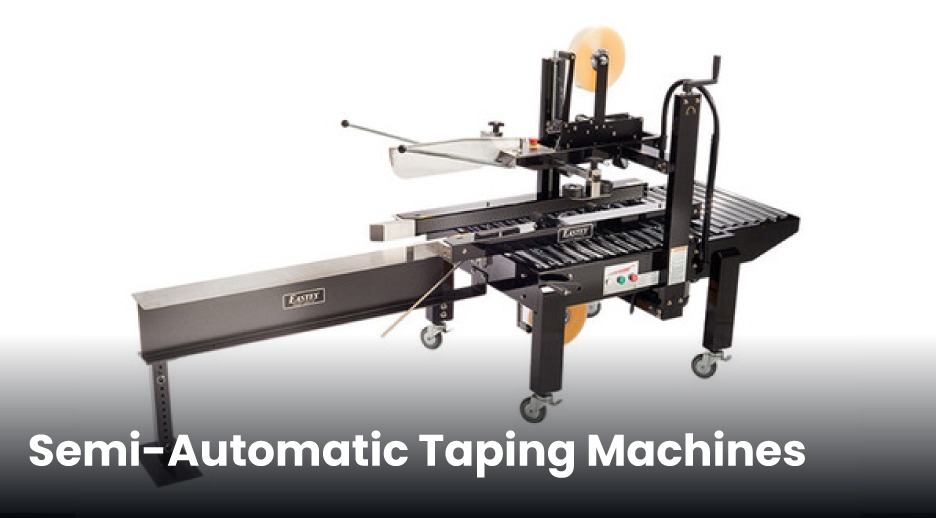
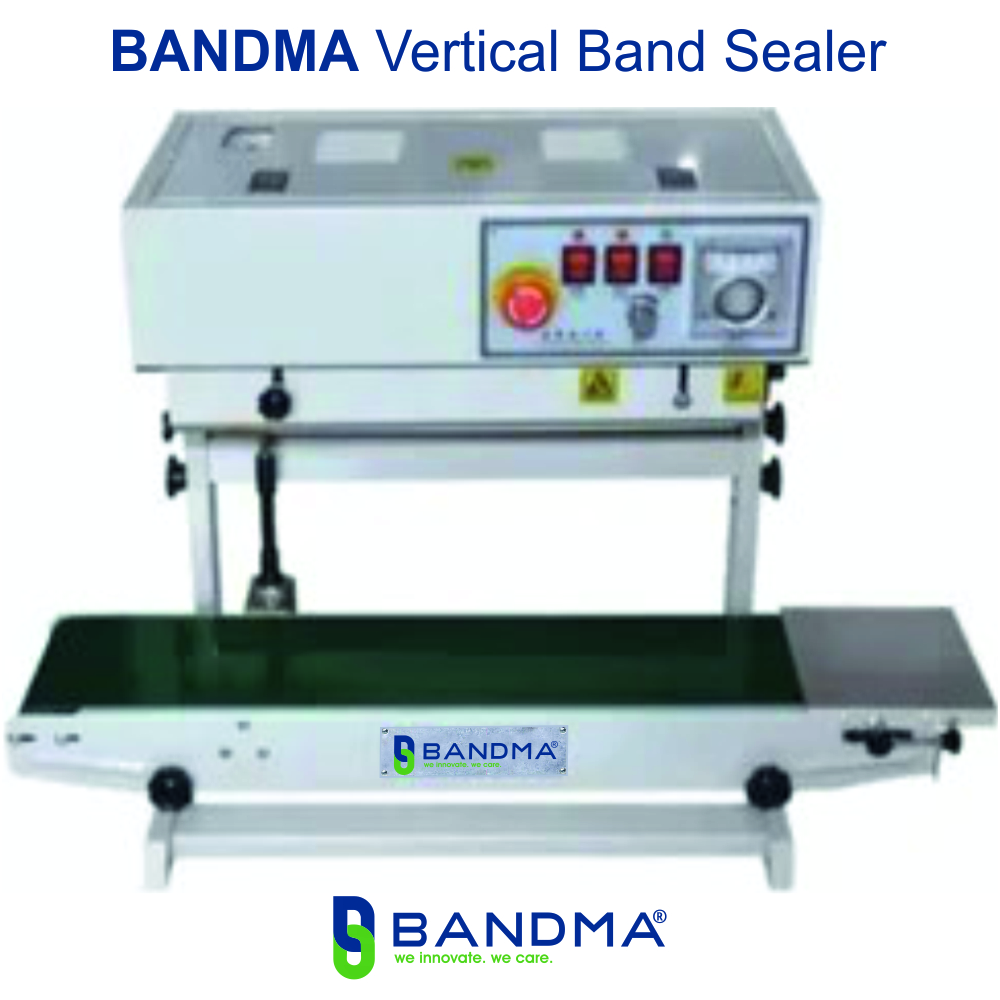
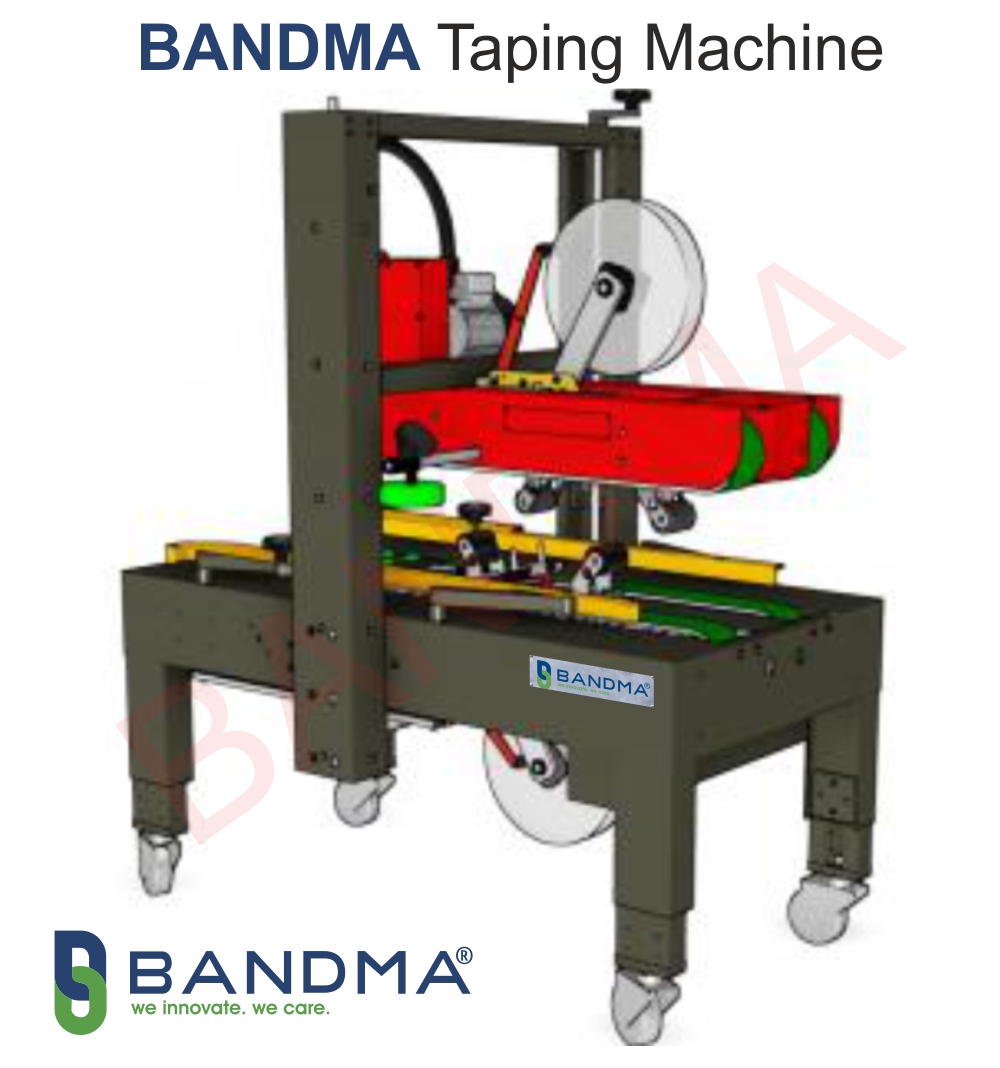
A semi-automatic taping machine seals the top and bottom of a carton in one pass. The operator folds the flaps, places the carton on the machine's conveyor belt, and the machine does the rest. The result is a consistently sealed box in seconds.
These machines handle a range of carton heights with quick manual adjustment — making them well-suited to businesses with moderate SKU variety. Bandma's BH-51SB, for example, is specifically designed for lightweight boxes with low height profiles, a common requirement in FMCG secondary packaging.
Semi-automatic machines pay for themselves quickly at volumes of 200 to 1,000 boxes per day, particularly where labour costs are rising or consistency is important for brand presentation.
Fully Automatic Taping Machines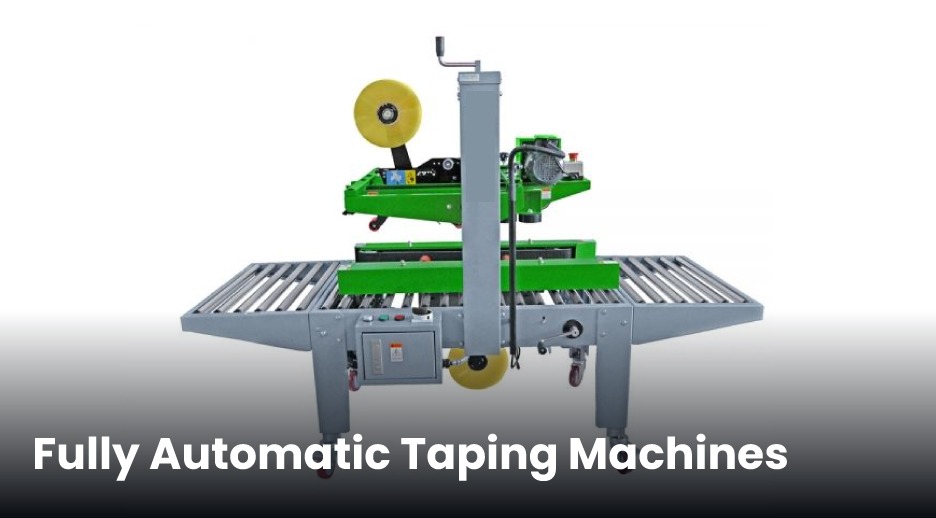
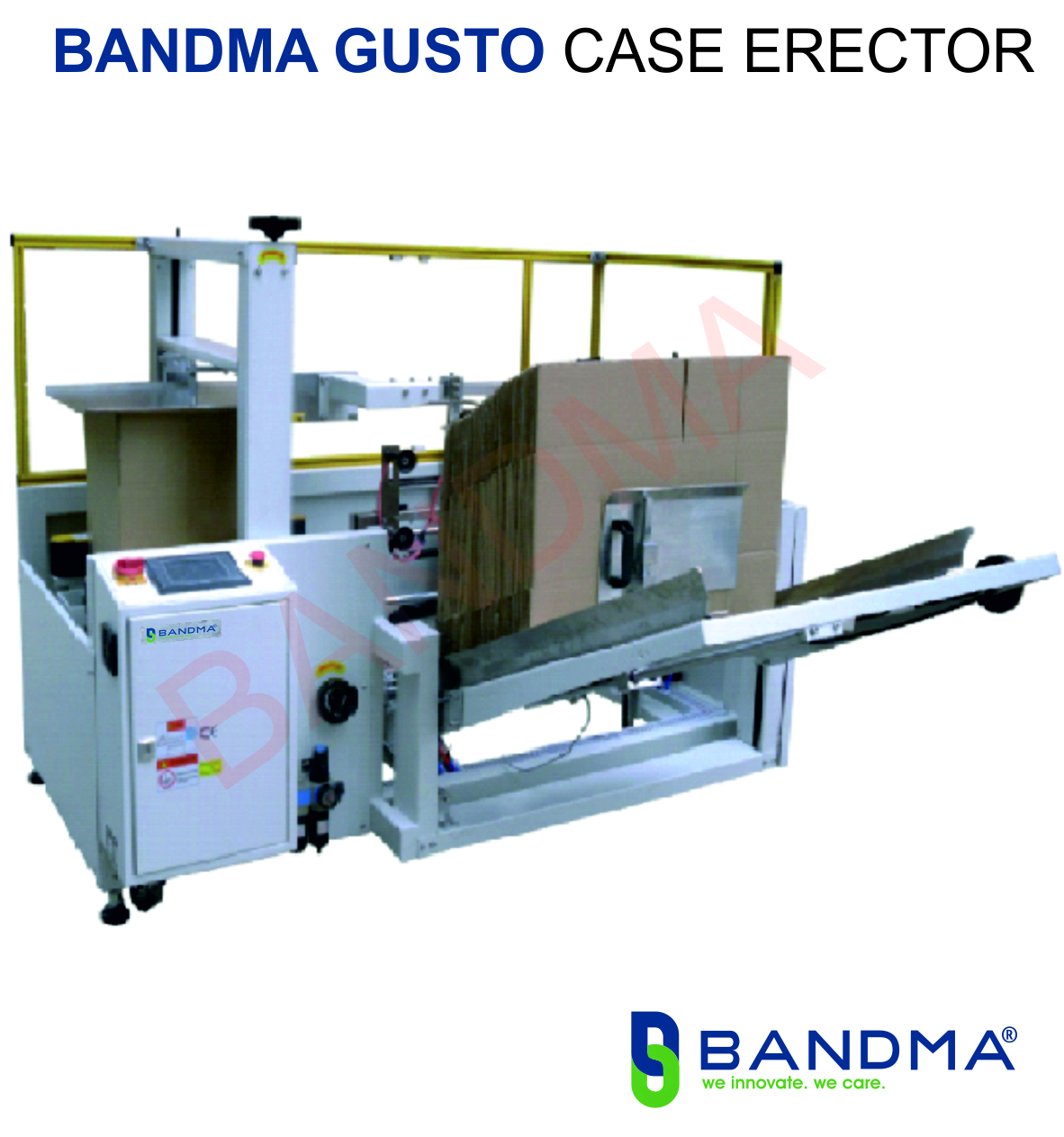
A fully automatic carton sealer — also called a random flap-folding taping machine — forms, folds, and seals cartons without any operator intervention. These machines read the carton dimensions electronically and adjust on the fly, which is essential when box sizes vary continuously.
Bandma's random flap-folding carton sealer is designed for integration into high-speed lines. It handles flap folding automatically, eliminating a step that otherwise requires a dedicated operator at every shift.
Fully automatic machines make sense when volumes exceed 1,000 boxes per day, labour is the largest packaging cost, or the line runs multiple shifts.
Comparing the Options Side by Side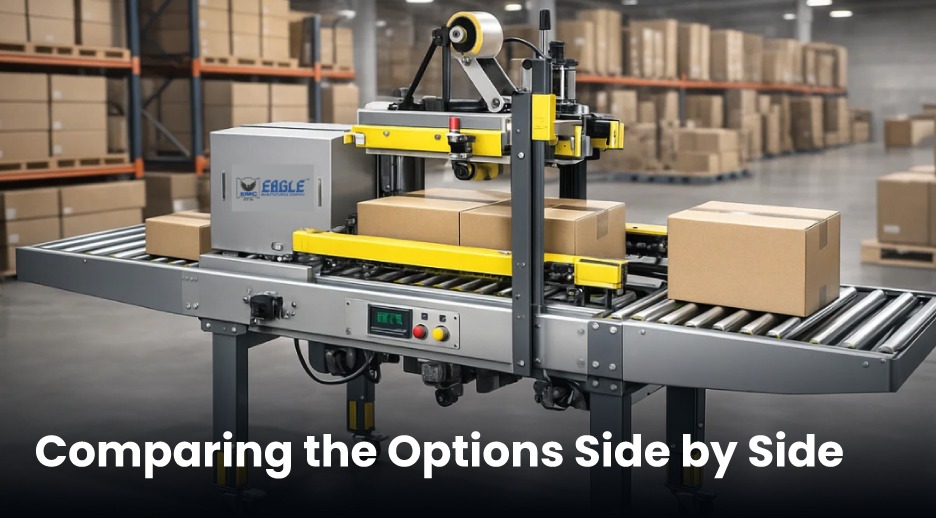
Factor | Manual | Semi-Automatic | Fully Automatic |
Daily Volume | < 100 boxes | 100–1,000 boxes | 1,000+ boxes |
Operator needed? | Yes (full time) | Yes (minimal) | No |
Box size flexibility | Any | Adjustable | Automatic |
Seal consistency | Variable | High | Very High |
Upfront cost | Very low | Moderate | Higher |
ROI timeline | Immediate | 3–12 months | 6–18 months |
The Hidden Cost: Tape Waste
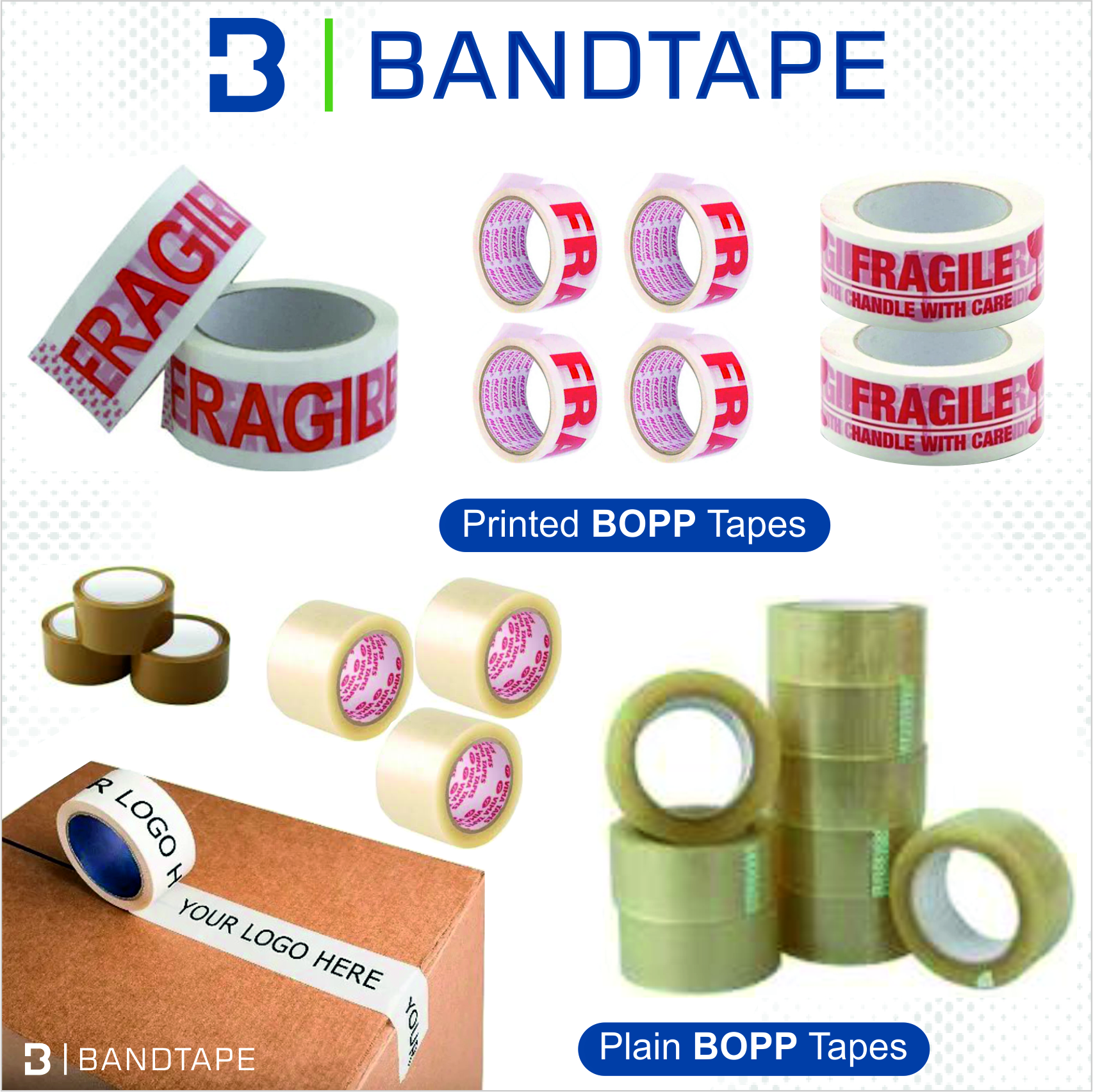
Inconsistent manual taping wastes tape. Operators often apply two layers where one would suffice, or over-extend the tape around edges. A semi-automatic machine applies a precise, measured length every time. At high volumes, the tape savings alone can offset a significant portion of the machine cost.
Bandma's Taping Machine Range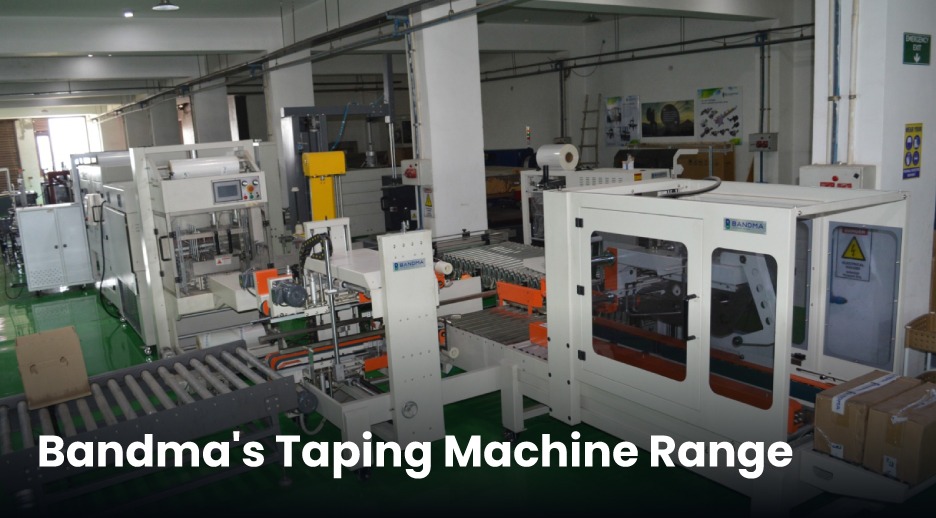
Bandma offers taping machines across the full range — from simple bench-top models suitable for small warehouses to high-speed random flap-folding systems for fully automated packaging floors. All models use standard tape rolls, require minimal maintenance, and come with Bandma's 24/7 after-sales support.
Talk to Bandma to find the taping machine that fits your volume, your boxes, and your budget.