

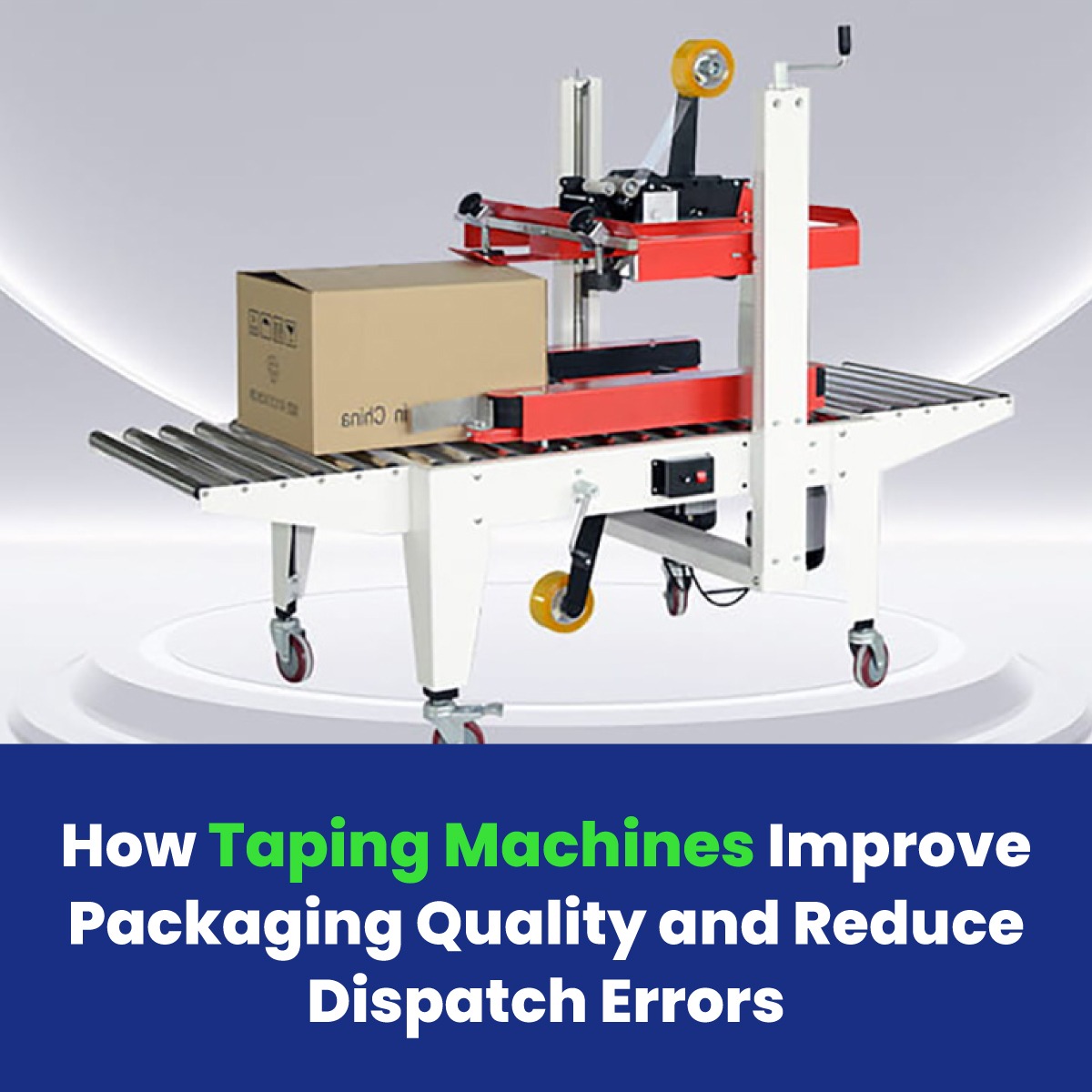
In most factories, carton sealing looks like a small task—but it quietly affects the entire dispatch workflow. A loose tape, uneven flap closure, or inconsistent sealing can cause cartons to open during handling, collapse while stacking, or get rejected by distributors. These issues lead to rework, delays, and unnecessary damage costs.
This is exactly why more production managers are shifting from manual taping to automatic and semi-automatic taping machines. They bring consistency, speed, and accuracy to a process that is often overlooked but critically important.
Where Manual Taping Goes Wrong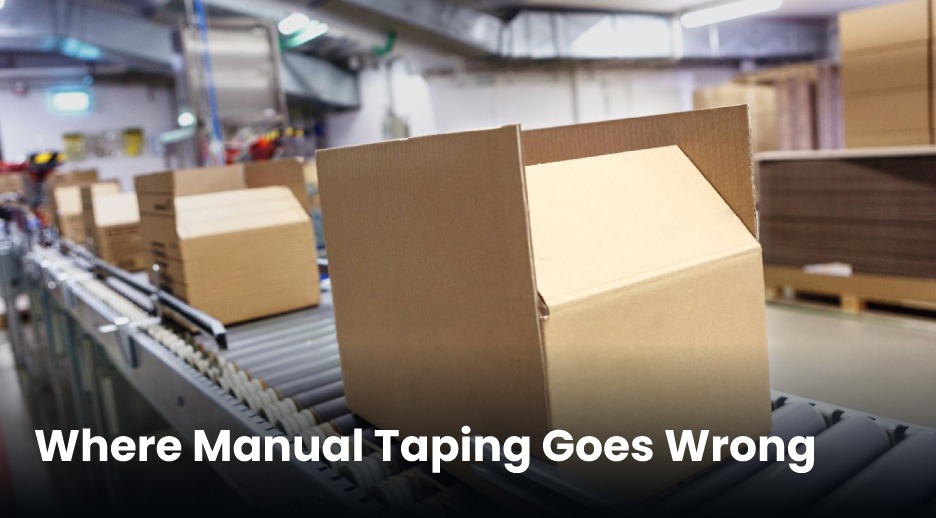
Even a skilled operator cannot maintain the same taping quality across an 8–10 hour shift. Common problems include:
Uneven tape pressure
Extra tape usage
Improper flap alignment
Weak tape hold due to fatigue
Missed edges or corners
Slow sealing during rush hours
These errors directly affect packaging quality and lead to higher dispatch complaints.
How Taping Machines Improve Packaging Quality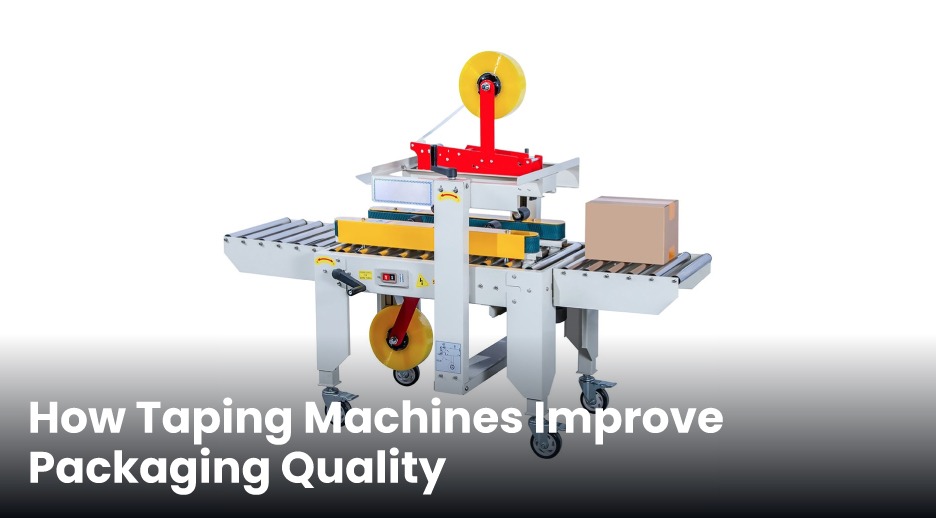
1. Perfect and Uniform Sealing
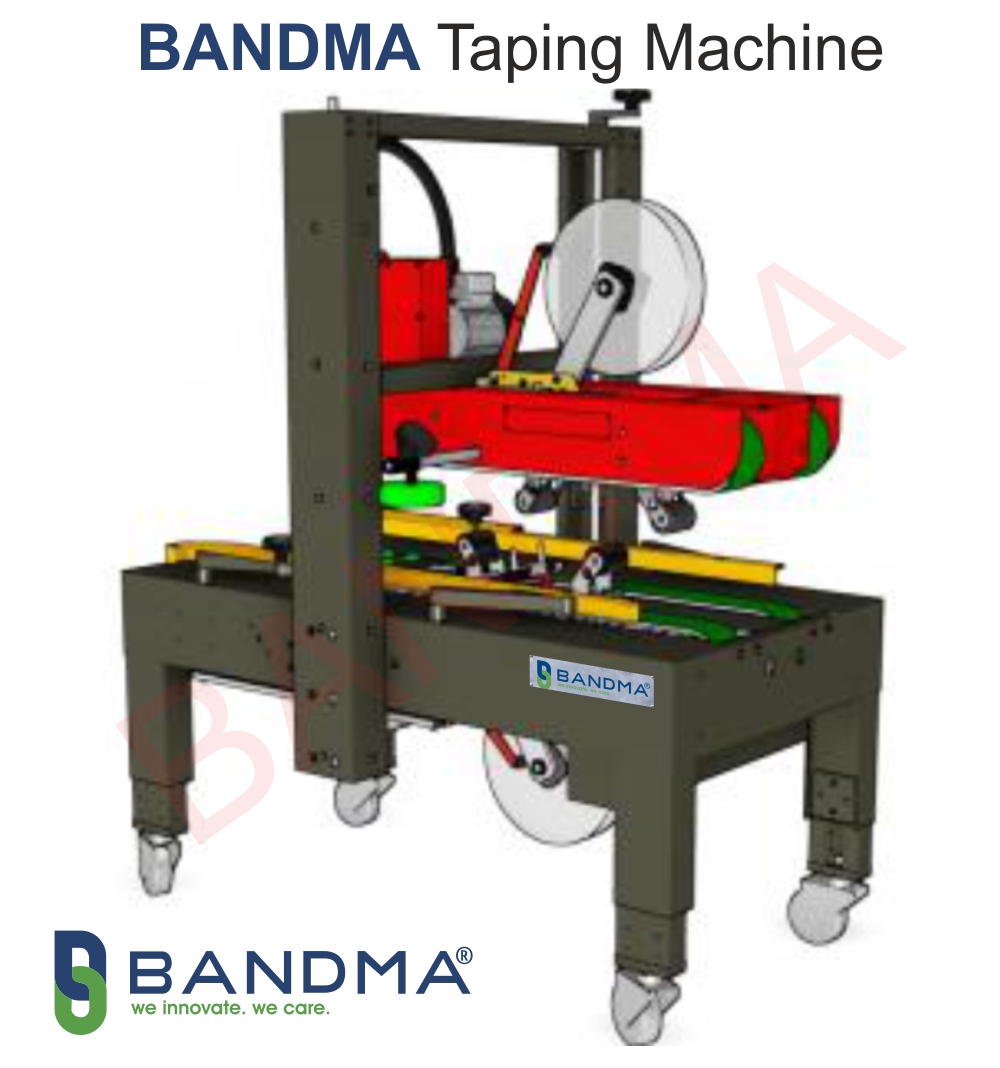
Taping machines apply consistent pressure on both top and bottom flaps.
No wrinkles, no loose edges, no weak bonds.
Every carton gets the same professional finish.
2. Proper Flap Alignment
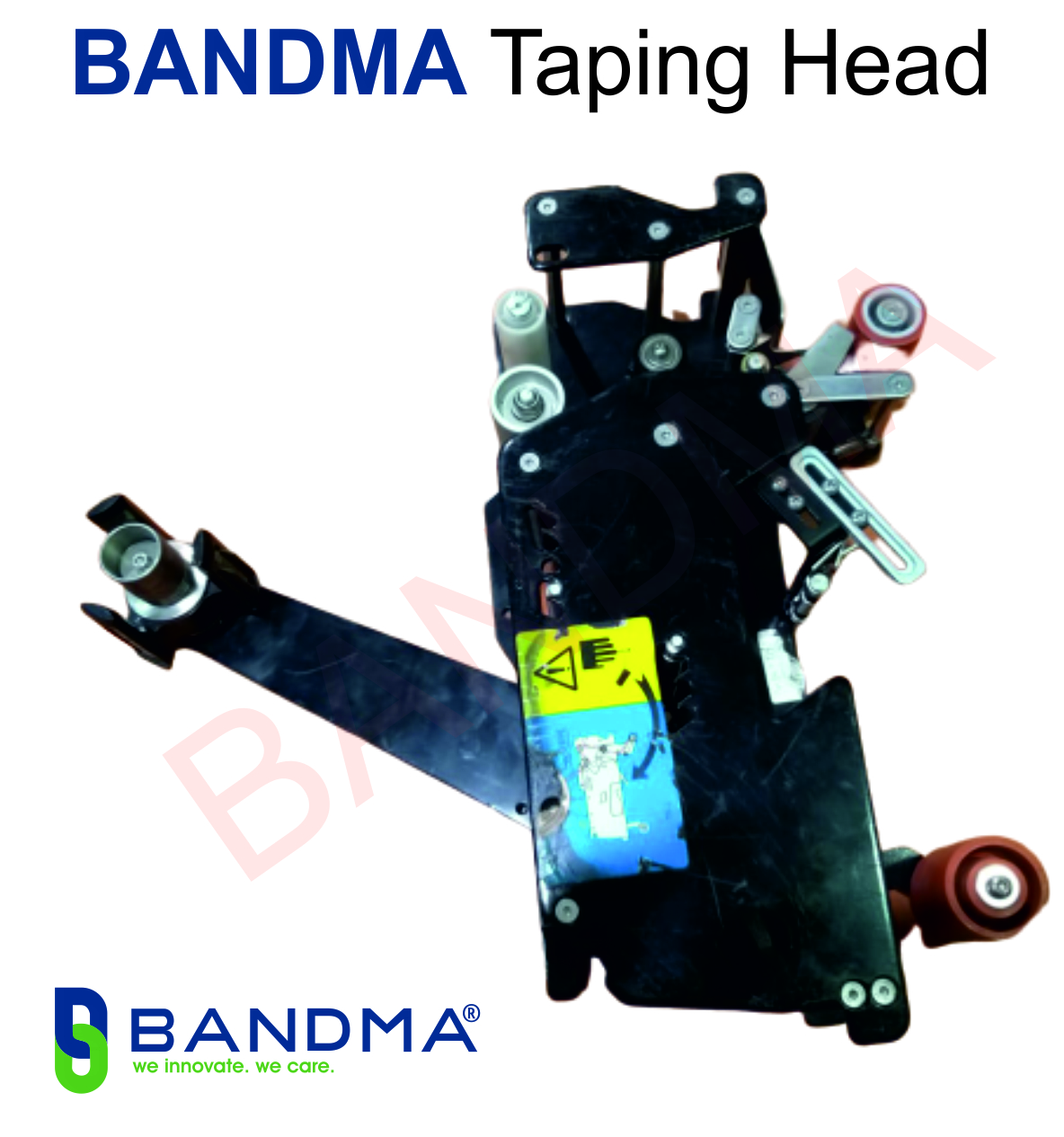
The guiding rollers ensure the carton stays centered, which prevents misalignment—one of the biggest reasons cartons burst during stacking.
3. Stronger Seal for Transit
Because tension, pressure, and tape length are controlled, the seal holds much better in long-distance transport, vibration, and humidity.
4. Better Aesthetics
Clean, straight taping improves the brand’s presentation, especially when cartons are customer-facing.
How Taping Machines Reduce Dispatch Errors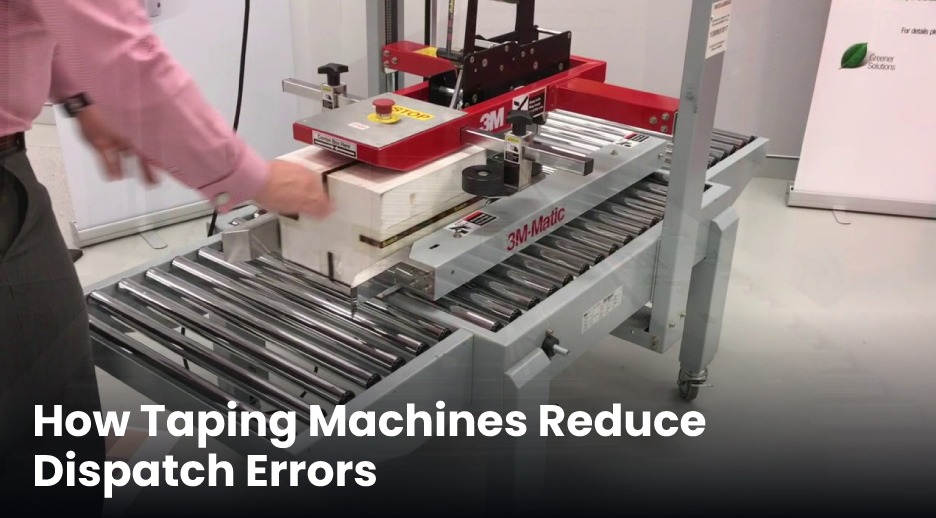
1. Eliminates Rework
With manual sealing, supervisors often reopen and retape boxes. Machines eliminate this, keeping the flow stable.
2. Prevents Cartons from Opening in Transit
A weak seal can fail in the truck, leading to damaged goods or rejected shipments.
Machine sealing minimizes this risk.
3. Reduces Tape Waste
Machines use exactly the amount needed, cutting material costs and preventing operator over-taping.
4. Improves Speed During Peak Hours
Taping machines can seal up to 20–30 cartons per minute, keeping dispatch lines fast even when order volume spikes.
Conclusion: A Small Upgrade With Big Operational Impact
Taping machines may look like a small part of your packaging line, but they create major improvements stronger sealing, fewer errors, better efficiency, and faster dispatch flow. When the final step of your line becomes predictable and consistent, your whole packaging system becomes more reliable.
If your factory still depends on manual taping, shifting to automated sealing is one of the simplest and highest-ROI upgrades you can make.