






In modern manufacturing, accuracy is no longer optional—it’s a strict requirement. Whether you run a beverage plant, a FMCG unit, a pharmaceutical line, or a warehouse dealing with thousands of parcels every day, packaging errors can lead to product damage, returns, compliance problems, downtime, and unnecessary operational costs. To eliminate these challenges, manufacturers are now integrating smart sensors into their packaging machinery, transforming how lines operate and how efficiently they perform.
Smart sensors are not just “add-ons.” They are becoming the backbone of intelligent packaging systems. These sensors constantly monitor machine conditions, product flow, alignment, sealing accuracy, load stability, and even equipment health. The result is packaging machinery that can “sense,” “respond,” and “self-correct” in real time.
This shift toward sensor-driven automation is helping manufacturers achieve a level of precision that was nearly impossible with conventional machines.
What Are Smart Sensors and Why Are They Important?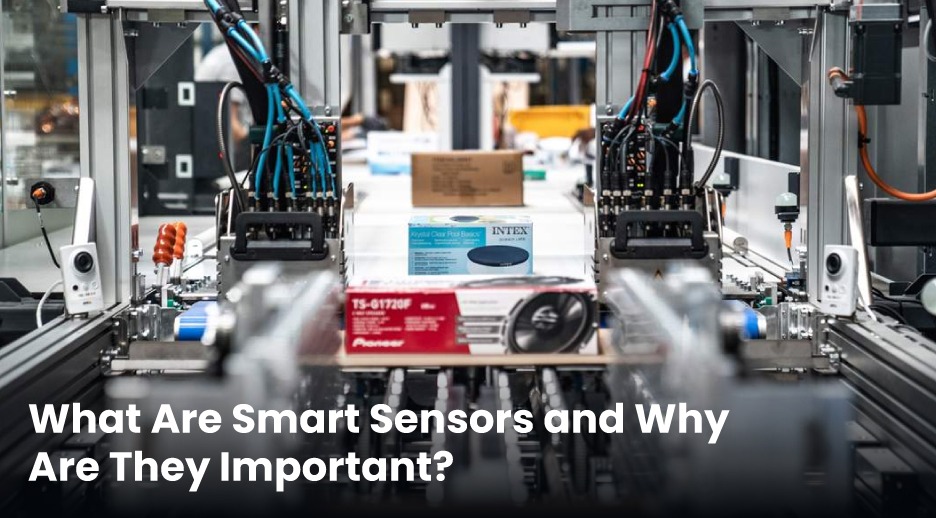
Smart sensors combine traditional sensing capability with built-in data processing. Unlike old sensors that only detect basic signals (like on/off or presence/absence), smart sensors interpret data, analyze conditions, and communicate with other machines or the central controller.
In short, smart sensors:
- Detect problems before they happen
- Keep machines running within tight tolerances
- Trigger automatic adjustments
- Enable predictive maintenance
- Ensure consistent packaging quality
These capabilities help packaging lines operate with fewer errors and greater efficiency—even at high speeds.
Types of Smart Sensors Commonly Used in Packaging Machines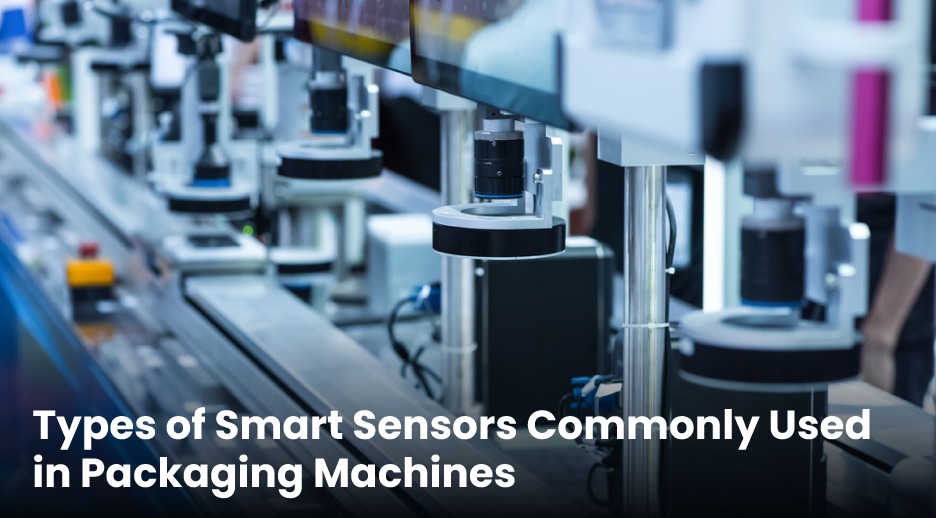
Different packaging applications require different sensors. Today’s automated packaging lines rely on a combination of the following sensor types:
1. Photoelectric Sensors
Used for detecting product position, size, and presence. They ensure accurate timing for operations like sealing, filling, or strapping.
2. Proximity Sensors
Crucial for monitoring moving parts, carton flaps, metal components, and mechanical alignment.
3. Vision Sensors & Cameras
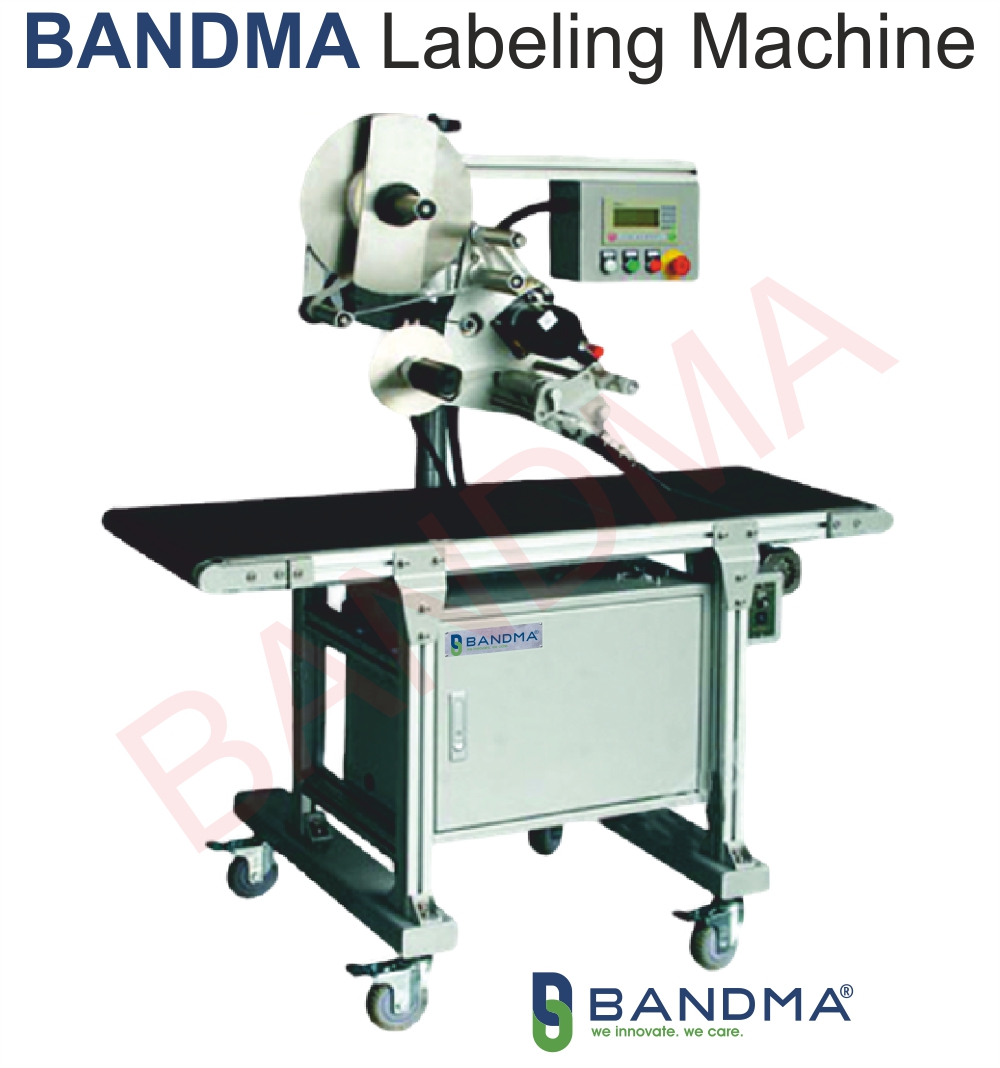
These act like “digital eyes.” They check label placement, printing accuracy, barcodes, product orientation, and reject defective items instantly.
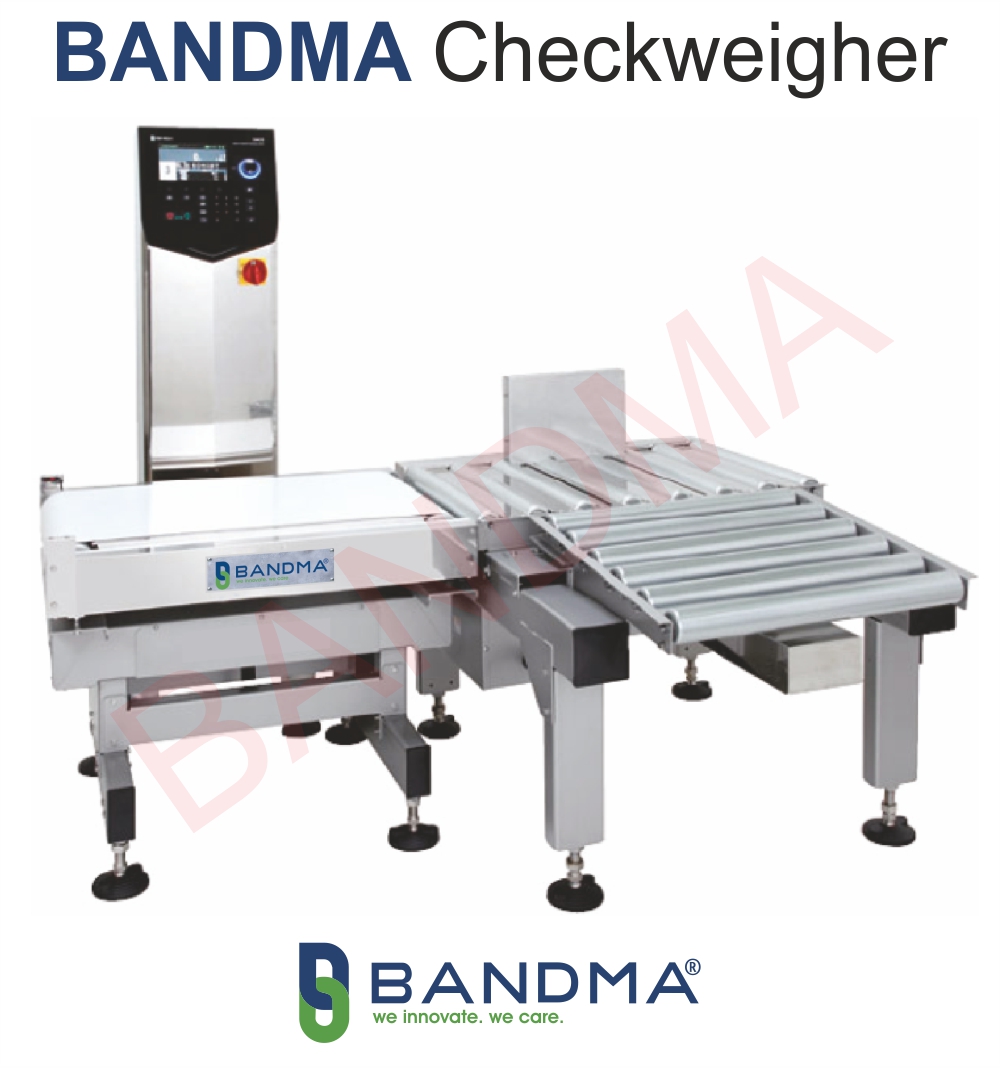
4. Load Sensors & Weight Sensors
Used in pallet wrapping, weighing, and bundle strapping systems to achieve uniform tension and stable loads.
5. Temperature Sensors
Necessary for shrink tunnels, sealers, and heat-based packaging to maintain consistent sealing quality.
6. Vibration and Motor Health Sensors
Used to predict motor failure, bearing wear, and gearbox issues before they cause downtime.
These sensors work together to form a fully synchronized packaging environment.
How Smart Sensors Improve Packaging Accuracy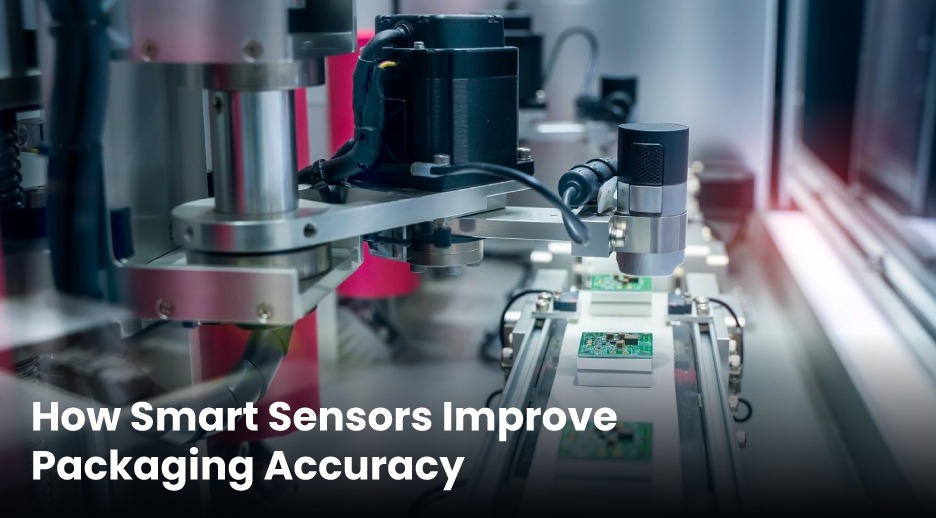
1. Real-Time Position Control
In strapping machines, pouch filling machines, tapers, and wrapping systems, even millimeters matter. Smart sensors ensure every product is exactly where it needs to be before the machine executes a function—reducing misalignment and wasted material.
2. Automatic Detection of Faults
Traditional machines rely on operators to notice faults, often after damage has already occurred. Smart sensors detect problems instantly—like a tilted carton, a missing product, an open flap, or a jam—and stop the line before the issue spreads.
3. Better Consistency in Sealing, Strapping, and Wrapping
Packaging quality heavily depends on uniform tension, heat, and pressure. Smart sensors monitor these parameters and adjust them automatically, ensuring that:
- Straps have consistent tension
- Seals are strong and leak-proof
- Pallet wrapping is tight and stable
- Labels are aligned correctly
This improves presentation and reduces transit damage.
4. Higher Line Speed Without Compromising Quality
As production demand grows, line speeds increase. Smart sensors help packaging machines:
- React faster
- Make micro-adjustments
- Maintain quality at higher speeds
Manufacturers can boost output without additional labor.
5. Improved Traceability and Data Logging
Modern packaging machines with smart sensors collect and store data such as:
- Cycle count
- Fault frequency
- Temperature variations
- Tension deviations
- Speed vs. accuracy reports
This information helps managers optimize performance, schedule maintenance, and ensure compliance.
Smart Sensors and Predictive Maintenance: A Game-Changer
One of the biggest advantages of smart sensors is the ability to predict equipment failures. Instead of waiting for a machine to break down, sensors track temperature, vibration, pressure, and load variations to identify early signs of damage.
Predictive maintenance offers several benefits:
- Reduced unplanned downtime
- Lower repair costs
- Extended machine life
- Better safety for operators
For high-volume operations, the cost savings from predictive maintenance can be substantial.
Where Smart Sensors Deliver Maximum Value
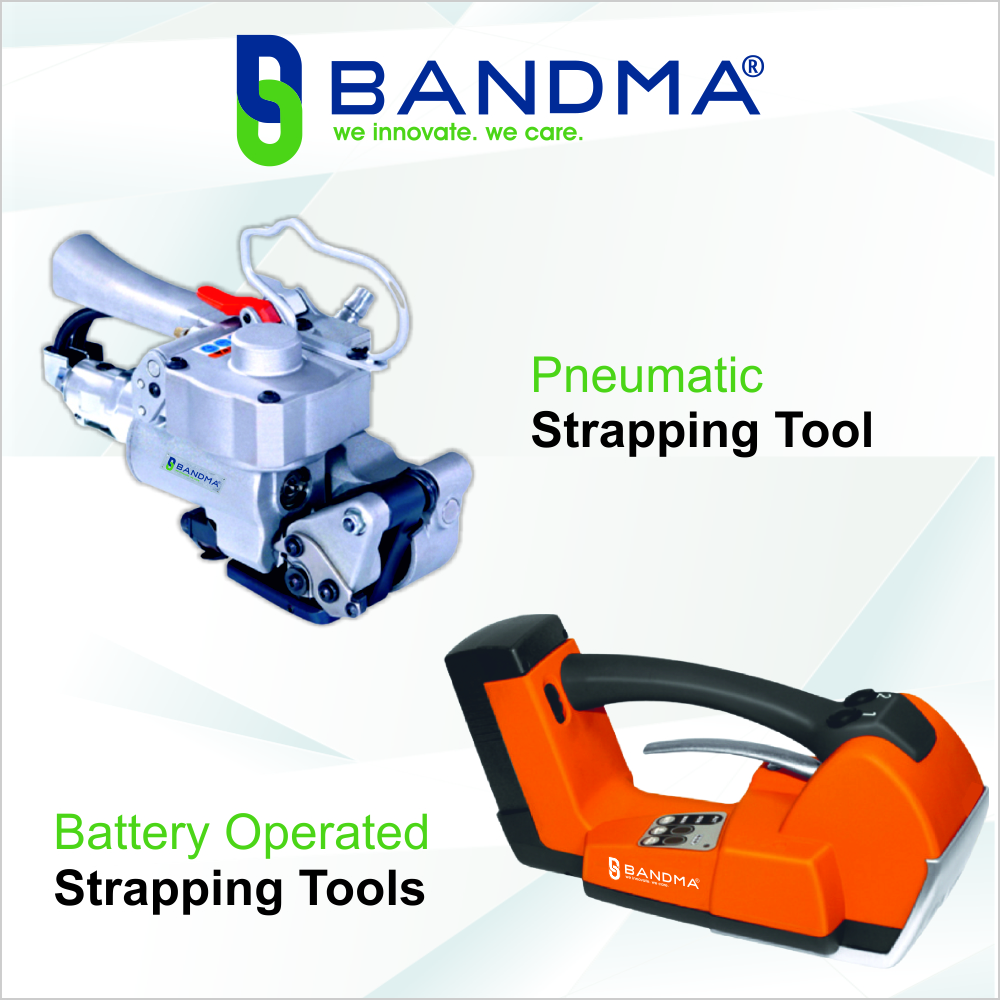
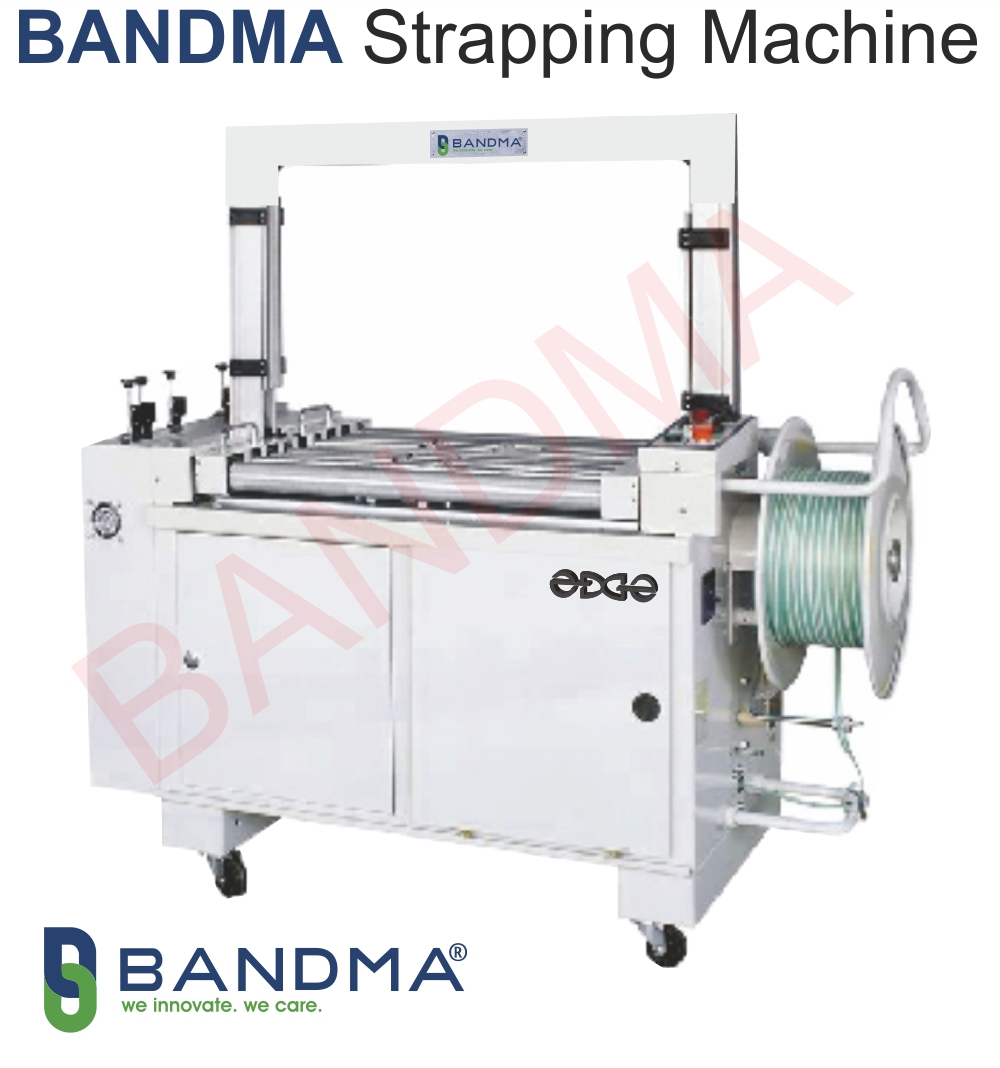
Strapping Machines
Sensors ensure proper strap feed, tension accuracy, and top pusher alignment.
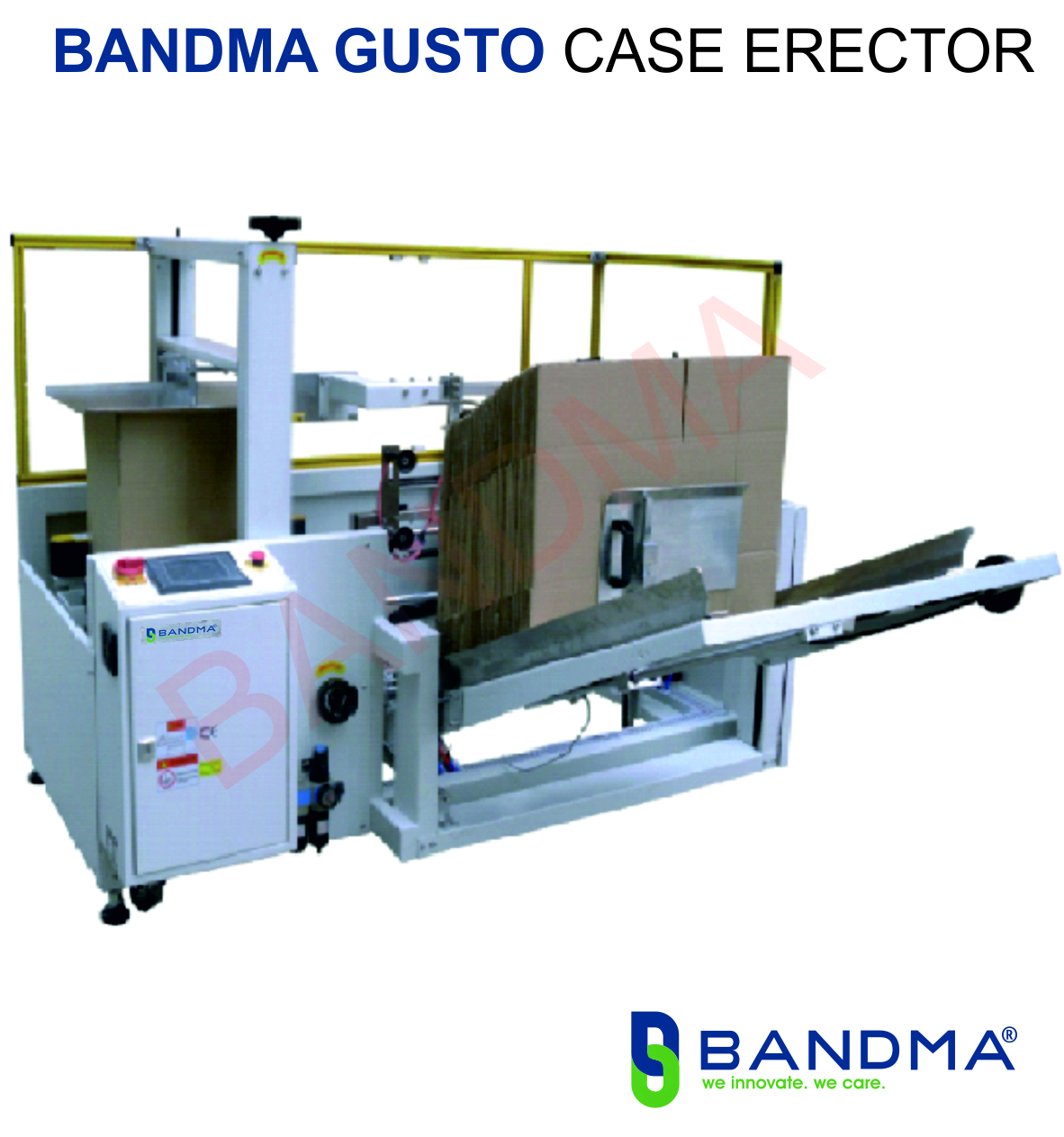
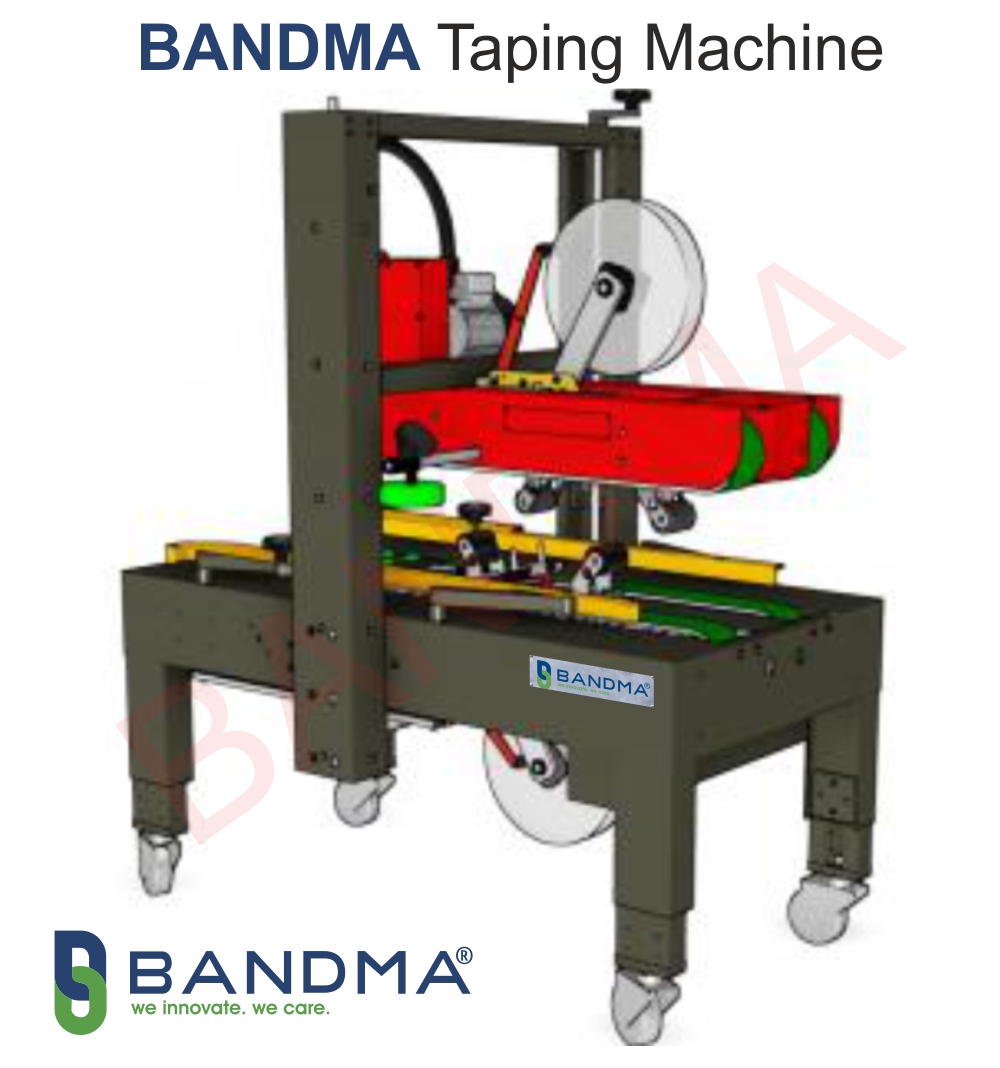
Case Erectors and Sealers
They maintain perfect carton dimensions and sealing accuracy.
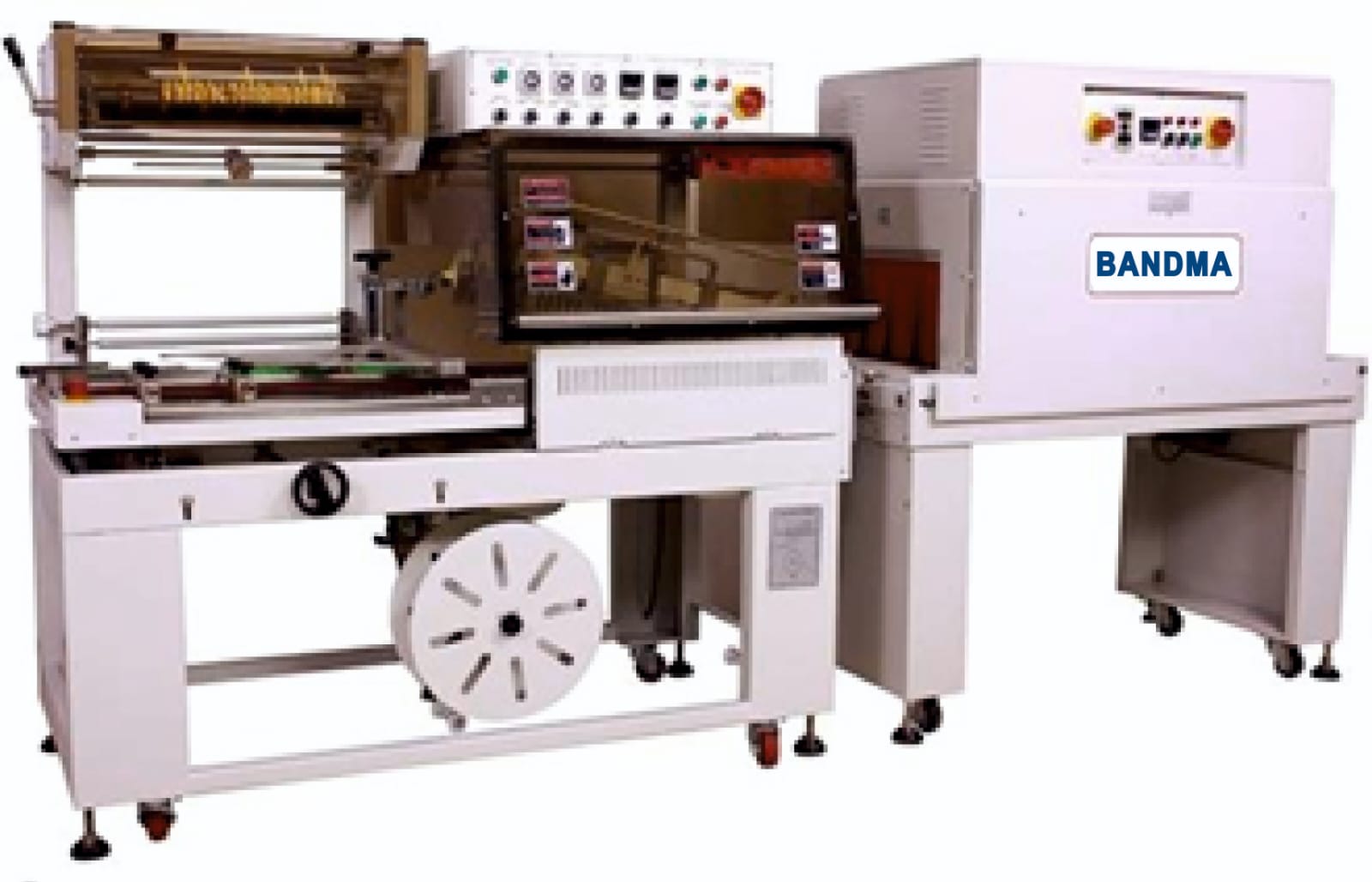
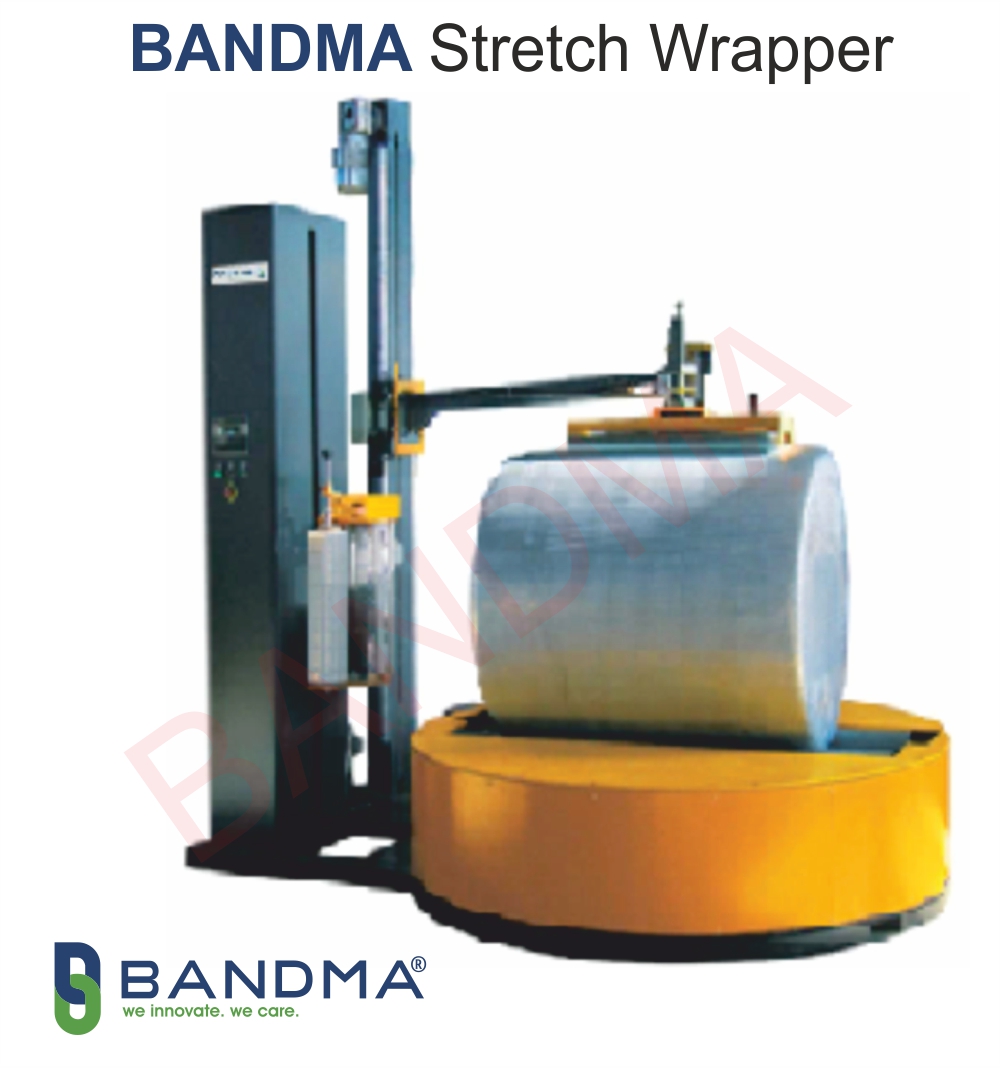
Shrink and Stretch Wrappers
Sensors control film usage, temperature, and wrapping force.
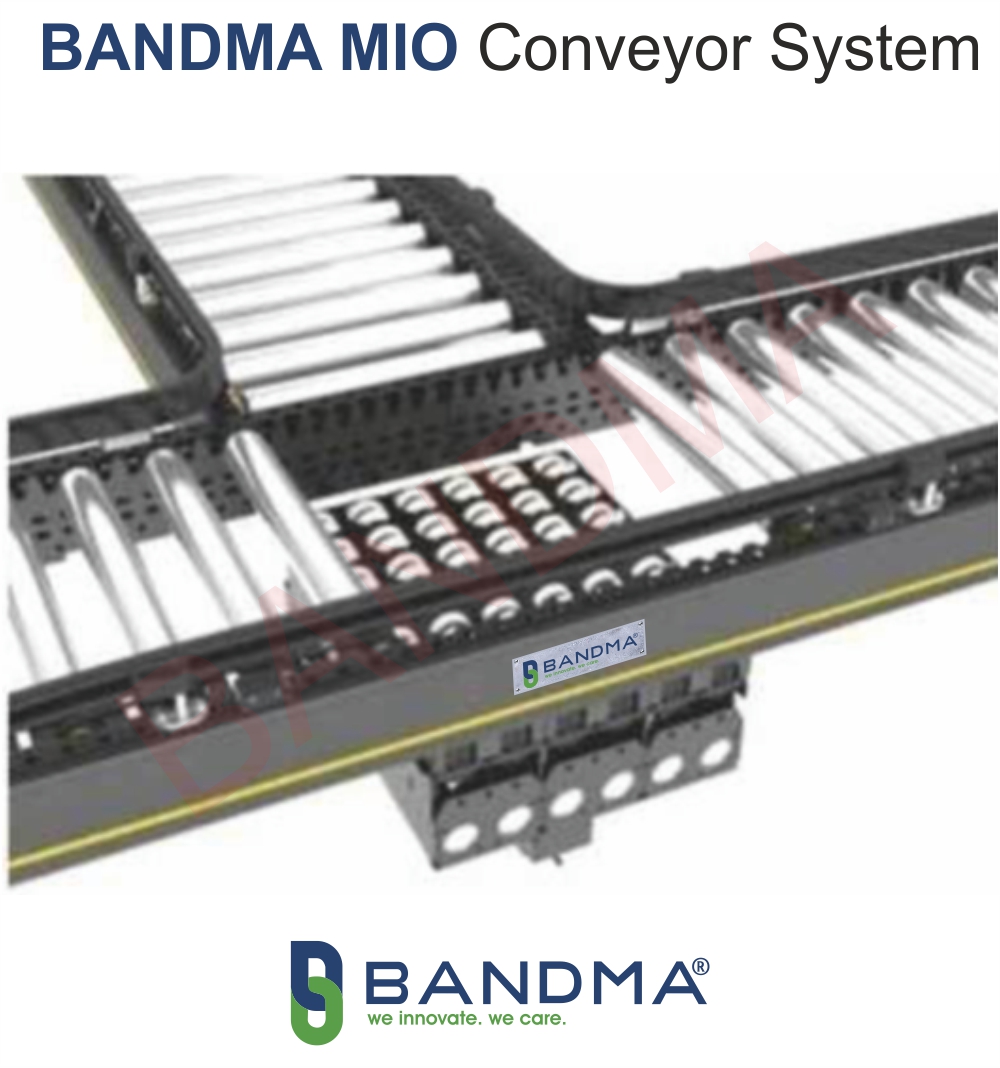
Conveyors
Sensors manage spacing, flow control, and product tracking.
Palletizing Systems
Vision sensors and weight sensors guide stacking precision and pallet stability.
Every segment of a packaging line benefits from sensor-driven intelligence.
Conclusion: The Future of Packaging Is Smart, Accurate, and Self-Adaptive
Smart sensors are not just improving packaging machines—they are redefining how entire packaging lines operate. With real-time monitoring, automatic adjustments, and predictive maintenance, factories can achieve:
- Near-zero packaging errors
- Faster production
- Safer operations
- Lower operating costs
- Higher customer satisfaction
As the demand for precision grows, smart sensors will become the standard for every packaging operation not just an upgrade.