

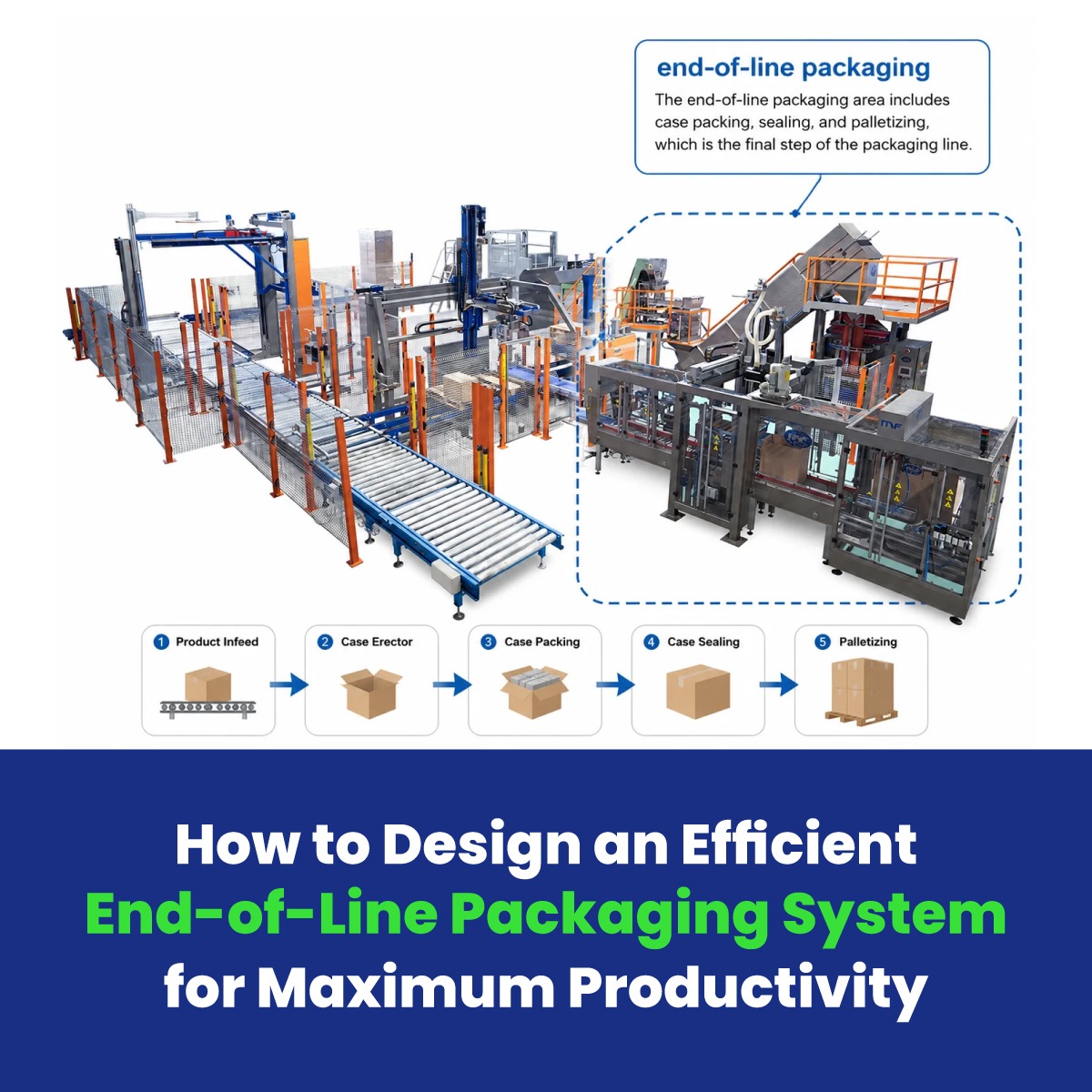
An efficient end-of-line packaging system plays a crucial role in ensuring products are packed, secured, and ready for shipment without delays. While manufacturers often focus on production machinery, the packaging process at the end of the production line is equally important. A poorly planned packaging system can create bottlenecks, increase labour costs, and reduce overall productivity.
Designing an effective end-of-line packaging system requires careful planning based on production requirements, product type, available space, and future business growth. A well-designed system not only improves operational efficiency but also helps reduce packaging costs and maintain consistent product quality.
Understand Your Production Capacity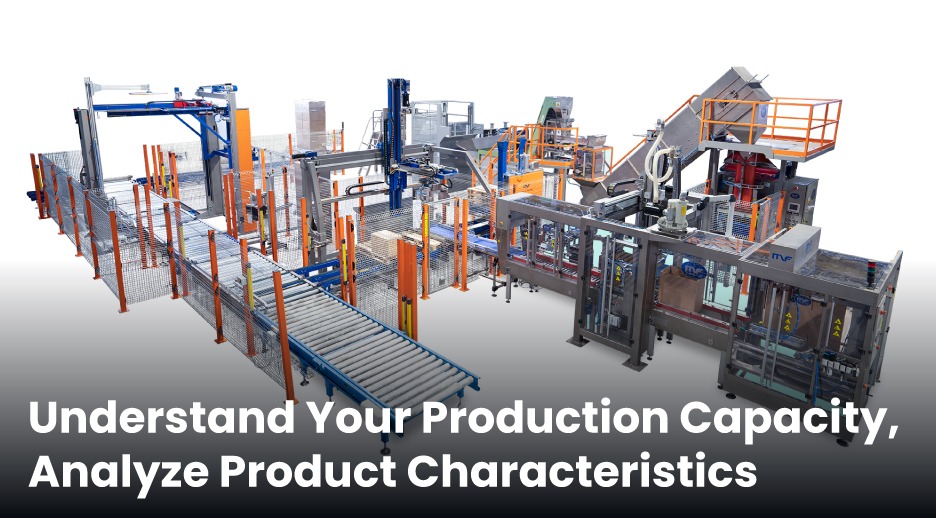
The first step is to evaluate your daily and hourly production volume. Your packaging line should be capable of handling the same output as your production line. If the packaging process is slower than production, products will accumulate, causing delays and reducing efficiency.
Selecting equipment with the right capacity ensures smooth product flow and minimizes downtime during peak production periods.
Analyze Product Characteristics
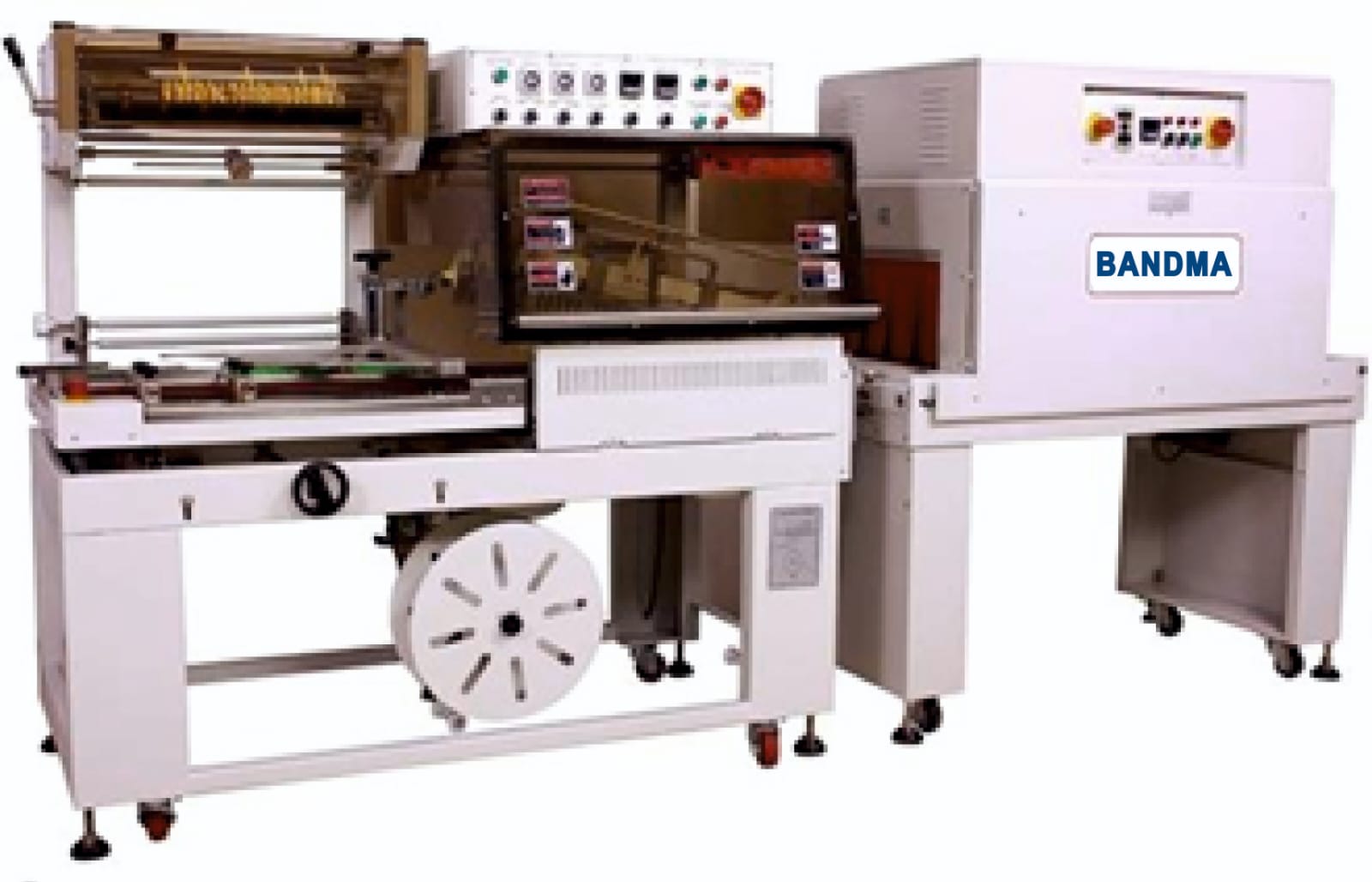
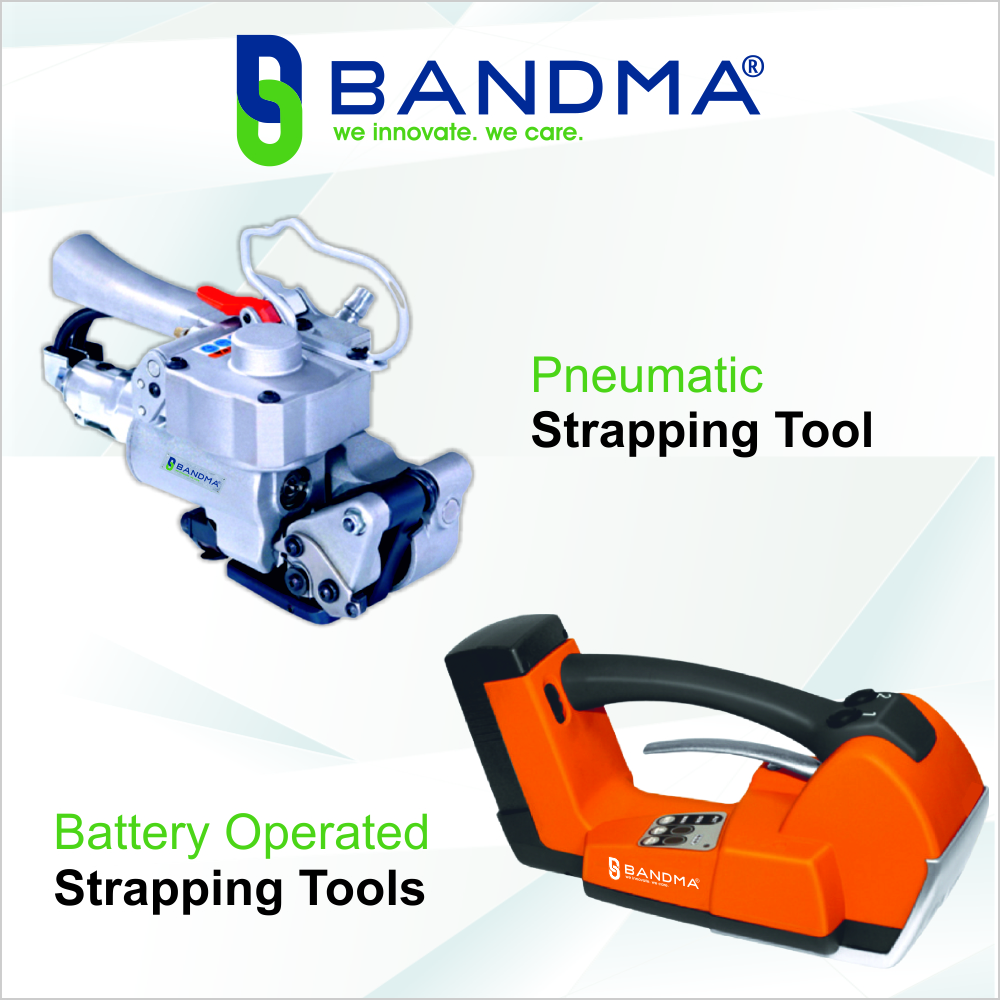
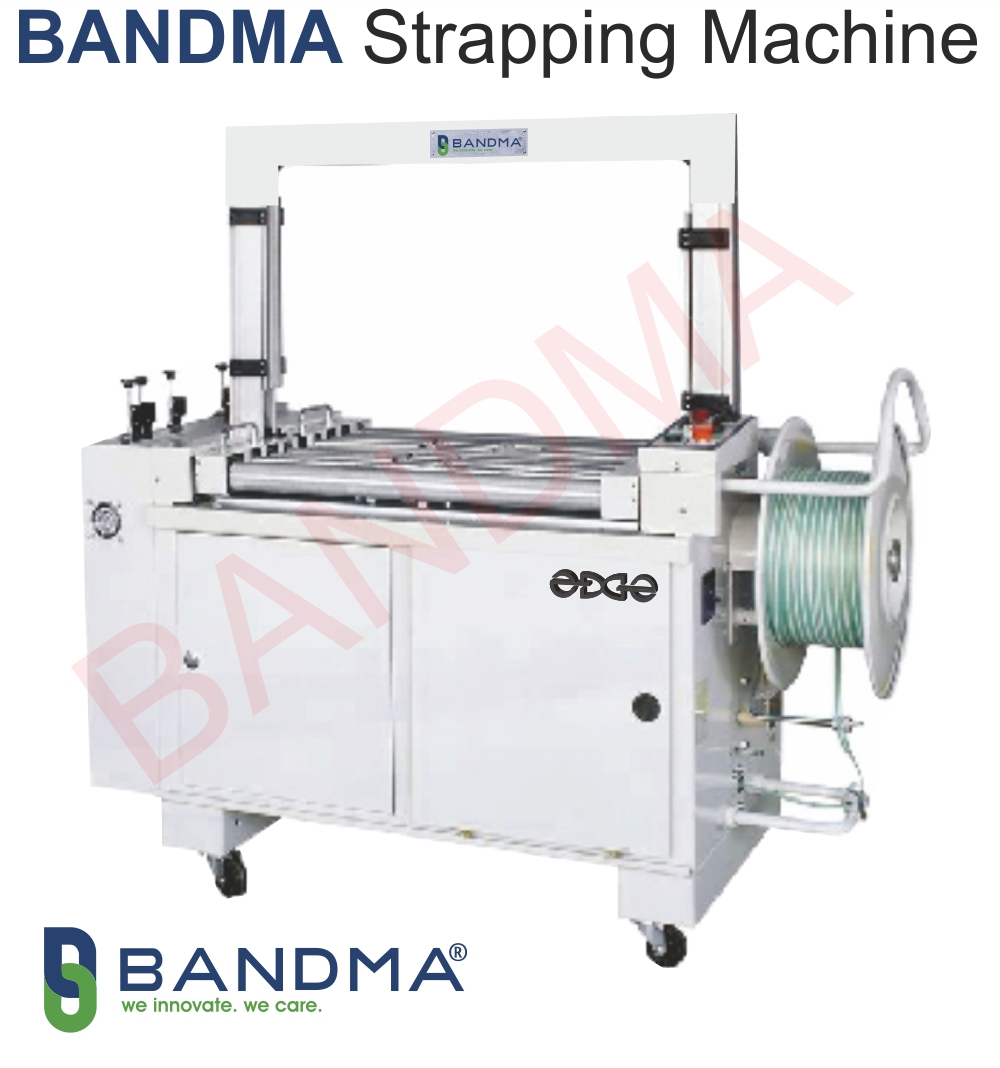
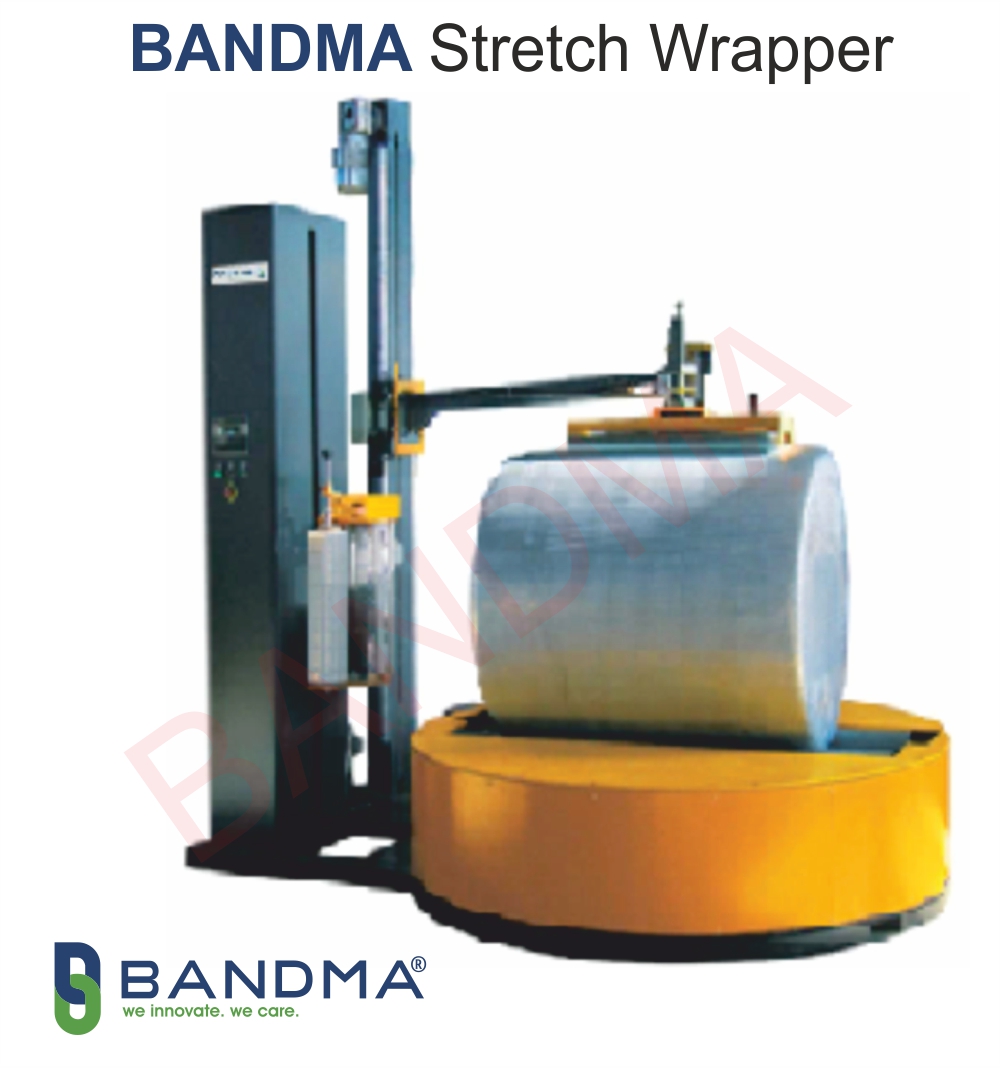
Every product has unique packaging requirements. Factors such as size, weight, shape, and fragility determine the type of packaging equipment needed. For example, heavy cartons may require automatic strapping, while palletized goods often need stretch wrapping for secure transportation.
Understanding these characteristics helps businesses choose equipment that protects products throughout storage and shipping.
Create a Smooth Product Flow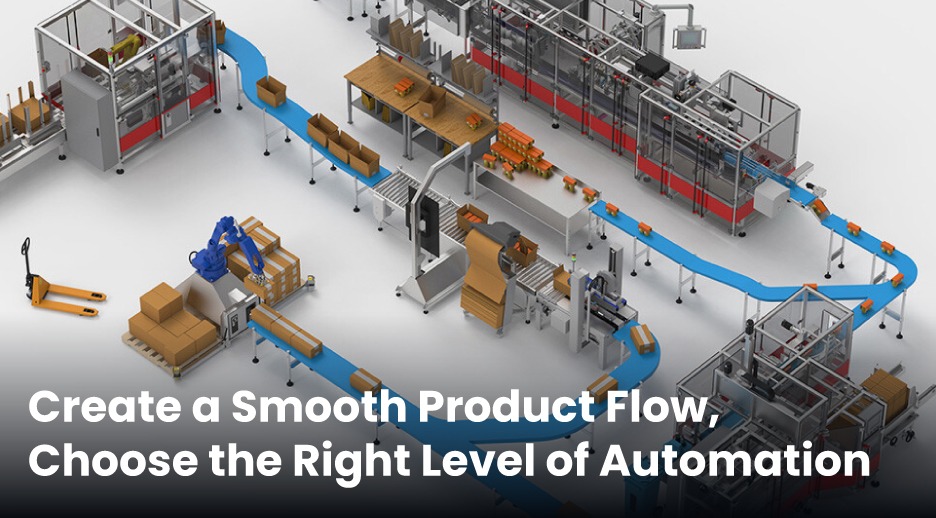
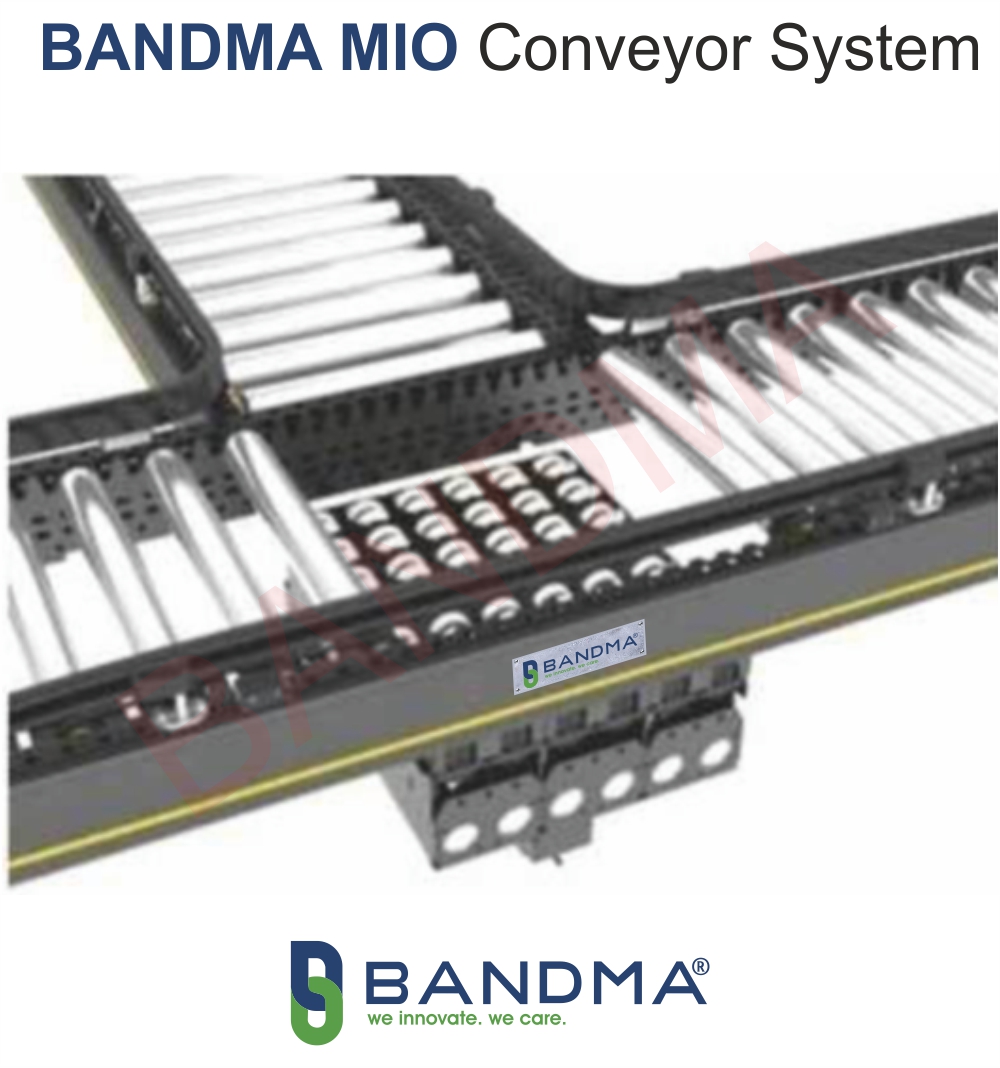
An efficient packaging line should allow products to move continuously from production to dispatch. Conveyors play an important role in connecting different packaging machines and eliminating unnecessary manual handling.
A smooth workflow reduces waiting time, improves production speed, and minimizes the chances of product damage caused by repeated handling.
Choose the Right Level of Automation
Not every business requires a fully automated packaging line. Small and medium-sized manufacturers may benefit from semi-automatic solutions, while high-volume industries often require complete automation.
The ideal system should match current production requirements while offering flexibility for future expansion. Investing in scalable automation helps businesses grow without replacing their entire packaging setup.
Reduce Manual Handling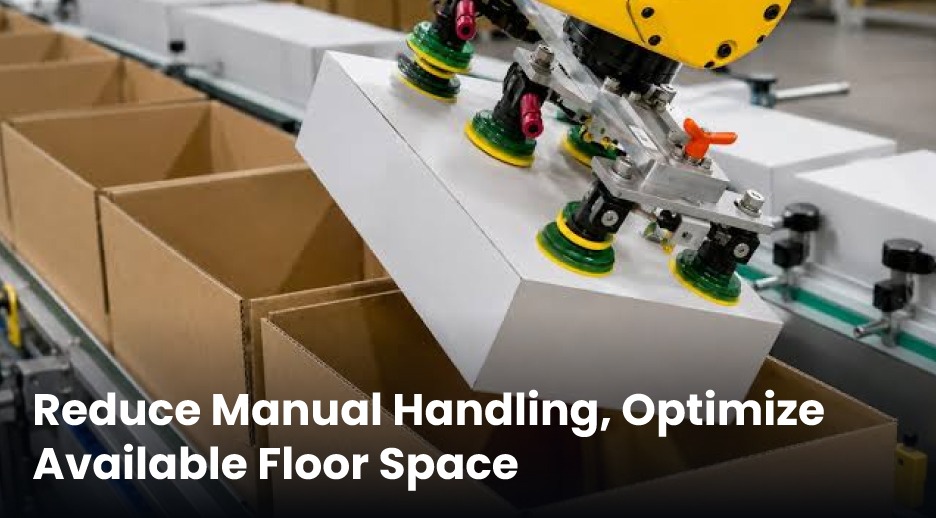
Manual handling increases labour costs and creates opportunities for packaging errors. Employees may become fatigued during repetitive tasks, affecting both productivity and packaging consistency.
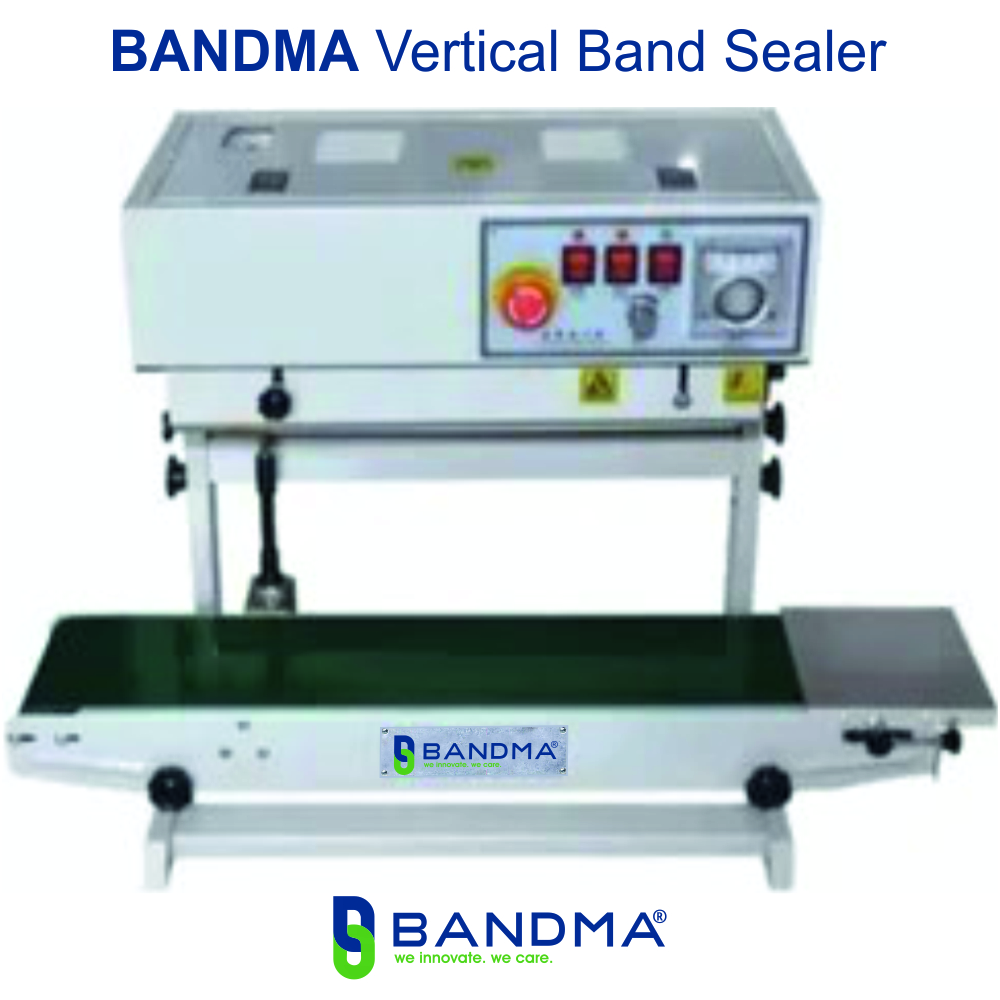
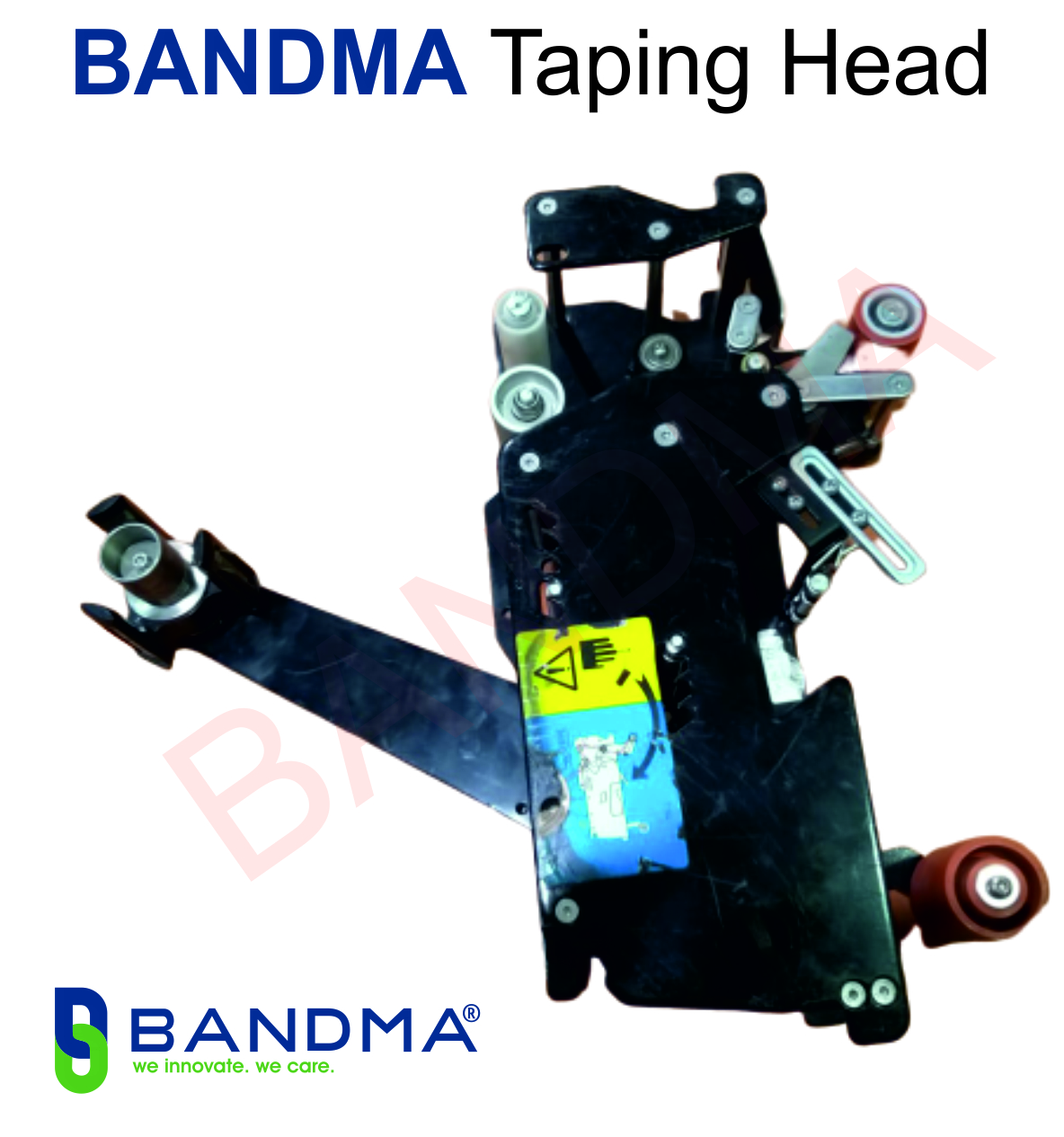
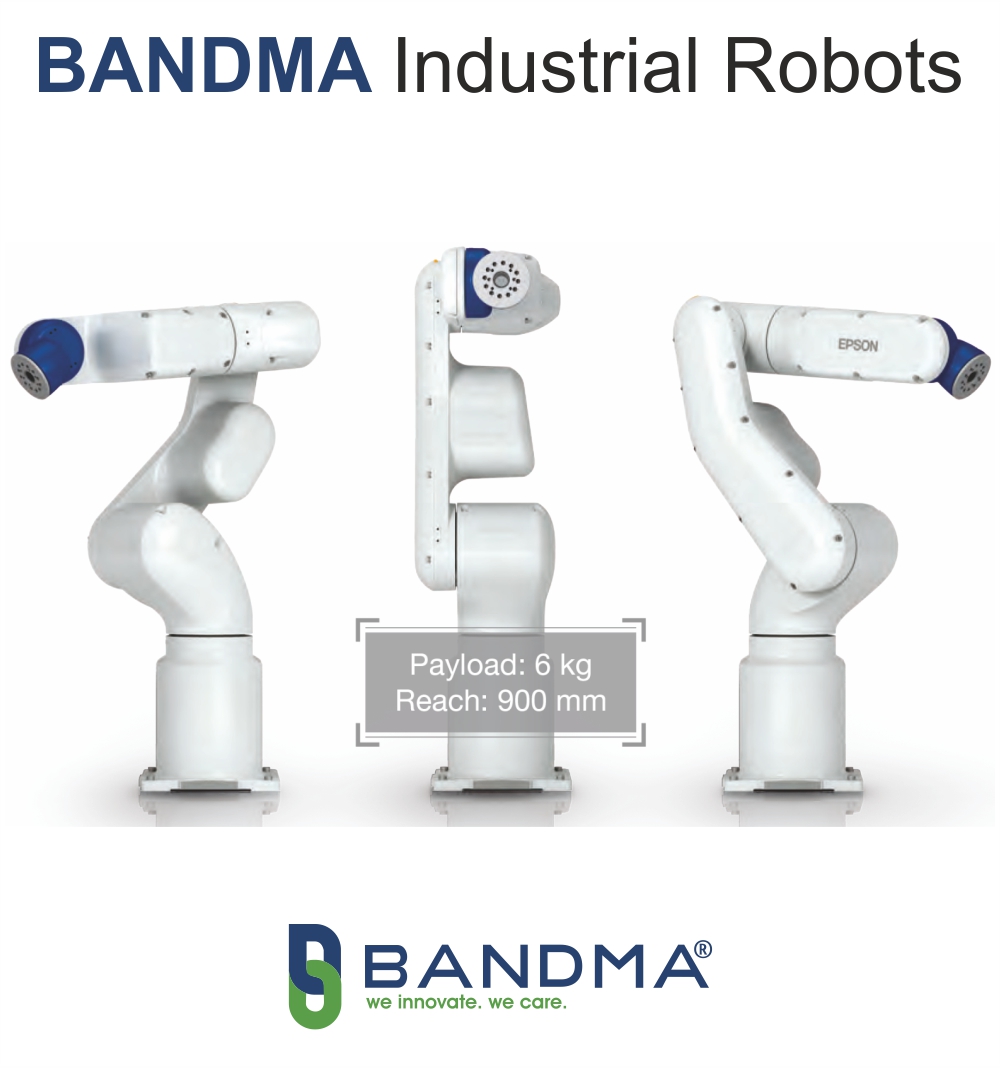
Automating processes such as carton sealing, strapping, pallet wrapping, and product movement helps reduce physical effort while improving packaging accuracy and workplace safety.
Optimize Available Floor Space
Factory space is a valuable resource. A well-planned packaging layout should maximize productivity without occupying unnecessary floor area.
Equipment should be positioned strategically to allow easy movement of products, operators, and maintenance personnel. Proper spacing also simplifies cleaning, servicing, and future upgrades.
Focus on Packaging Quality
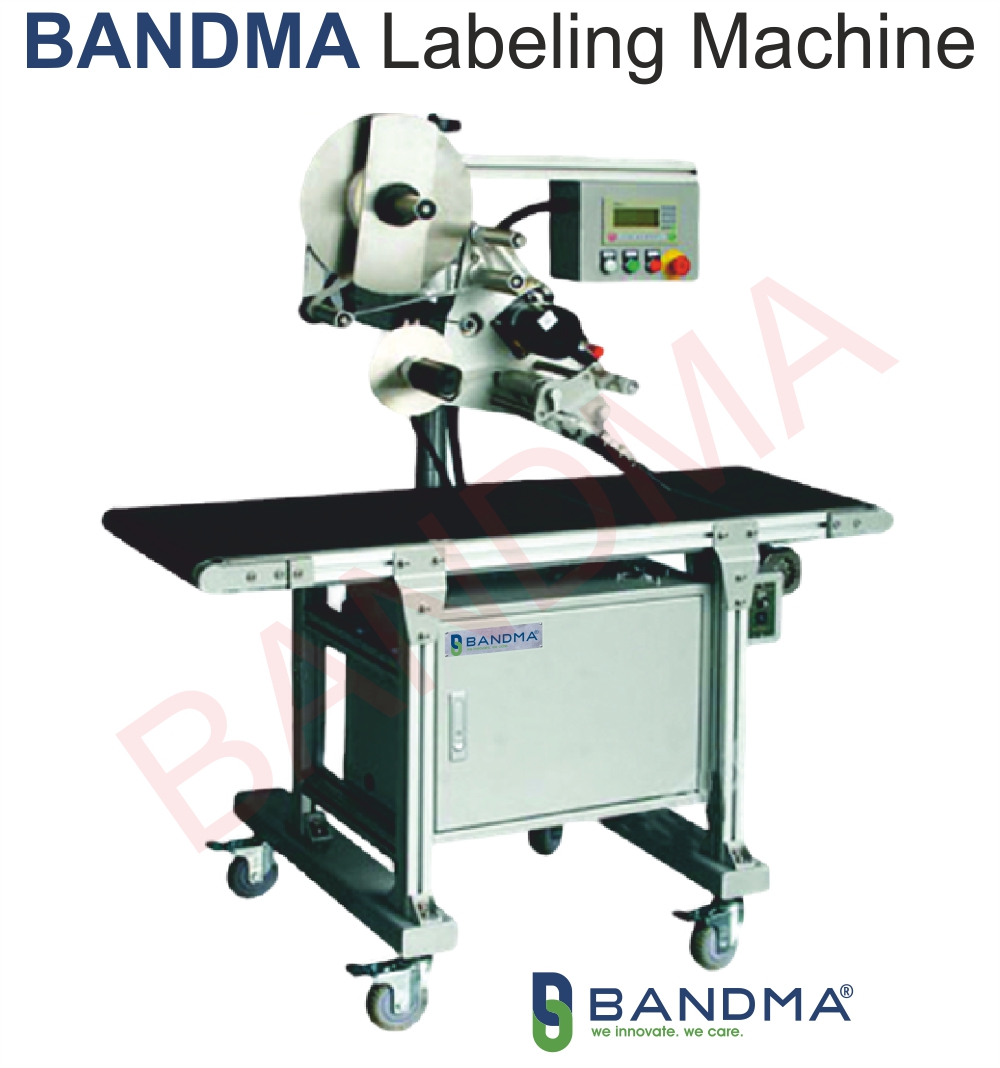
A packaging system should not only be fast but also maintain consistent packaging quality. Proper carton sealing, accurate strapping tension, and secure pallet wrapping reduce the risk of damage during transportation.
Consistent packaging enhances product protection, improves customer satisfaction, and strengthens your company's professional image.
Plan for Future Business Growth
Production demands often increase as businesses expand. Designing a packaging line that can accommodate higher volumes prevents costly modifications later.
Choosing equipment that supports additional conveyors, automation upgrades, or higher production speeds allows manufacturers to adapt to changing market requirements more efficiently.
Prioritize Maintenance and Reliability
Reliable equipment keeps production running smoothly. Regular preventive maintenance helps reduce unexpected breakdowns and extends machine life.
Selecting packaging machines known for durability, easy maintenance, and readily available spare parts can significantly improve long-term operational performance.
Improve Overall Operational Efficiency
An efficient end-of-line packaging system combines production, packaging, and dispatch into one continuous workflow. This reduces delays, improves productivity, lowers operating costs, and ensures products reach customers safely.
Businesses that invest in proper packaging line design often experience faster order fulfillment, better resource utilization, and higher customer satisfaction.
Conclusion
A well-designed end-of-line packaging system is essential for achieving maximum productivity in modern manufacturing. By understanding production capacity, selecting suitable automation, optimizing product flow, reducing manual handling, and planning for future growth, businesses can create a packaging process that is both efficient and cost-effective.
Investing in the right packaging system is more than improving operations—it is a long-term strategy for increasing productivity, reducing costs, and delivering consistent quality to customers.