



Palletizing has always been an essential part of warehousing and production. Whether it’s FMCG, food and beverage, chemicals, logistics, electronics, or e-commerce—every industry needs to move products safely from the production line to shipping. For years, this job was done manually or with basic mechanical setups. But today, modern factories are shifting toward robotic palletizing systems that promise speed, consistency, and lower errors.
So, what really changes when you move from conventional palletizing to robotic palletizing? And which one makes more sense for your plant? This blog breaks it down in a simple, practical way.
What Is Conventional Palletizing?
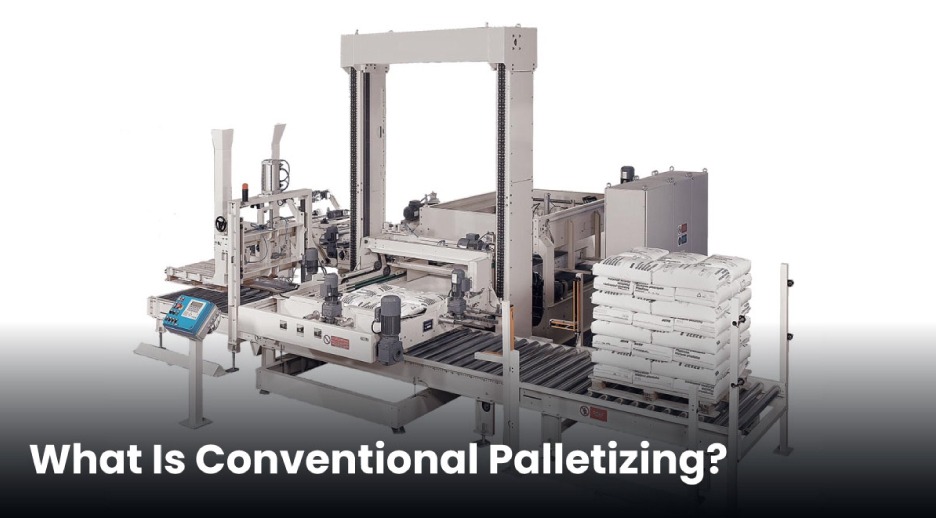
Conventional palletizing includes manual labor or semi-mechanized systems where workers lift, stack, and arrange cartons or bags onto pallets. In some setups, conveyors feed products to workers, but stacking is still done by hand or with very basic tools.
This method has been around for decades because it’s simple to set up and requires minimal technology. But as production volumes increase, its limitations become very clear.
Pros of Conventional Palletizing
- Lower initial investment
- Easy to operate
- Flexible for different product types
Useful for low production or seasonal volumes
Cons of Conventional Palletizing
- Slower output
- Dependent on labor availability
- Higher risk of injury and fatigue
- Inconsistent stacking
- More space required
- Not ideal for high-volume operations
If your production varies a lot, or you handle small batches, conventional palletizing still works—but it struggles when the line gets busy.
What Is Robotic Palletizing?
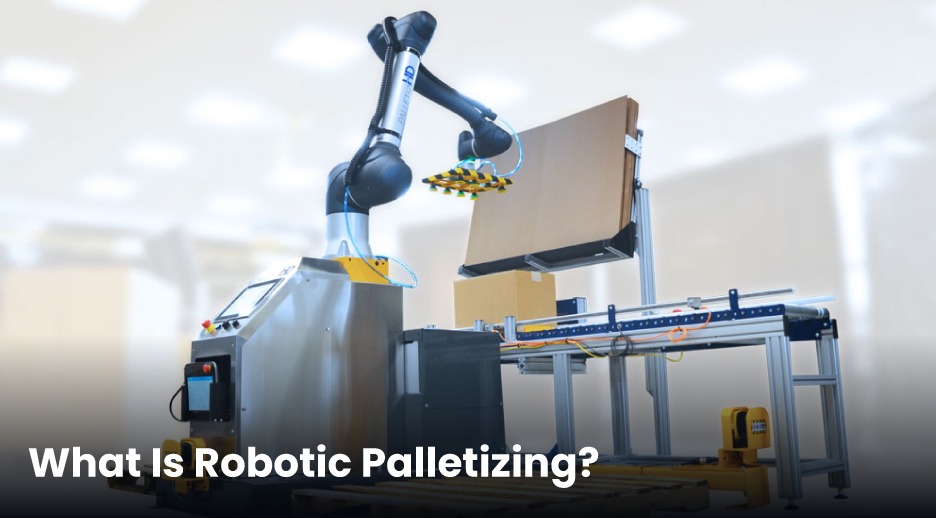
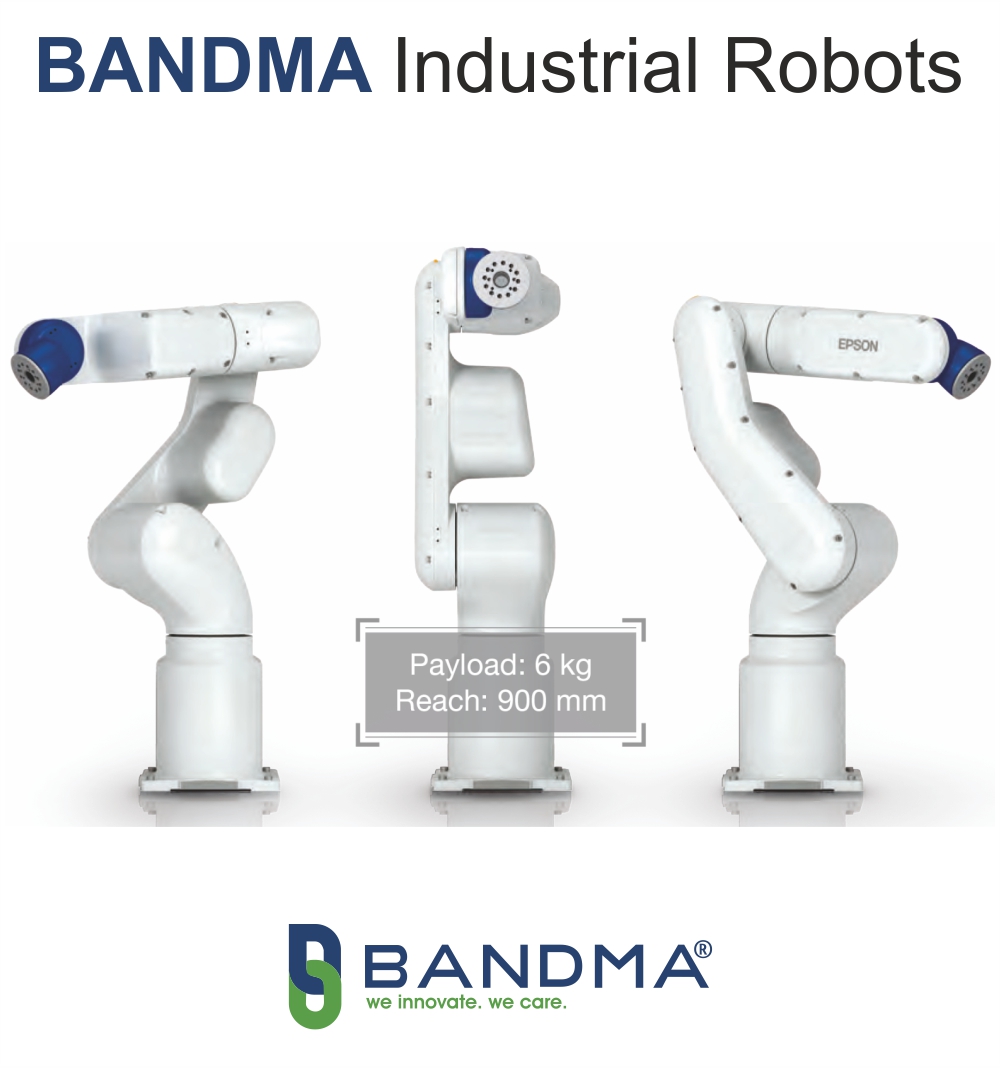
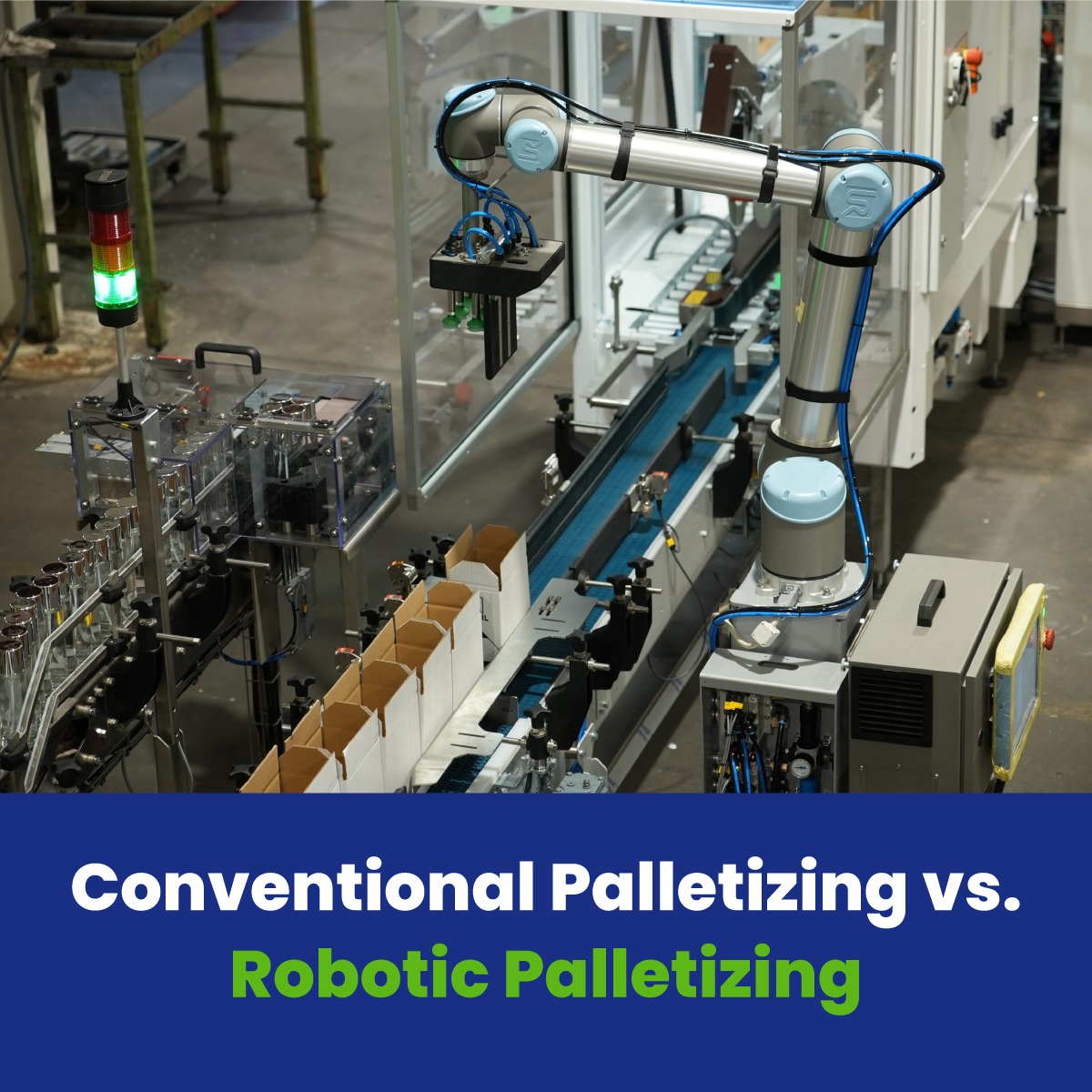
Robotic palletizing uses an industrial robot equipped with grippers, sensors, and pre-programmed patterns to stack cartons, bags, or containers automatically. These systems are designed to work continuously, with minimal human involvement.
Modern robotic palletizers handle multiple products, adapt to different pallet patterns, and maintain speed even when product dimensions vary.
Pros of Robotic Palletizing
- High speed and consistent output
- Reduces labor dependency
- Improves worker safety
- Handles heavy or repetitive loads effortlessly
- Works 24/7 without performance drop
- Precise stacking and stable pallet loads
- Smaller footprint compared to manual setups
- Lower long-term operational cost
Cons of Robotic Palletizing
- Higher initial investment
- Requires training for operators
- Needs proper maintenance planning
For companies with growing volumes, robotic palletizing becomes the most efficient and future-ready solution.
Key Differences: Conventional vs. Robotic Palletizing
1. Speed
Conventional palletizing speed depends entirely on the workforce. Fatigue slows output throughout a shift.
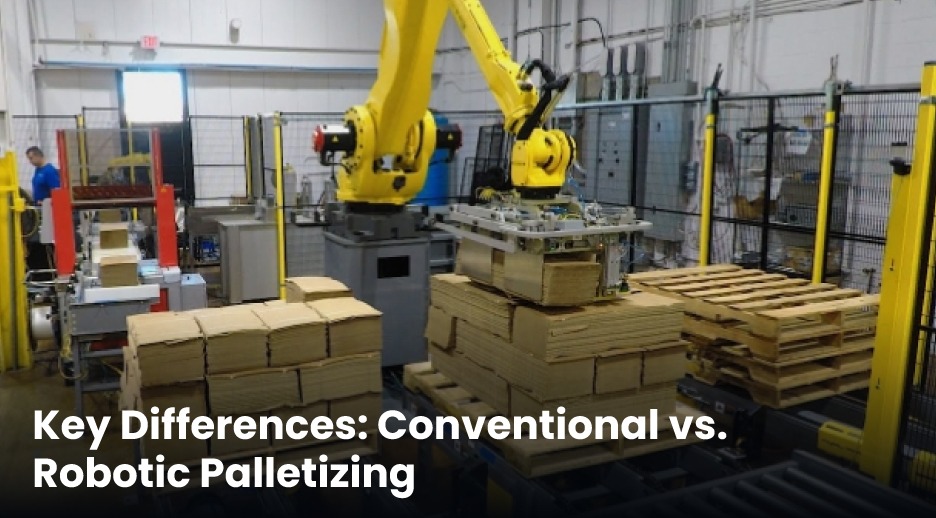
Robotic palletizing delivers consistent cycles—day, night, peak season, or low season. A robotic arm does the same job in less than half the time with zero performance drop.
2. Labor Dependency
Manual palletizing requires multiple workers per shift. Any absenteeism or shortage directly slows production.
A robotic palletizer only needs one operator to monitor the system. This reduces labor cost, eliminates injury risks, and stabilizes production planning.
3. Consistency and Accuracy
Humans cannot maintain identical stacking quality across hundreds of pallets.
Robotic palletizers follow pre-programmed patterns, ensuring every pallet is perfectly aligned, tightly stacked, and transport-safe.
4. Product Handling
Heavy cartons, fragile items, slippery bags, or mixed product sizes are tough to manage manually.
Robotic palletizers use customized grippers and sensors, making them suitable for almost any package type.
5. Floor Space
Manual palletizing usually needs more space because of worker movement, staging areas, and safety zones.
Robotic systems are compact and designed to fit even in tight production areas.
6. Long-Term Cost
- Even though robots cost more upfront, they offer:
- Lower labor expenses
- Fewer errors
- Less product damage
- Higher productivity
This leads to a strong ROI within a few months to a couple of years.
Which Option Is Right for Your Facility?
Choose Conventional Palletizing If:
- Your volumes are low
- You have frequent product changes
- You want the lowest upfront investment
- You rely on semi-manual processes
Choose Robotic Palletizing If:
- Your production is growing
- You want 24/7 reliability
- You face labor shortages
- You need consistent pallet quality
- You want to reduce long-term costs
- You handle heavy, repetitive tasks
Most modern factories today choose robotic palletizing because it supports automation goals, reduces operational risk, and prepares the plant for future demand.
Conclusion
Both conventional and robotic palletizing methods have their place—but the demands of modern manufacturing are pushing more units toward robotic systems. Robots deliver speed, safety, and consistency that manual or semi-manual setups simply can’t match. And as production lines continue to get faster, robotic palletizing becomes a smart, long-term investment rather than just an upgrade.