
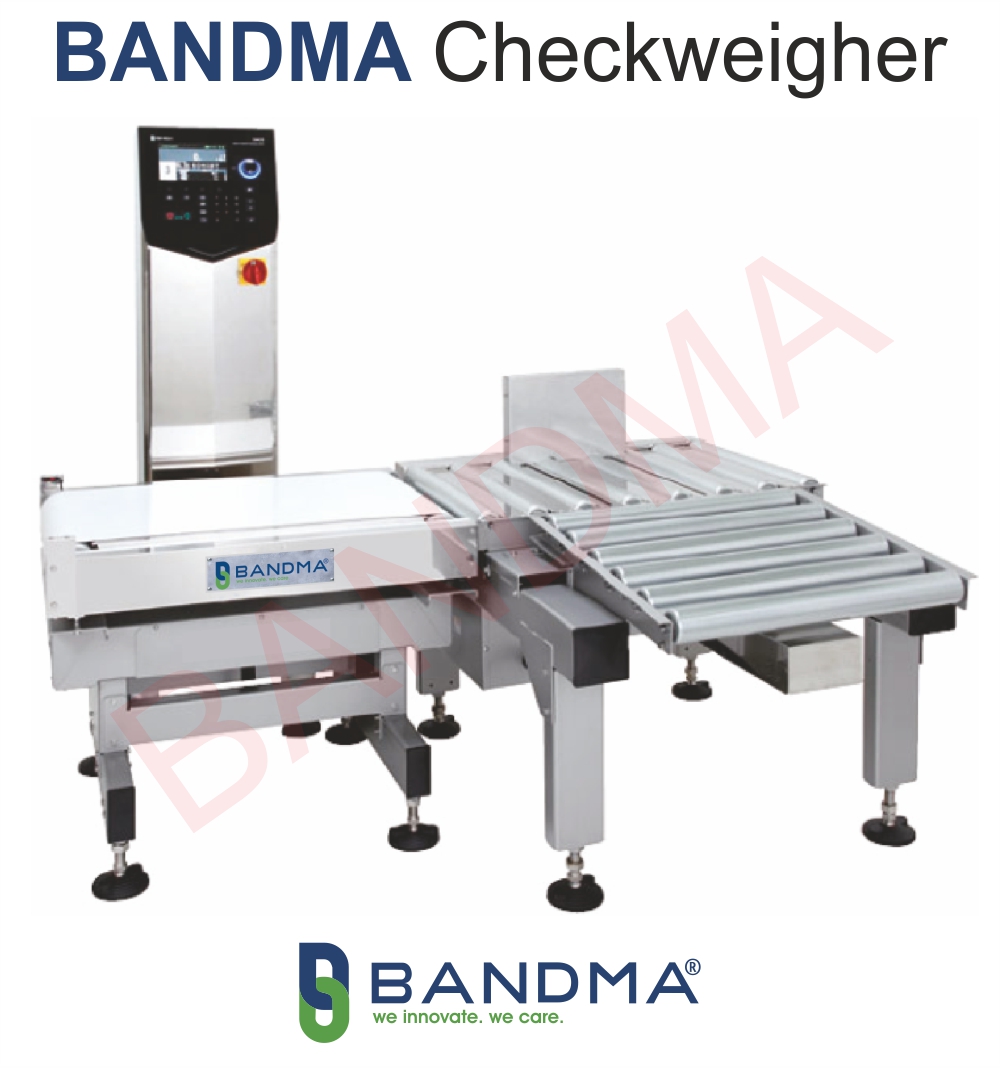

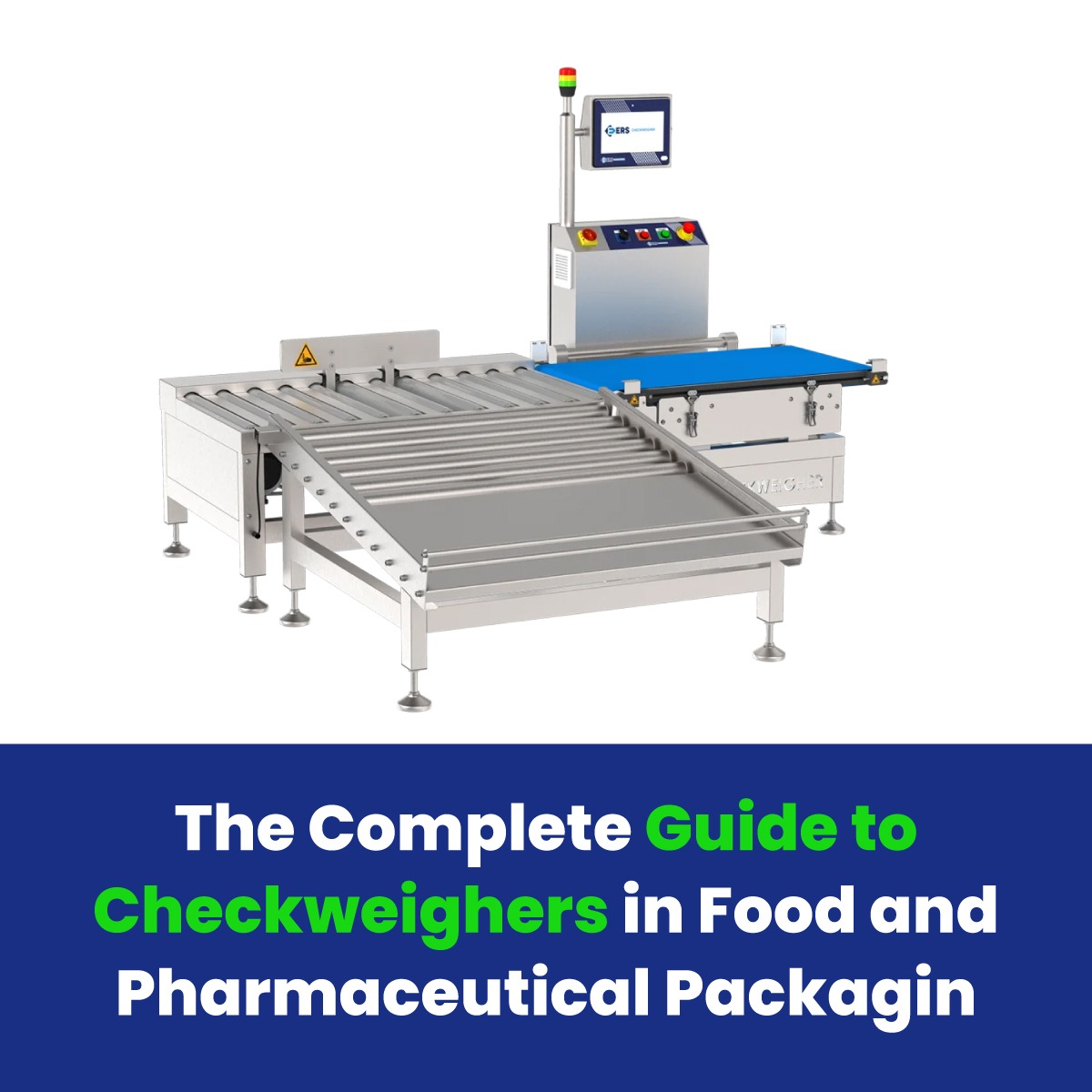
A checkweigher does one thing: it weighs every single product that passes over it, at line speed, and rejects anything outside a pre-set weight range. That sounds simple. But the downstream consequences of getting it right — or wrong — are enormous.
This guide is for production managers and packaging engineers in food, pharma, and consumer goods who want to understand checkweighers before specifying one.
Why Weight Matters So Much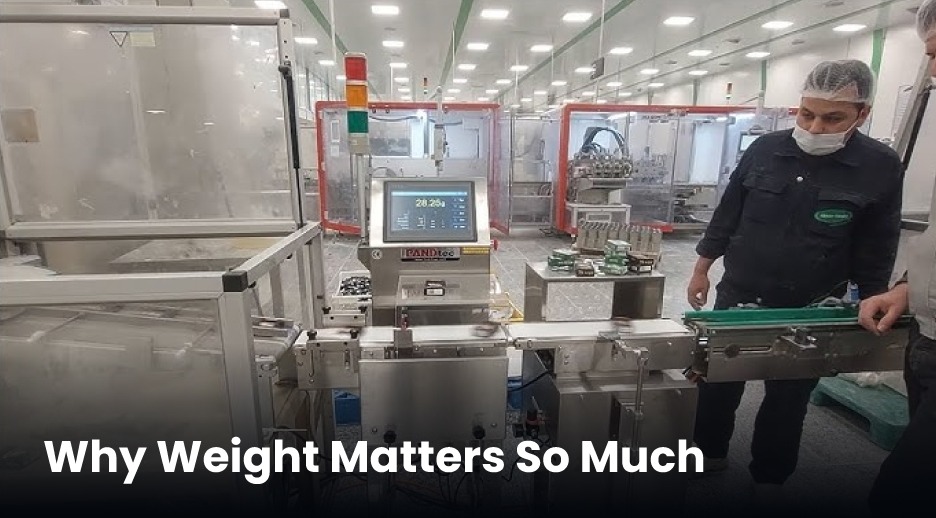
In food manufacturing, the net weight printed on a pack is a legal declaration. Short-weight packs expose the company to regulatory action, fines, and reputational damage. Over-weight packs mean product giveaway — essentially giving away raw material and packaging cost with every unit shipped.
In pharmaceuticals, incorrect tablet counts or capsule weights are a patient safety issue. Regulatory bodies including the FDA and BIS require documented weight verification for most dosage forms.
A checkweigher solves both problems simultaneously: it catches short-fills before they leave the site and it flags over-fills so they can be corrected at the filler.
How an Inline Checkweigher Works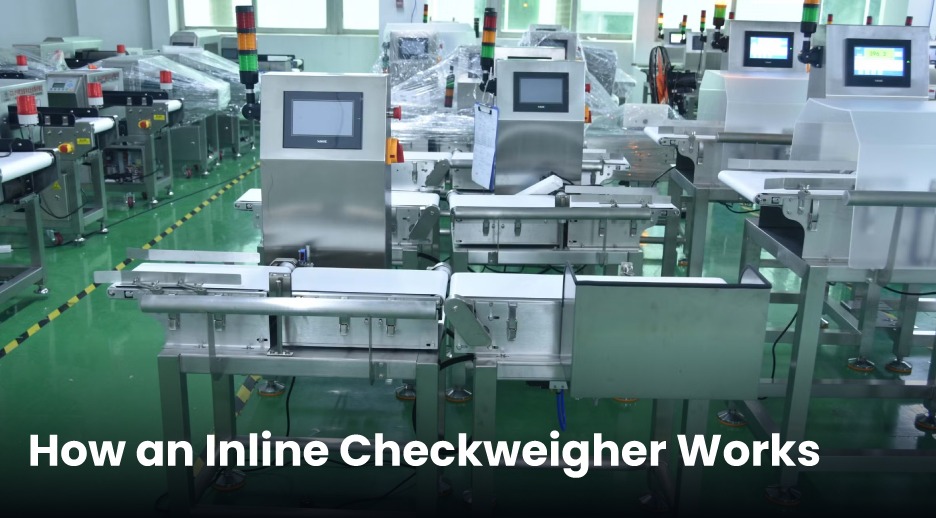
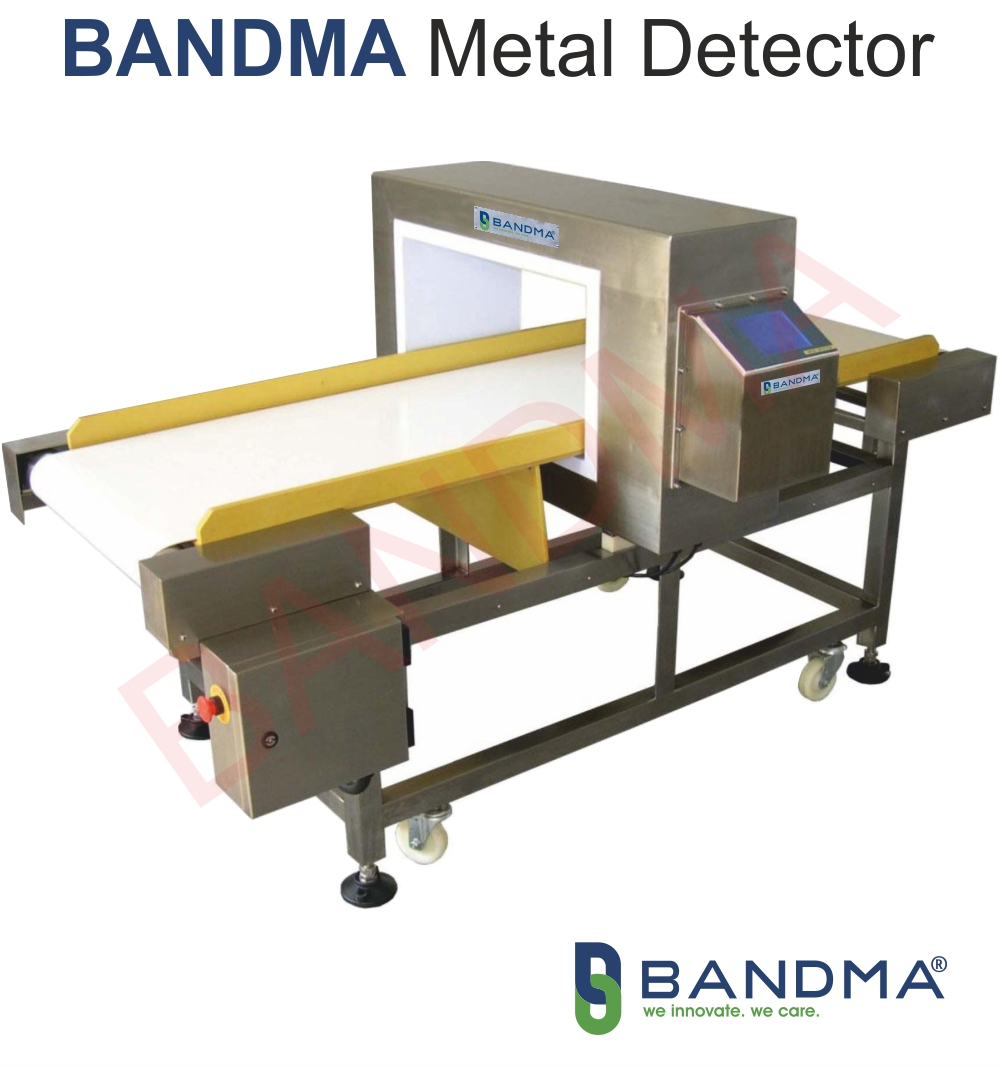
Products travel along a conveyor and pass over a weigh belt — a short, isolated section of belt sitting on a precision load cell. The load cell measures the weight in milliseconds as the product crosses. The measured weight is compared to the target weight and the programmed upper and lower tolerance limits.
If the weight is within limits, the product continues downstream. If it is outside limits, a rejection mechanism — typically an air blast, a pusher, or a flap — removes it from the line before it can be packed into a case.
All weight data is logged, creating a full production record that supports quality audits and regulatory inspections.
Key Specifications to Understand
• Weighing range: Expressed as minimum and maximum weight. Ensure the machine's range covers your lightest and heaviest products with margin to spare.
• Accuracy (division): Expressed as ±X grams. Food-grade checkweighers typically achieve ±0.5g to ±2g depending on line speed and product weight.
• Speed: Measured in packs per minute. High-speed lines may require machines capable of 200+ packs/minute.
• IP rating: IP65 or IP66 is required for wet or washdown environments. Pharmaceutical lines often require IP69K for aggressive cleaning protocols.
• Integration: Does the machine communicate weight data to the line's MES or ERP? OPC-UA and Ethernet interfaces are now standard on modern checkweighers.
• Rejection mechanism: Air blast is fastest and works for lightweight packs; pushers and flaps are more positive for heavier or irregular products.
Checkweigher vs Filling Machine: Whose Job Is It?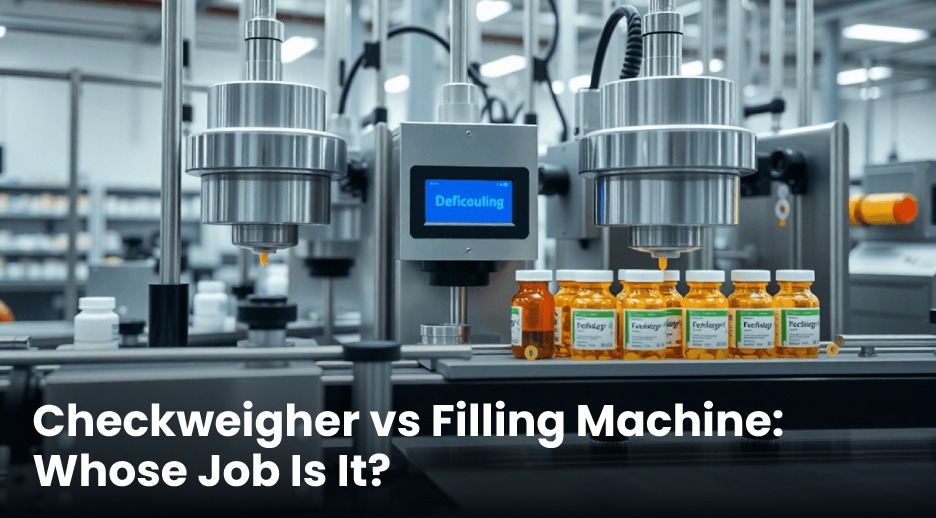
A common misconception is that a precise filling machine eliminates the need for a checkweigher. It does not. Filling machines can drift over time as components wear, temperature changes, or product density varies. The checkweigher is the quality gate — it measures the actual outcome, not the intended fill.
In practice, the checkweigher feeds statistical data back to the filler operator (or directly to the filler control system), allowing the fill level to be corrected before giveaway accumulates.
Regulatory Requirements in India
Under the Legal Metrology Act and BIS standards applicable to packaged commodities, net weight declarations must meet prescribed error limits. Checkweigher data provides the documented evidence that these limits are consistently met — essential for BIS certification audits and for export documentation.
Pharmaceutical manufacturers operating under Schedule M of the Drugs and Cosmetics Act are additionally required to maintain batch records that include weight verification data. An inline checkweigher with data logging automates this requirement.
Where to Position a Checkweigher on the Line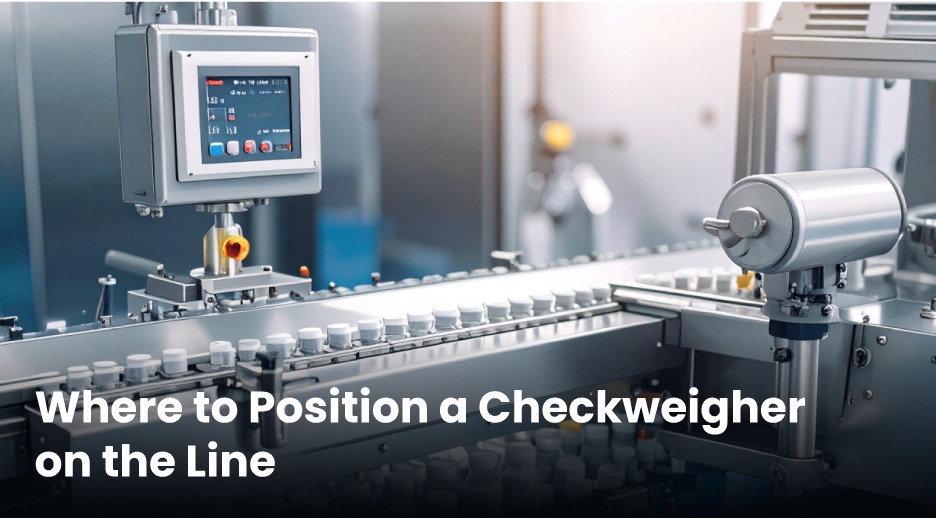
The most effective position is immediately after the filling or portioning operation and before the case packer or labeller. This catches fill errors at their source. A second checkweigher after the case packer verifies the complete case weight — catching missed units or mispacks before palletisation.
Bandma supplies checkweighers configured for food, pharma, and industrial applications. Speak to our team to specify the right model for your line.