

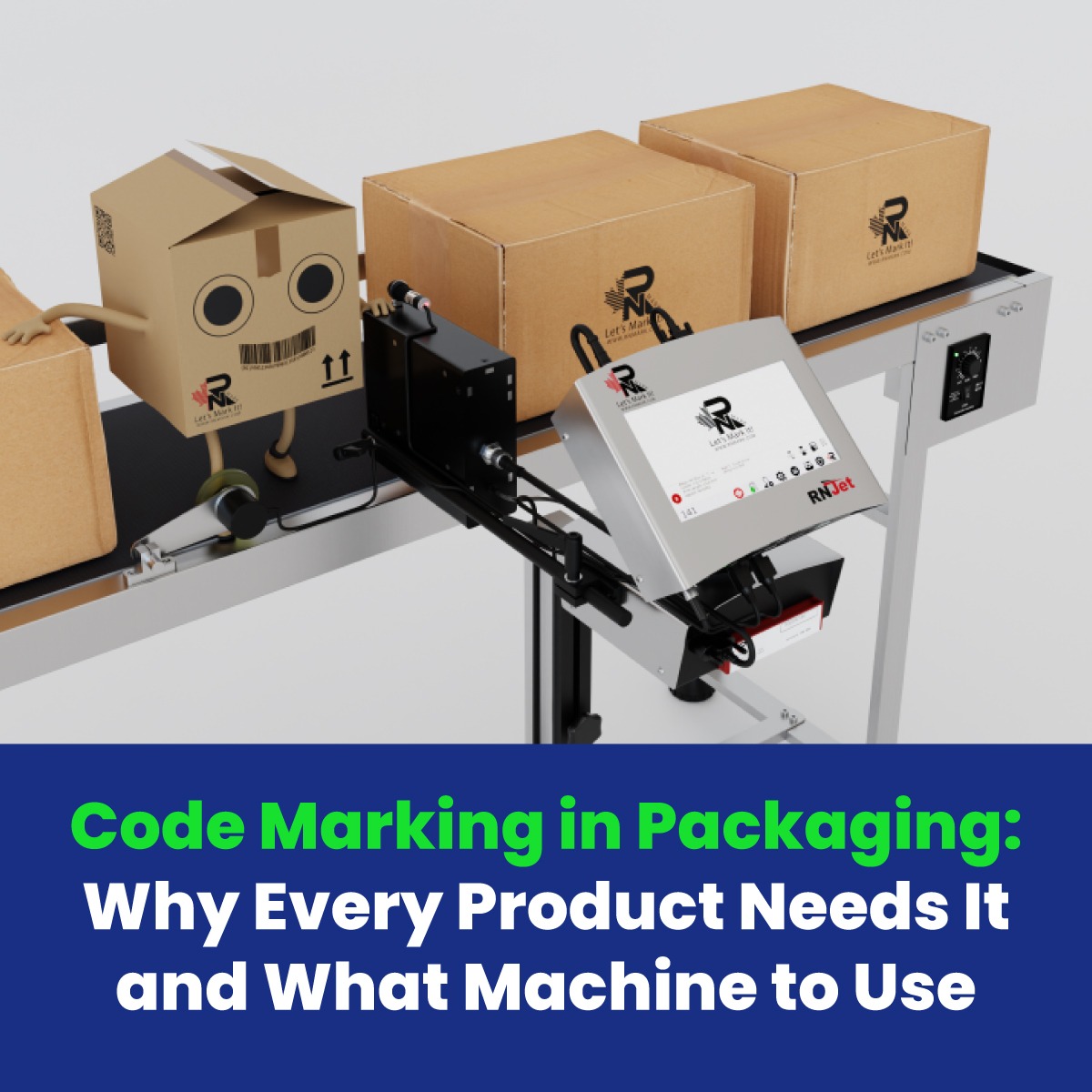
Every product that leaves a packaging line in India carries printed information that is legally required to be there. Manufacturing date. Expiry date. Batch number. MRP. FSSAI licence number. In many categories, a barcode or QR code links the pack to a national product registry.
This information has to be applied to the pack accurately, durably, and fast enough to keep pace with the line. That is what a code marking machine does, and it is a non-negotiable part of any packaging line serving regulated markets.
What Code Marking Covers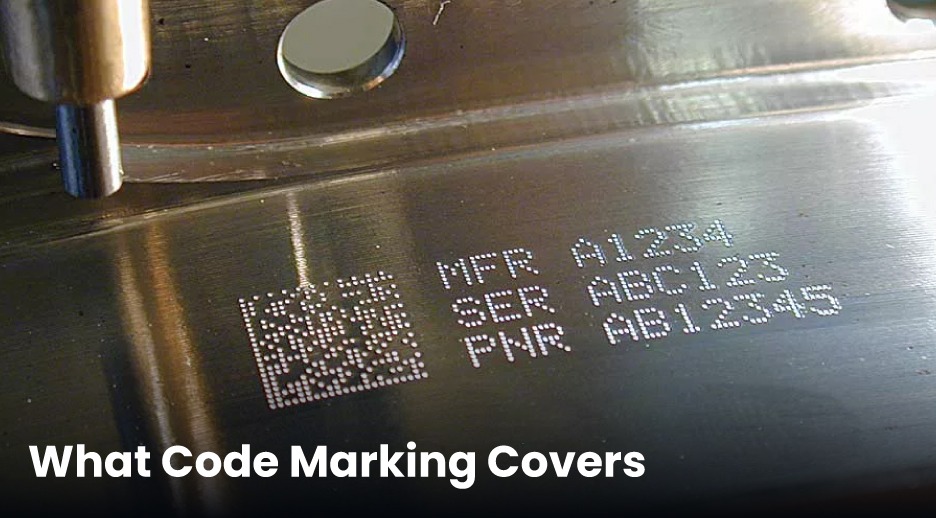
Code marking is the umbrella term for any machine that prints variable information that changes by batch, by date, or by product directly onto primary or secondary packaging. It includes the manufacturing date printed on a biscuit wrapper, the batch number on a pharmaceutical blister, the price sticker on a beverage can, and the shipping barcode on a carton.
What distinguishes code marking from label printing is that the information is applied in-line, at production speed, without stopping the line. Labels are pre-printed; code marks are printed in real time.
Types of Code Marking Machines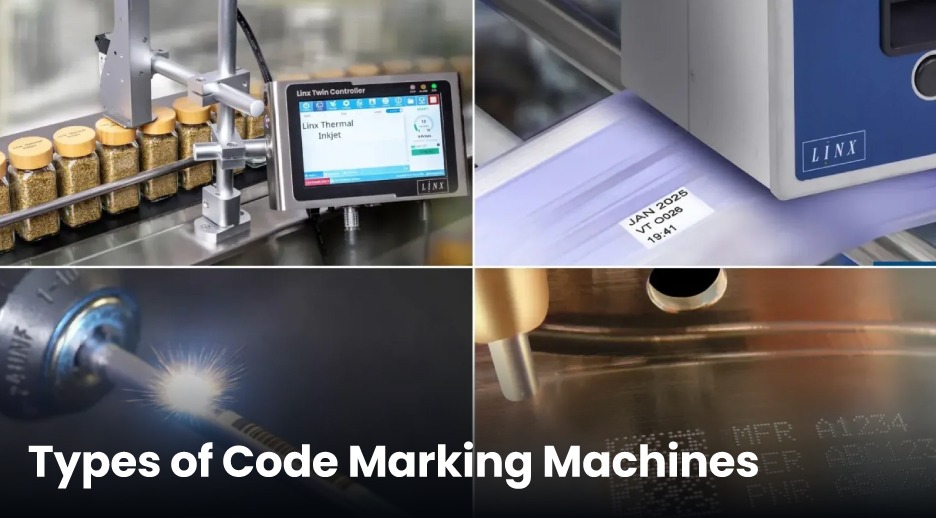
Continuous Inkjet (CIJ) printers are the most widely used type for primary packaging. They print at high speed on almost any surface, such as plastic film, glass, metal, or coated carton, without contact. Typical applications include date and batch codes on FMCG packs. They are fast, flexible, and the consumable cost (ink and solvent) is low per print.
Thermal Inkjet (TIJ) printers use a disposable ink cartridge and print on porous surfaces such as corrugated carton and uncoated paper. They are lower cost to purchase than CIJ and require no daily flushing or maintenance. Suitable for outer carton coding and secondary packaging where print resolution needs to be higher.
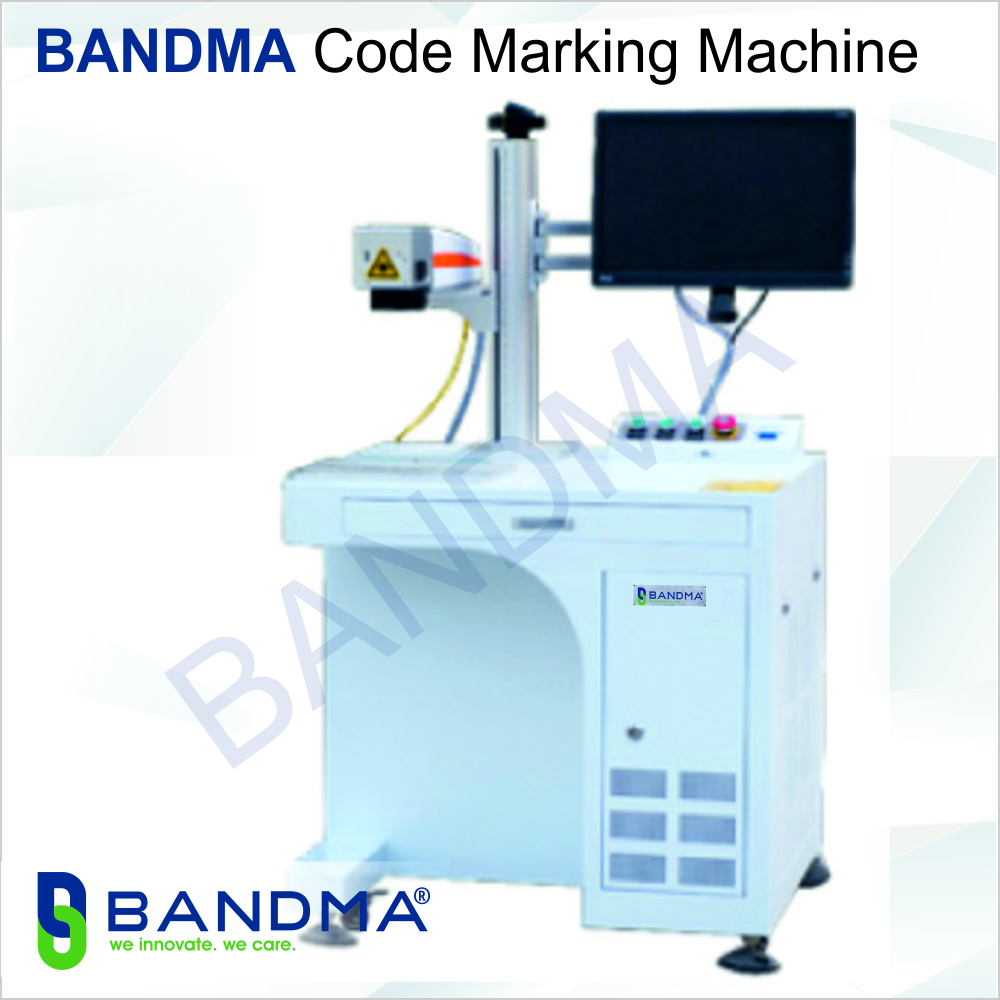
Laser coders use a laser beam to ablate or change the colour of the substrate surface, producing a permanent mark with no consumables. They are used where the mark must be tamper-proof and permanent, such as in pharmaceutical blisters, premium cosmetics, and product authentication applications.
Large Character Marking machines apply large, clear codes to outer cartons and pallets using a roller or spray print head. These are the machines that print the shipping barcode and address block on a despatch carton.
What to Look for When Specifying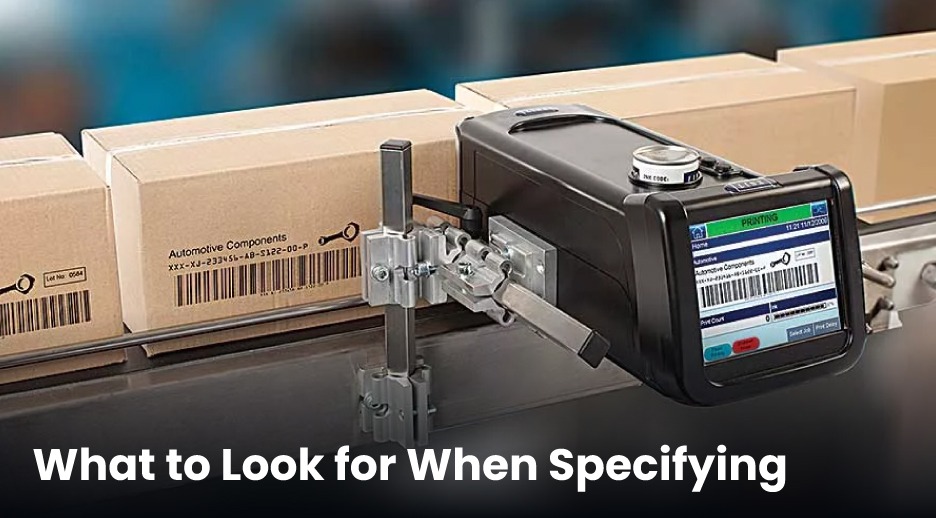
Line speed is the first constraint. The marking machine must be able to print a complete code on every product passing it, at the line's maximum speed, with no smearing or missed prints. Confirm the machine's rated speed exceeds your line's peak throughput.
Substrate compatibility comes second. CIJ works on almost everything; TIJ and laser are more selective. Confirm compatibility with your packaging material before purchasing.
Integration with your line's production data system allows batch numbers and dates to be pushed to the marking machine automatically, eliminating manual entry and the errors that come with it.
Bandma supplies code marking solutions across CIJ, TIJ, and large character marking for primary and secondary packaging applications. Contact us to specify the right system for your line and your compliance requirements.