
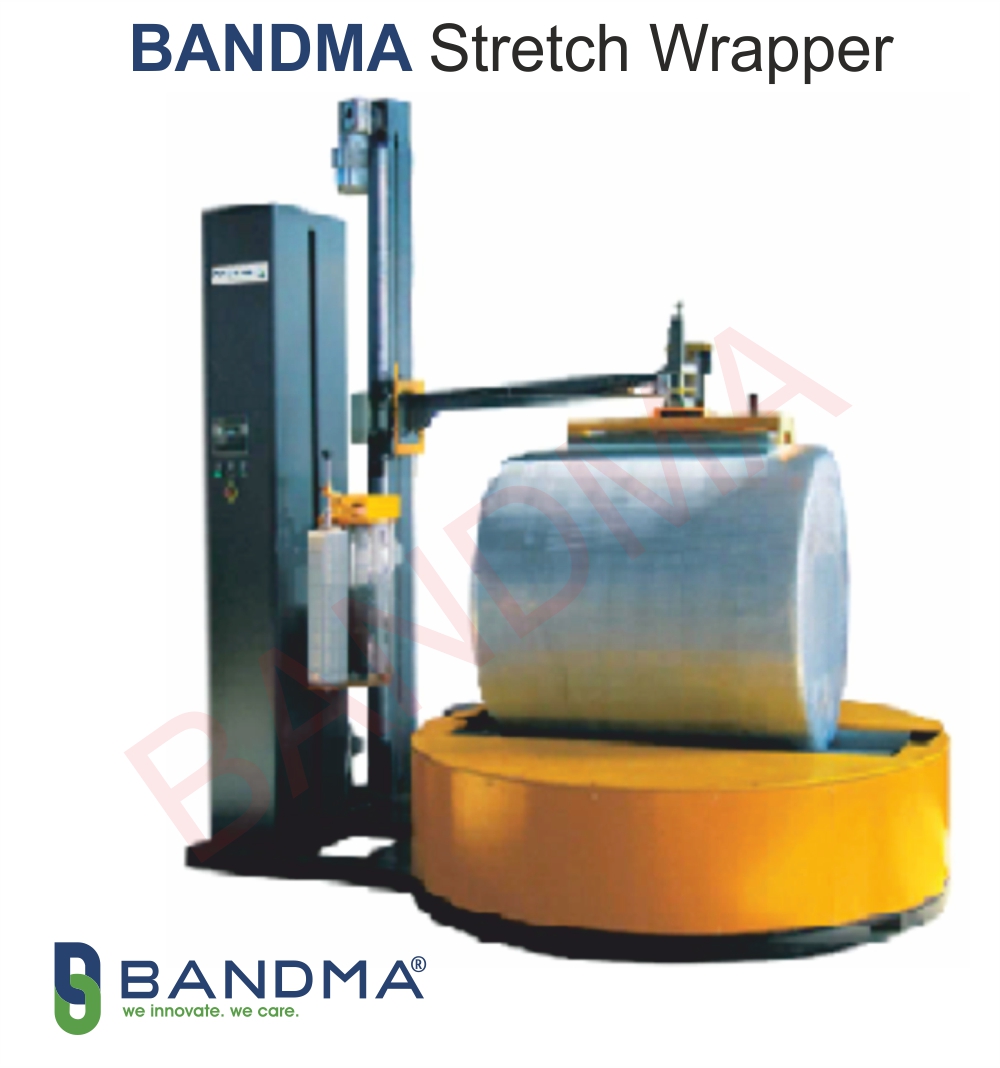

A pack with a missing or unreadable date is a pack nobody wants to accept. Retailers and distributors check the batch number, manufacturing date and expiry date before taking stock. When these codes are smudged or faded, the whole consignment can be refused at the gate, however good the product inside may be.
A code marking machine removes this risk by printing every code the same way, at line speed. The sections below show the main machine types and where each one sits on the line.
Inkjet Coder in Action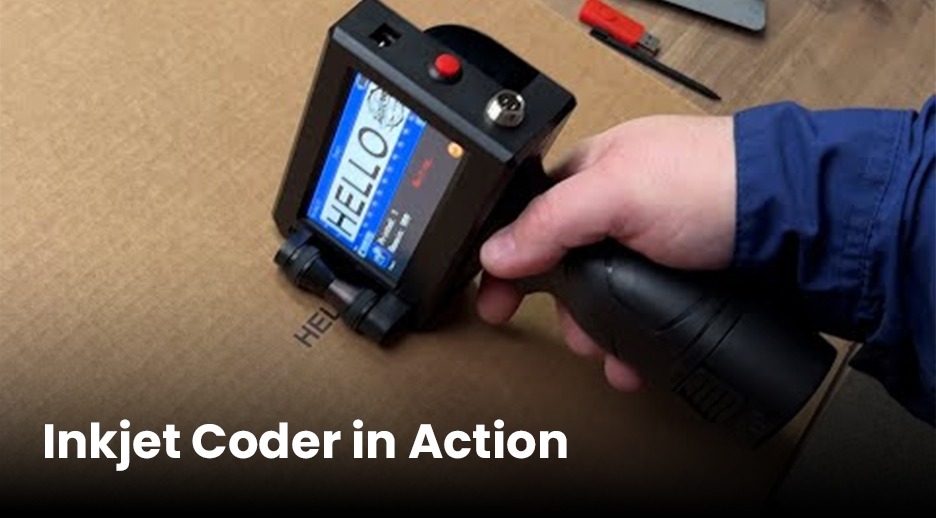
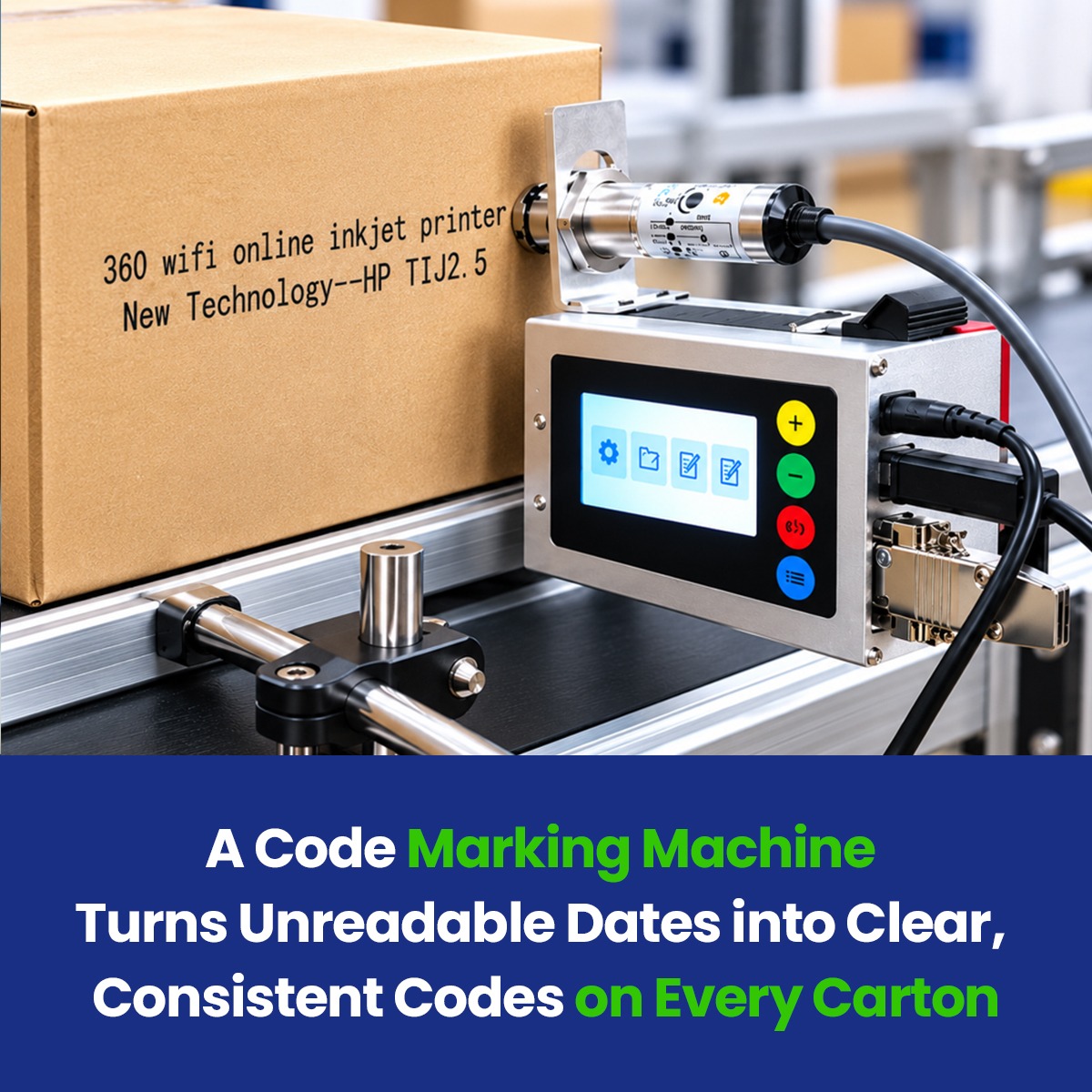
A continuous inkjet coder sprays tiny droplets of ink through a compact printhead, forming sharp characters on the pack as it moves past. It prints on cartons, bottles, cans and many other surfaces without touching them, which keeps the line running at full speed.
The printhead is small and easy to mount beside a conveyor. Batch numbers, dates and prices can be changed from the control screen in seconds.
Laser Coder on Cartons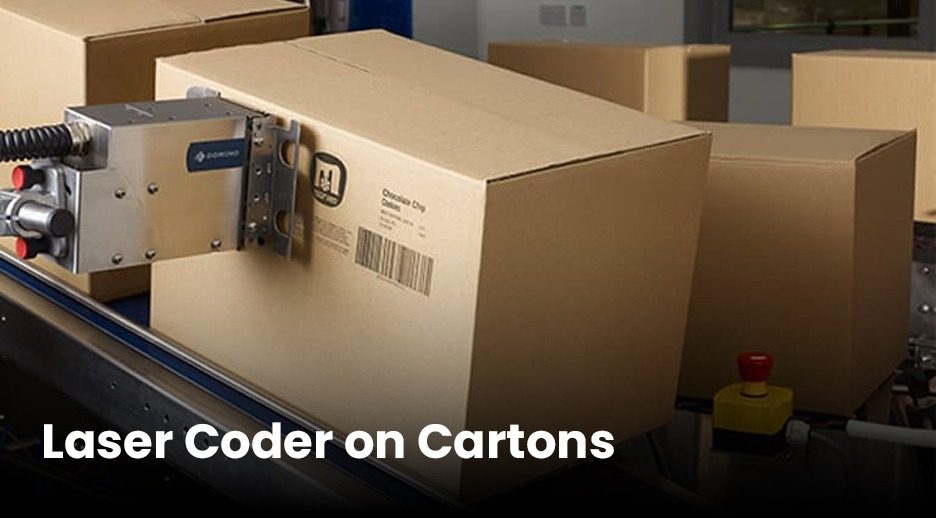
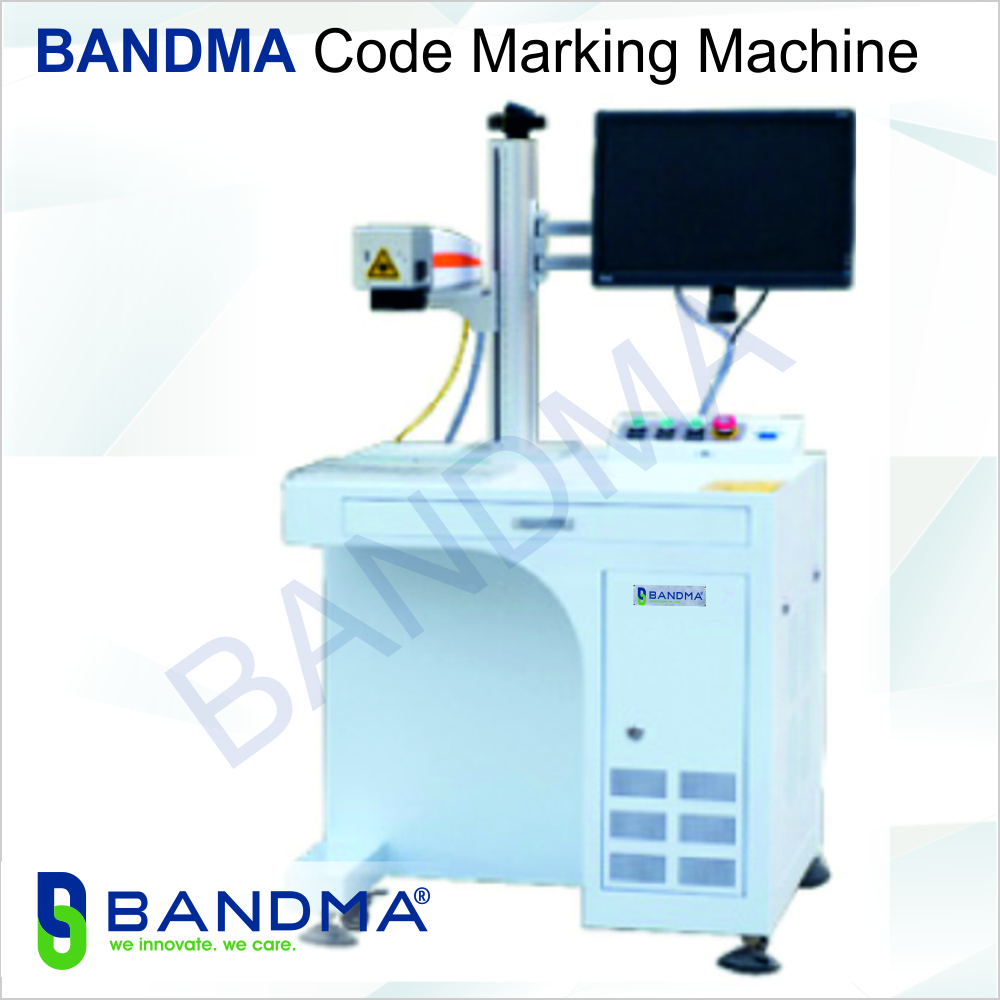
A laser coder uses a focused beam to mark the surface permanently, with no ink involved. The result is a clean, durable code that does not smudge, fade or rub off during handling and transport.
Because there are no inks or solvents to refill, running costs stay low. The compact laser head fits above the line and marks cartons, glass and plastic with steady precision.
Thermal Transfer for Pouches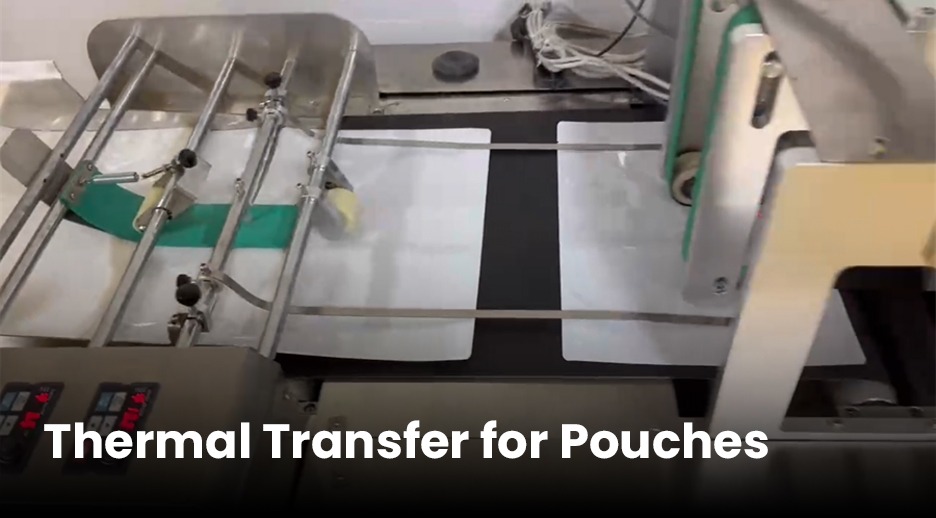
A thermal transfer printer presses a heated printhead against an inked ribbon to place a crisp, high-resolution code on flexible film. It is the usual choice for pouches, sachets and flow-wrap packs that need sharp text and barcodes.
The printer mounts directly on the packaging machine and prints as the film advances. Dates and batch details stay clear even on small packs.
Coding Unit on Conveyor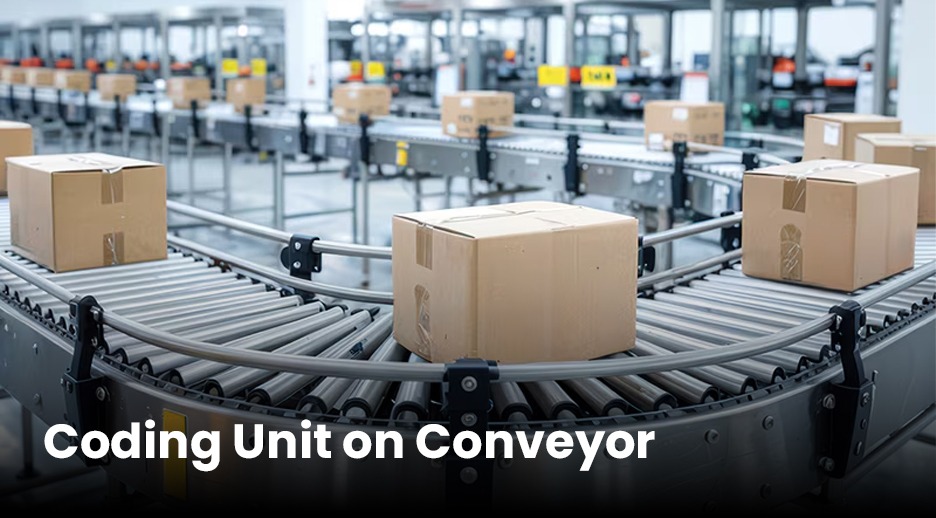
On the production line, the coder is mounted at the side or above the conveyor, where products pass at a steady speed. A sensor detects each pack and triggers the print at exactly the right moment, so every code lands in the same position.
This setup removes the guesswork of hand stamping. The same size, position and clarity repeat for every carton, whichever shift is working.
Camera Inspecting Every Code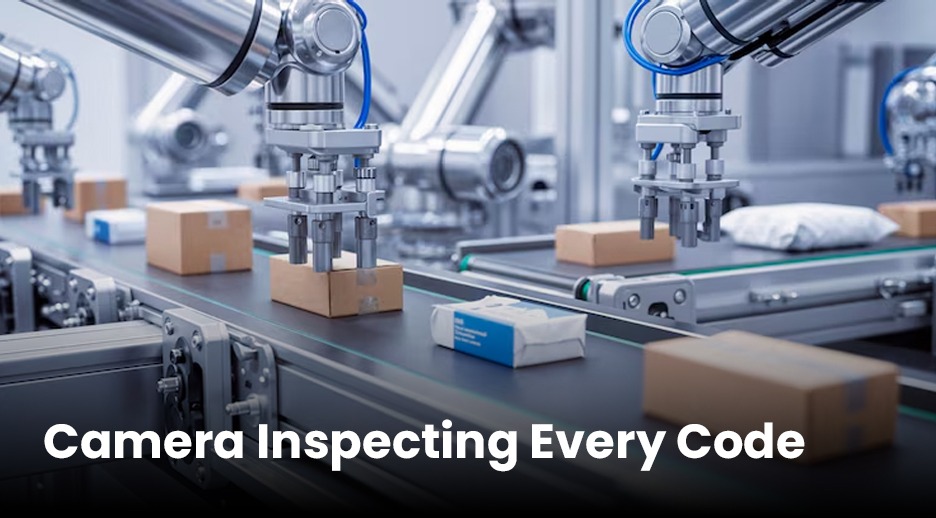
A camera or scanner mounted after the coder reads each code as the pack goes by. If a code is missing, blurred or wrong, a reject unit pushes the pack off the line before it reaches the carton.
This final check catches faults the eye misses at line speed. It also keeps a record that can be shown to buyers and auditors when they ask for proof.
Conclusion
Coding looks like a small detail, yet it decides whether a pack is accepted or rejected. Clear, accurate and consistent codes protect shelf life claims and keep buyers confident in every shipment.
Manufacturers who automate their coding and check the results remove one of the most avoidable causes of rejection. The product is judged by what is printed on it, so every character deserves the same care as the product itself.