
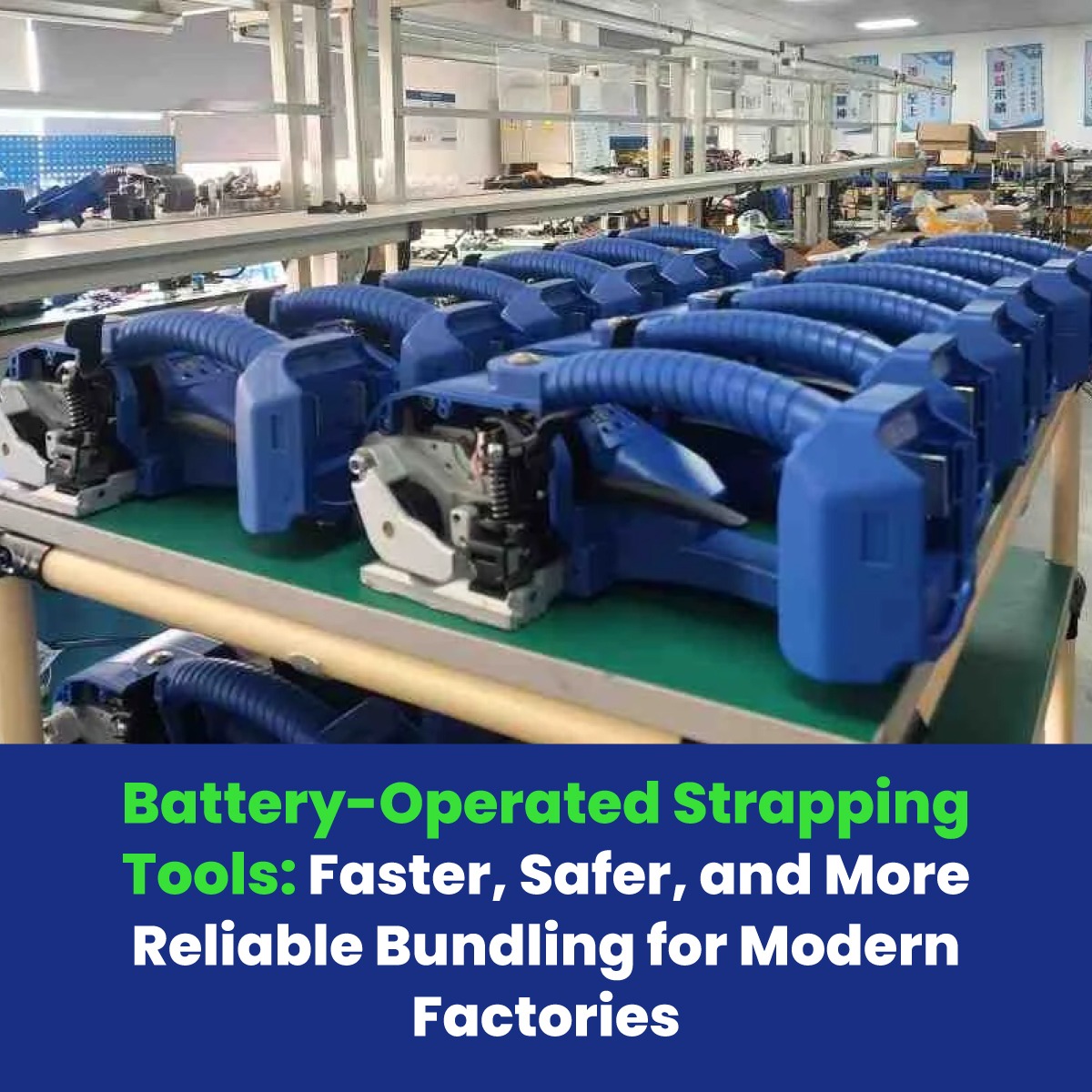
In today’s fast-moving manufacturing and logistics world, speed and reliability define success. Whether you’re securing cartons, pallets, pipes, coils, or bulky bundles, the efficiency of your strapping system directly affects workflow, labor cost, and product safety. This is exactly why battery-operated strapping tools have become the preferred choice for modern factories.
These portable, cordless tools are now replacing manual tensioners and sealers everywhere. They don’t just make strapping fast they make it consistent, secure, and far safer for operators. Let’s break down why battery strapping tools are dominating industrial packaging floors across the globe.
1. What Exactly Is a Battery-Operated Strapping Tool?
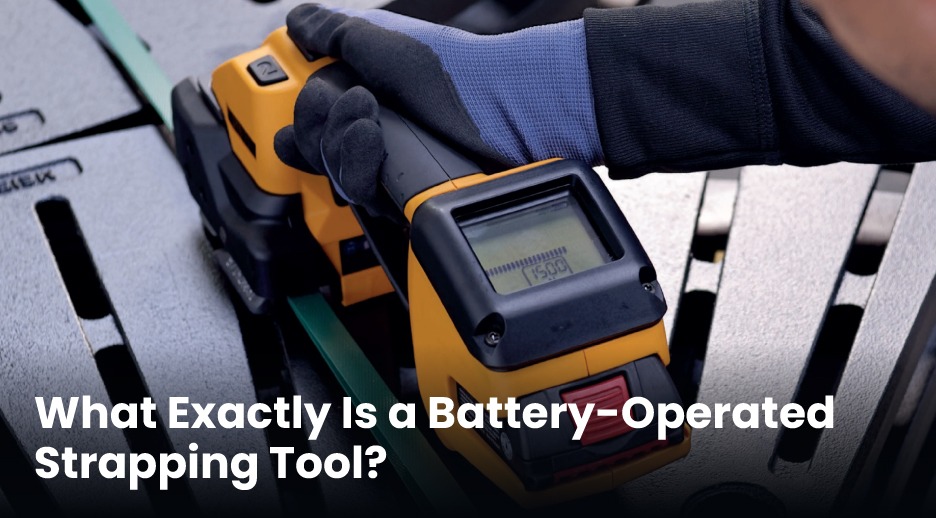
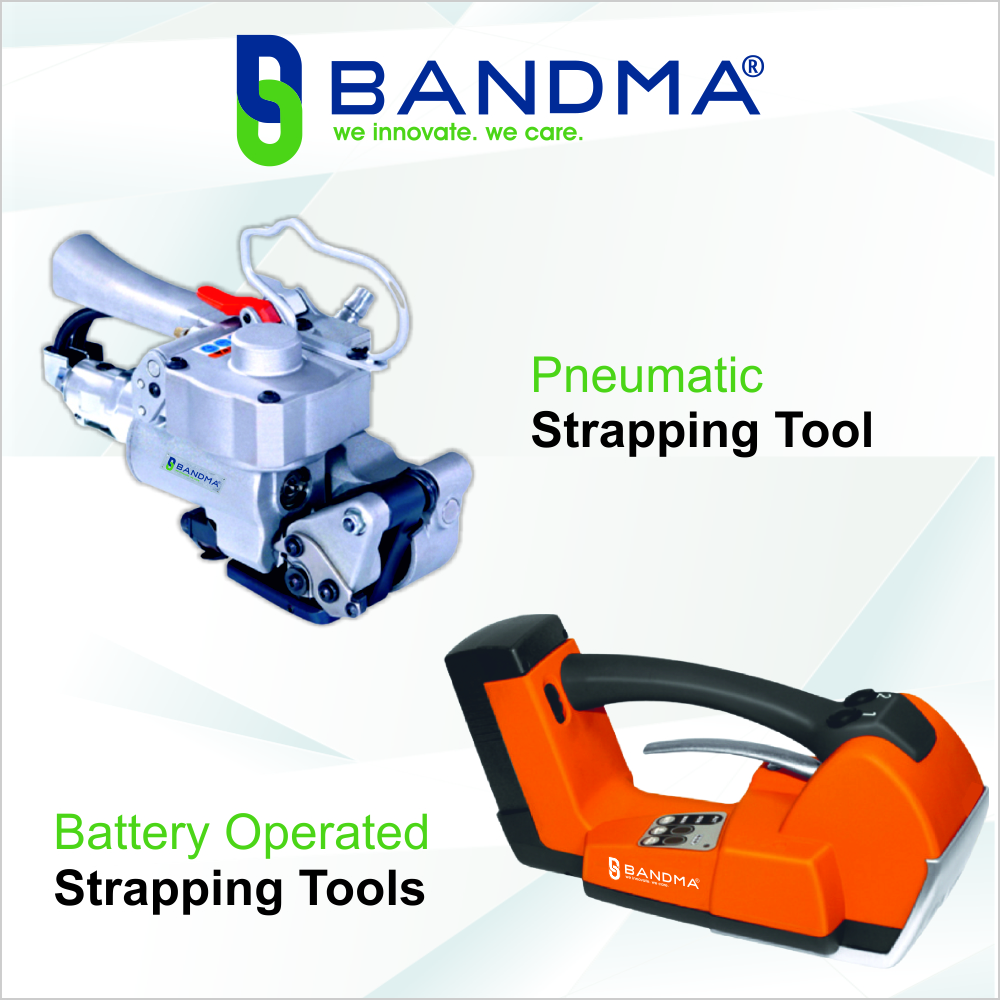
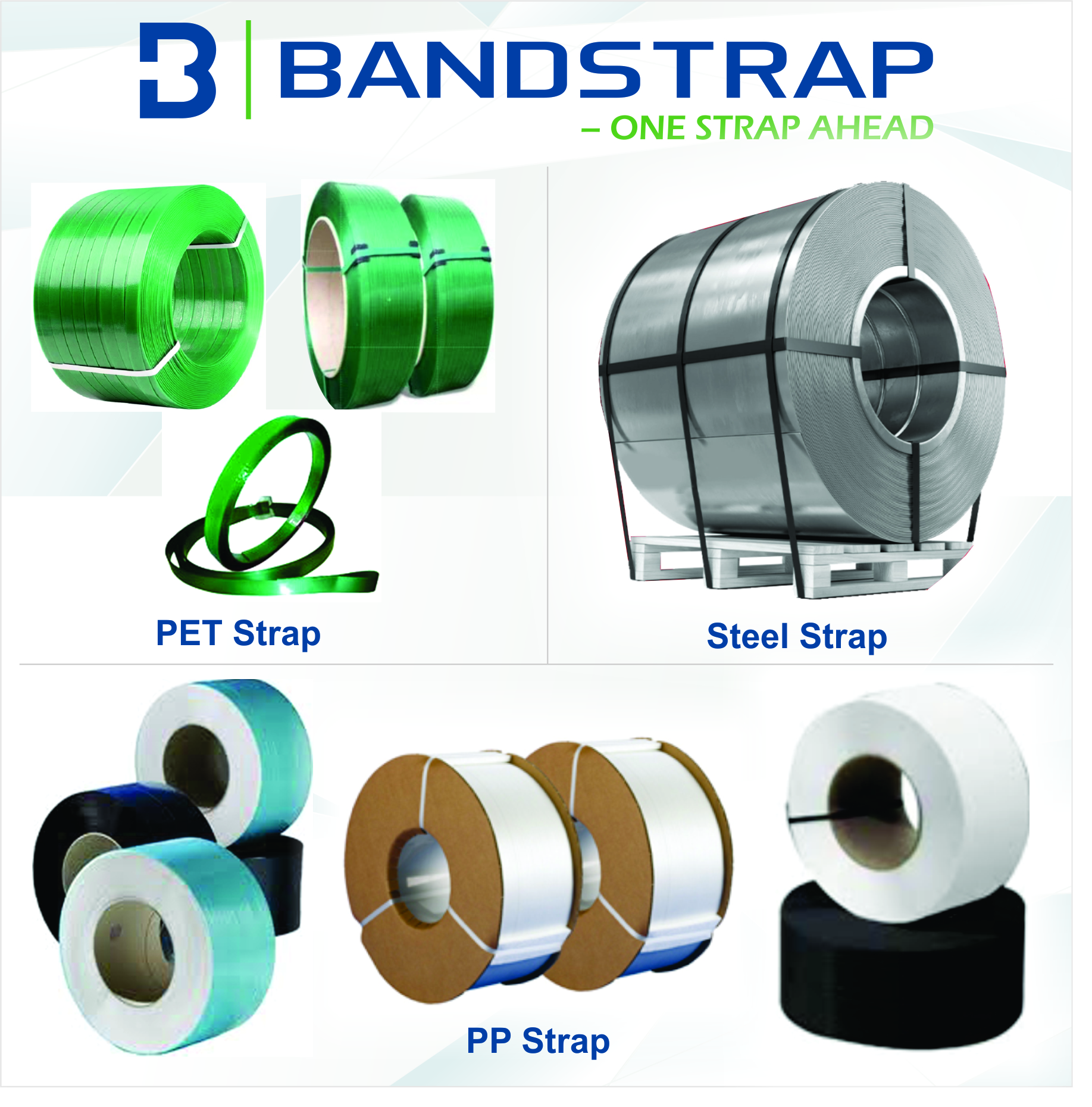
A battery-operated strapping tool is a handheld, cordless machine used to tension, seal, and cut plastic straps such as PP (Polypropylene) and PET (Polyester). Unlike manual tools, which require physical effort, these machines run on rechargeable lithium-ion batteries and deliver:
- Controlled tension
- Friction weld sealing
- One-button operation
- High-cycle efficiency
In other words, it’s a compact powerhouse designed for high-volume, high-speed bundling.
2. Why Modern Factories Are Shifting to Battery Strapping Tools
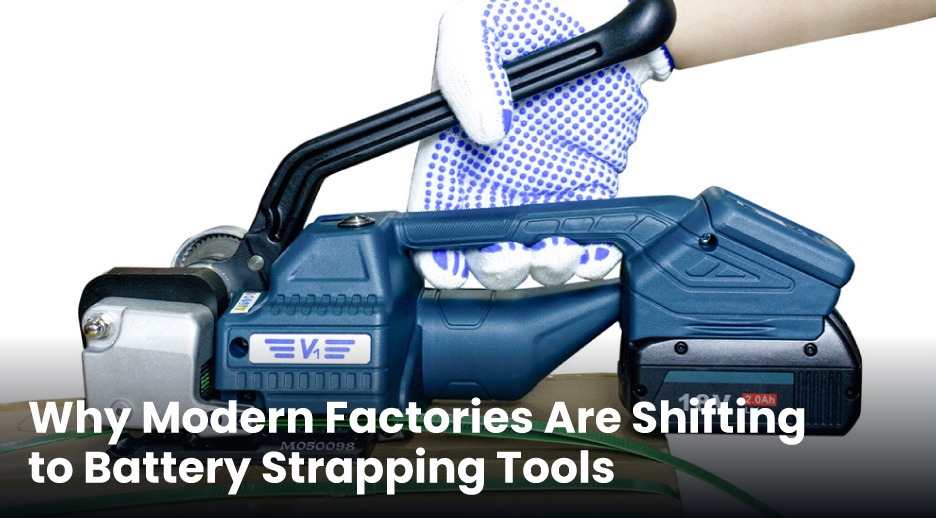
✔ Faster Operation
A manual strap cycle can take 30–45 seconds.
A battery strapping tool completes the same job in 2–3 seconds.
The difference is huge when your team is strapping:
- 200+ cartons per shift
- 100+ pallets daily
- Continuous, high-volume products
Speed alone increases overall productivity by 40–60%.
✔ Safer and More Ergonomic
Manual strapping leads to:
- Wrist strain
- Finger injuries
- Inconsistent sealing
- Operator fatigue
Battery tools eliminate these risks with:
- Ergonomic handling
- Automatic tensioning
- Zero sharp seal joints
- Minimal operator effort
A safer workforce means fewer errors and less downtime.
✔ Superior Joint Strength
Battery strapping tools use friction-weld sealing, which means:
- No metal seals
- No slipping
- High-strength bonding
Friction weld seals can withstand shock, vibration, and uneven load distribution—perfect for logistics and heavy industries.
✔ Works Anywhere: No Electricity Needed
Since the tool is cordless, it can be used:
- Inside warehouses
- On loading docks
- In remote yards
- On large-sized pallets
- During transit
The mobility and flexibility make it ideal for unpredictable operations.
3. Key Features That Make These Tools a Game Changer
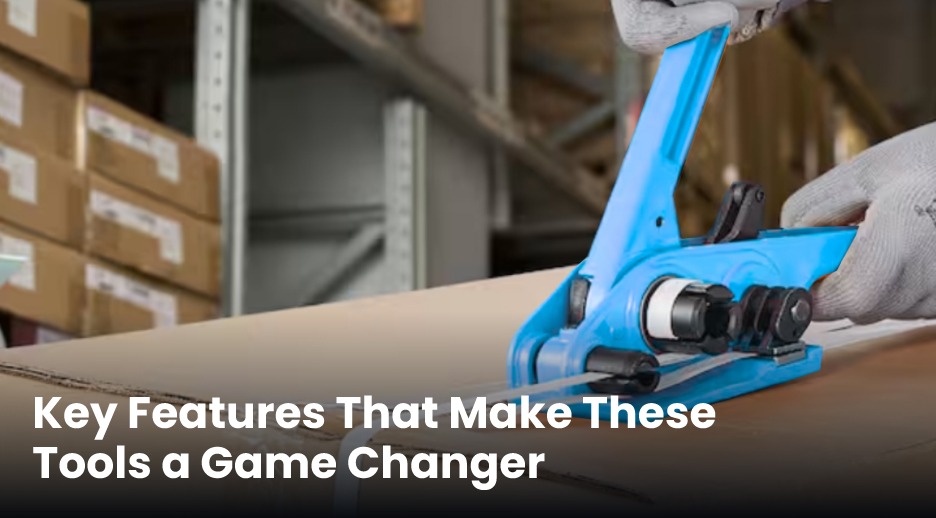
1. Adjustable Tension
Different products require different strap tension levels.
A battery tool allows precise control from soft bundling to heavy-duty strapping—all through digital settings.
2. Long-Lasting Lithium Batteries
A single charge typically delivers:
- 300–600 straps, depending on model
- Fast charging in 60–90 minutes
Batteries are durable, swappable, and designed for continuous shifts.
3. One-Touch Operation
The process is fully automated:
- Insert the strap
- Press the button
- Tool tensions, seals, and cuts automatically
This reduces operator dependency and ensures consistency.
4. Lightweight and Rugged Build
Industrial-grade construction ensures:
- Shock resistance
- Longer life
- Smooth operation even in dusty environments
4. Applications Across Various Industries
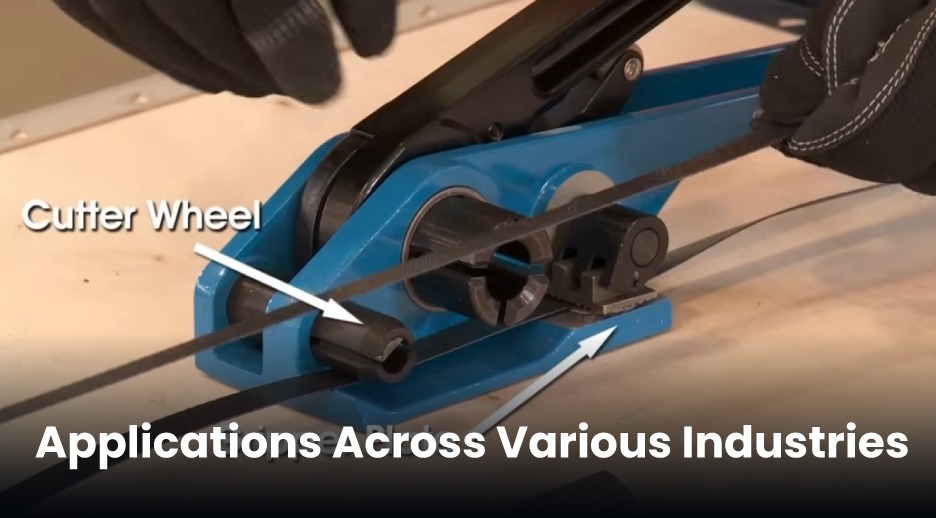
Battery-operated strapping tools are widely used in:
- Corrugation & Packaging (cartons, bundles, sheets)
- Textile & Garment industries
- Steel, aluminum & metal product bundling
- Logistics & warehouses
- Wood & furniture packaging
- FMCG & pharmaceuticals
Basically, any industry that needs reliable, secure bundling.
5. Economic Benefits: Why It Pays for Itself Quickly
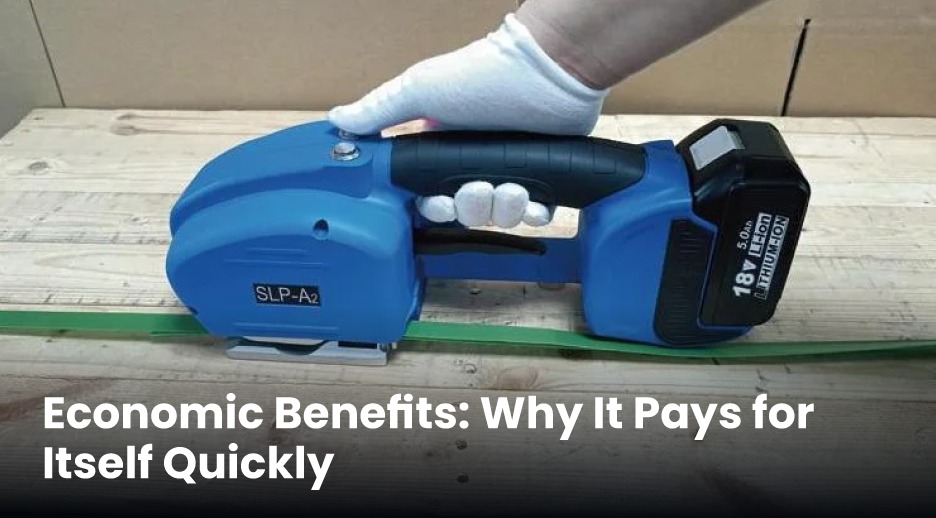
Many factories hesitate due to the upfront cost, but battery tools offer massive long-term savings:
- Zero seals → saves money
- Faster cycles → increases output
- Less manpower → reduces labor cost
- Fewer breakages → reduces product damage
- Low maintenance → lowers operating cost
Most companies recover the tool’s cost within 3–6 months.
Conclusion
Battery-operated strapping tools are no longer optional—they are essential for factories aiming for speed, safety, and scalability. With their mobility, consistency, and efficiency, these tools transform everyday packaging operations into a streamlined, high-performance process.
If your packaging line still depends on manual strapping, upgrading to a battery tool is one of the simplest and most profitable investments you can make this year.