




In manufacturing, every investment must prove its worth. Machines, manpower, and materials—everything is evaluated based on long-term return. But when it comes to packaging automation, many factories still hesitate. They assume automation is “expensive,” or that manual packaging is “good enough.” The truth is: modern packaging automation is one of the fastest-payback investments a factory can make.
In today’s competitive market—where speed, quality, and reliability directly affect profitability—automation does far more than reduce labor. It transforms the entire packaging workflow, eliminating inefficiencies and unlocking operational gains that manual systems can never deliver.
This detailed breakdown explains how packaging automation delivers ROI, why the payback period is shorter than most factories expect, and what real benefits companies experience after upgrading.
1. Reduced Labor Dependency = Immediate Cost Savings
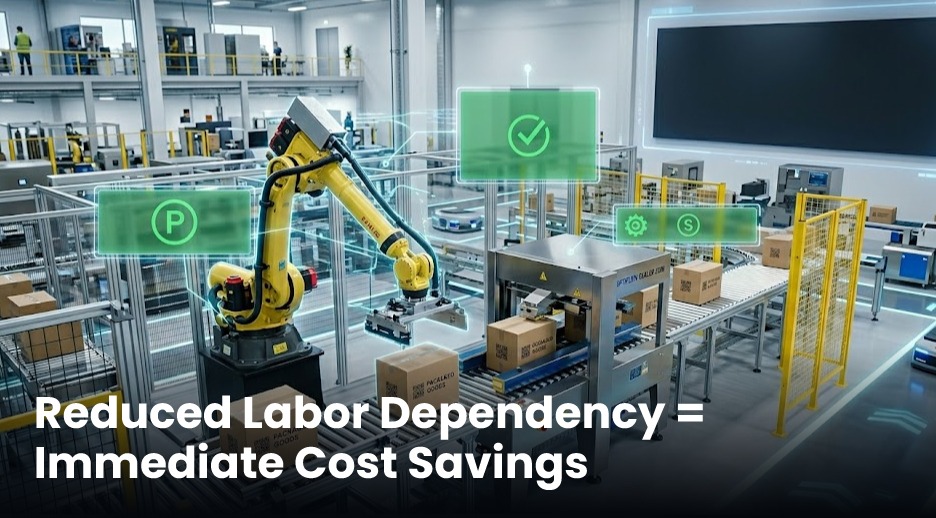
Labor is the single largest hidden cost in manual packaging. From taping and strapping to wrapping, palletizing, labeling, and carton forming, most factories rely on several workers just for routine packaging tasks.
Automation impacts labor in three ways:
- Replaces repetitive manual work
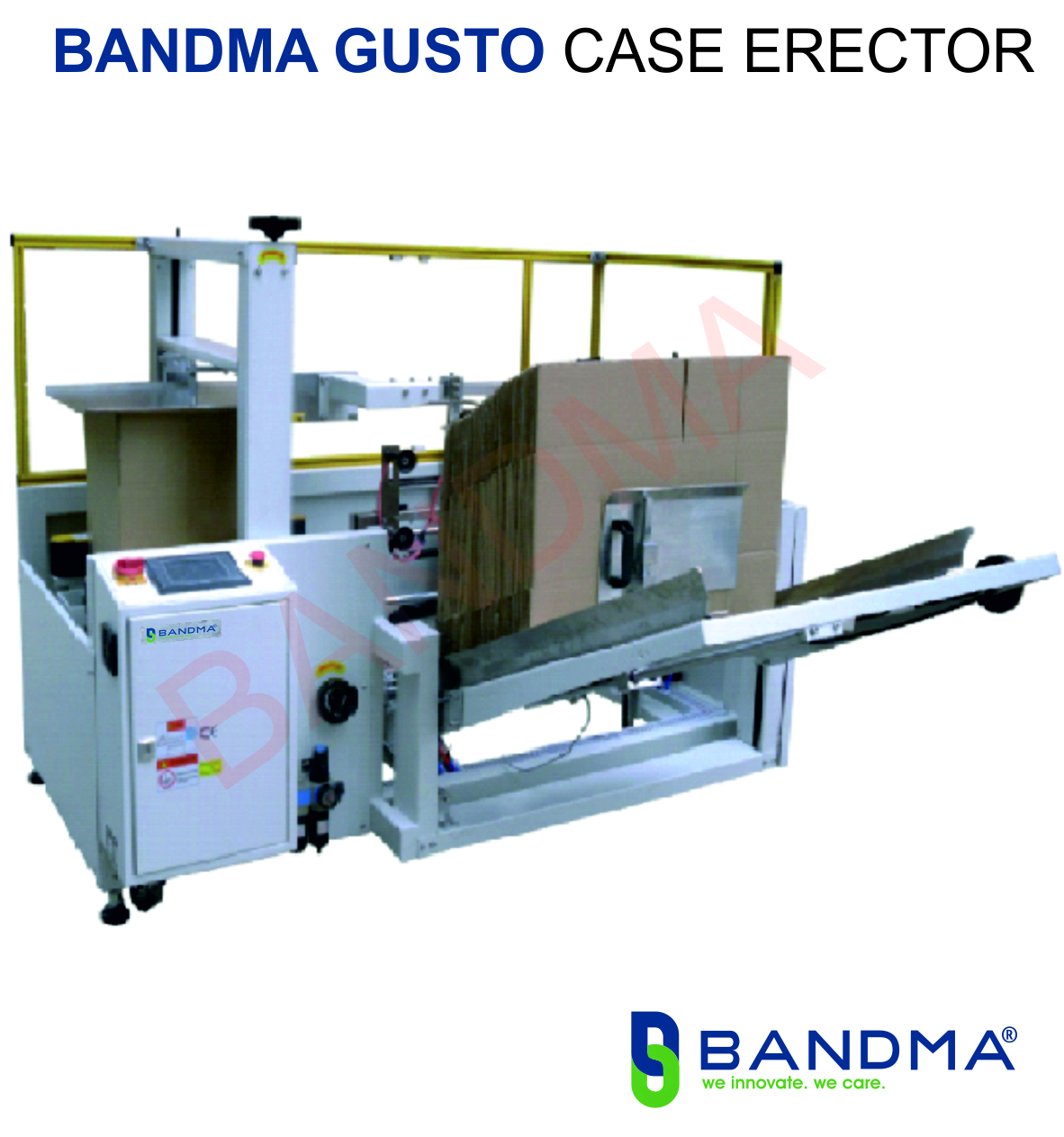
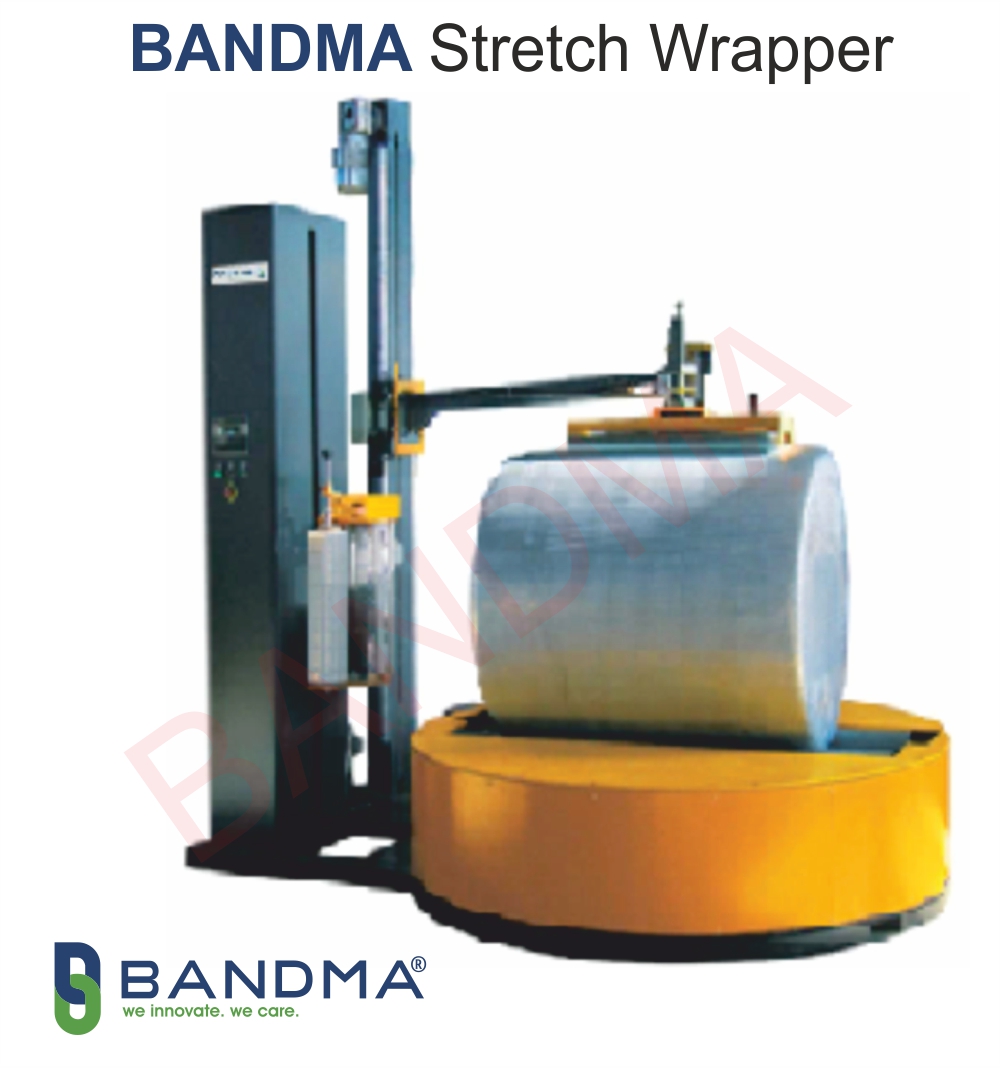
Machines like case erectors, strapping systems, and stretch wrappers require only one operator to supervise. - Reduces workload per shift
Fewer workers are needed, lowering salary, overtime, and training expenses. - Eliminates productivity fluctuations
Machines don’t get tired, slow down, or make errors—output remains stable.
Typical labor savings:
- 2–5 workers per line
- 30–60% reduction in overall packaging manpower
- Major cuts in overtime during peak seasons
For most factories, these savings alone justify the investment.
2. Higher Throughput & Faster Dispatch = Direct Revenue Gains
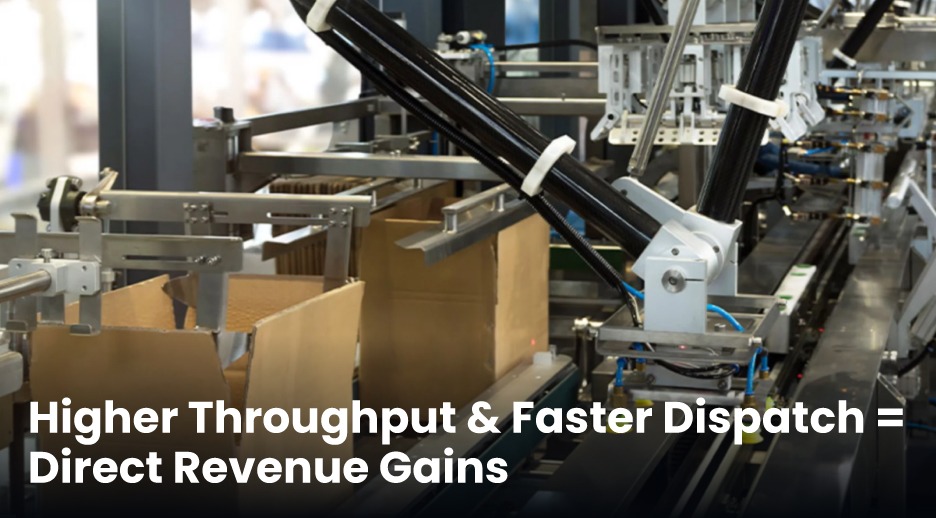
One of the biggest bottlenecks in manufacturing is the packaging area. Even if production is fast, manual packaging slows down the entire line.
Automation removes this bottleneck.
Automated solutions deliver:
- High-speed case forming
- Consistent sealing and strapping
- Uniform pallet wrapping
- Quick, stable palletizing
- Continuous operation without fatigue
When packaging matches production speed, factories ship more orders per day, meaning higher revenue capacity without increasing staff or working hours.
Throughput improvements typically include:
- 2× to 5× faster packaging speeds
- Faster order fulfilment
- Reduced dispatch delays
- Increased daily shipping volume
Increasing throughput is one of the fastest ROI drivers in packaging automation.
3. Reduced Product Damage = Better Profit Margins
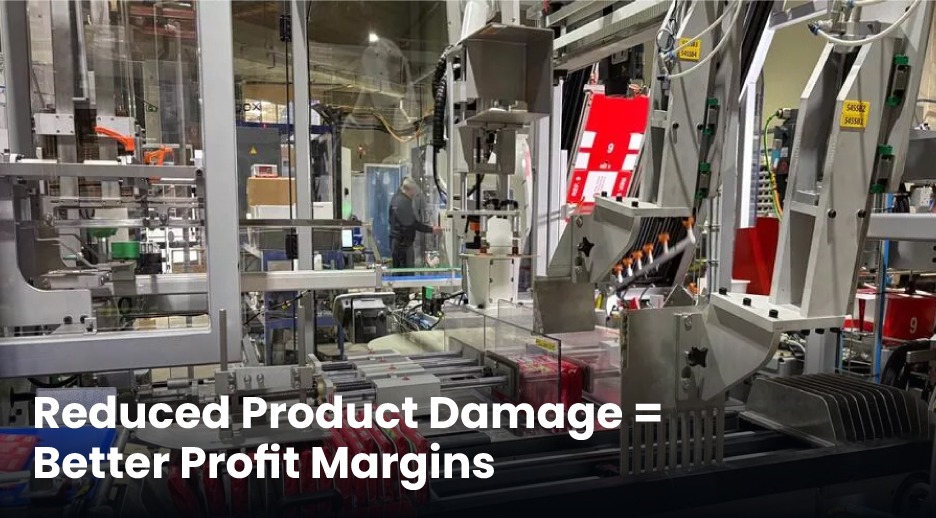
Packaging is your product’s last line of protection. Weak taping, loose strapping, or improper wrapping dramatically increase transit damage.
Manual packaging increases:
- Ruptured cartons
- Tilted pallets
- Film breakage
- Loose straps
- Moisture damage
Every damaged product has a cost—sometimes double:
- Replacement or refund
- Reverse logistics cost
- Customer dissatisfaction
Automation guarantees:
- Correct strap tension
- Even tight stretch wrapping
- Perfect tape adhesion
- Secure, stable pallets
- Consistency in every pack
Factories often see a 40–70% reduction in transit damage, which directly improves profit margins.
4. Material Savings: The Most Overlooked ROI Factor
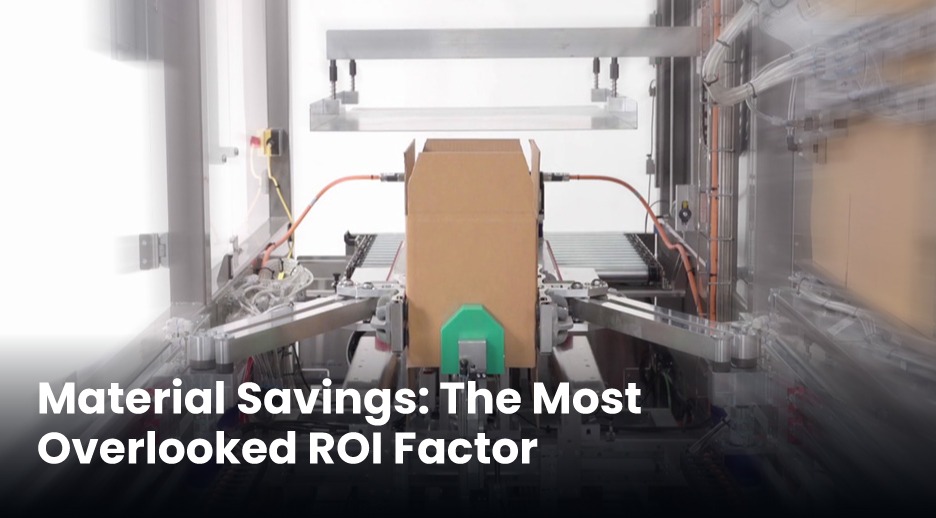
Manual packaging wastes a surprising amount of material.
Examples:
- Workers apply extra tape to “make sure it sticks.”
- Stretch film is pulled inconsistently, causing over-consumption.
- Straps are tightened manually, often requiring additional straps.
Automated machines optimize material use:
- Tape length per carton is fixed.
- Film pre-stretch technology reduces film consumption by 30–60%.
- Automatic tensioning prevents strap waste.
Over a year, these savings can be substantial—often equal to the cost of the machine.
5. Fewer Workplace Injuries = Long-Term Financial ProtectionManual packaging involves:
- Lifting heavy cartons
- Pulling film around pallets
- Bending repeatedly
- Sharp tools
- Unstable loads
Common issues:
- Back strain
- Wrist injuries
- Slip-and-fall accidents
- Cuts and bruises
These injuries include:
- Medical expenses
- Compensation costs
- Downtime
- Reduced morale
Automation eliminates most of these risks. Machines handle the heavy, repetitive, and dangerous tasks so workers don’t have to. This leads to safer operations and long-term cost protection.
6. Better Quality Control = Stronger Brand Reputation
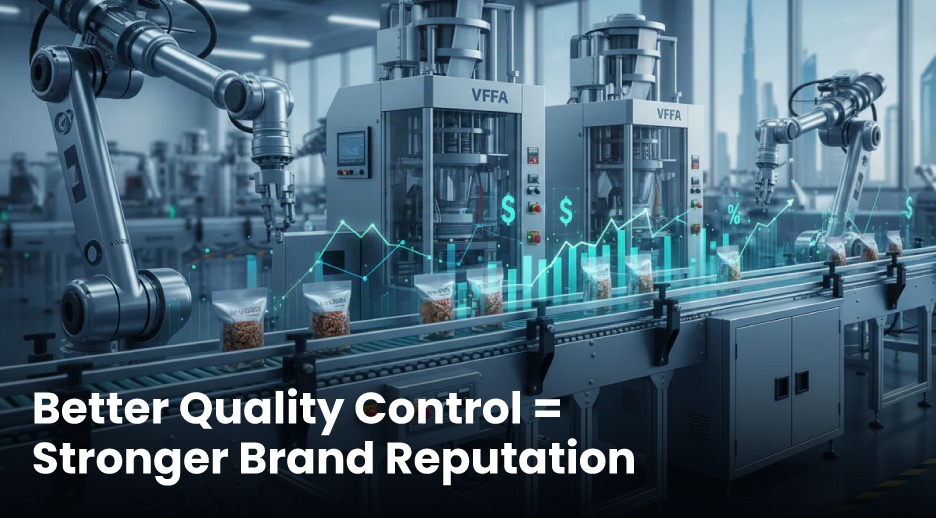
Automation ensures every carton and pallet looks the same—clean, professional, and secure. This consistency strengthens the brand image and reduces customer complaints.
Automated packaging ensures:
- Neat, uniform tape
- Correct strap tension
- Smooth pallet wrapping
- Accurate labeling
- Stable loads for transportation
Improved packaging quality enhances customer confidence and reduces return rates.
7. Scalability Without Hiring More People
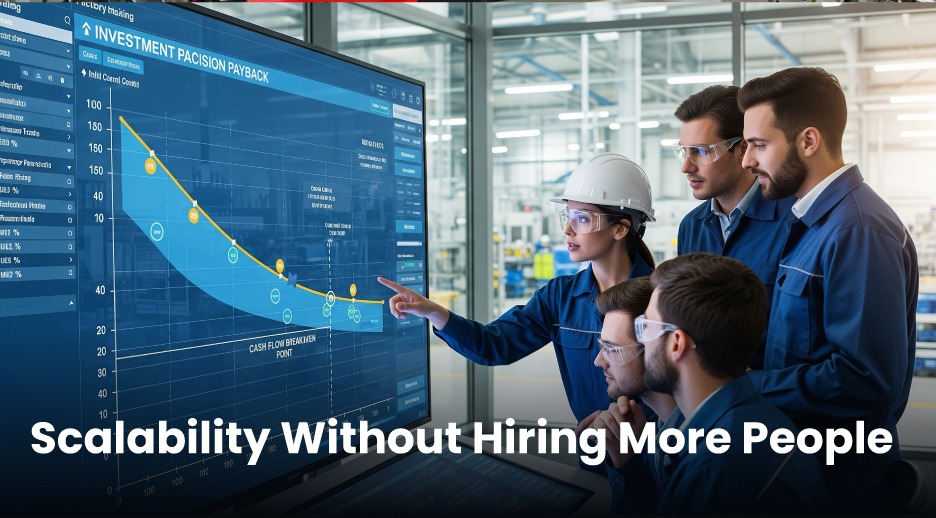
When production increases, manual packaging teams struggle to keep up. Hiring more workers is slow, inconsistent, and expensive.
Automation supports growth instantly:
- Machines can handle higher volumes without additional labor.
- Output increases simply by running longer shifts or adding conveyors.
- Seasonal peaks no longer disrupt operations.
This scalability is a major ROI driver that allows companies to grow rapidly without operational stress.
8. Realistic Payback Period of Packaging Automation
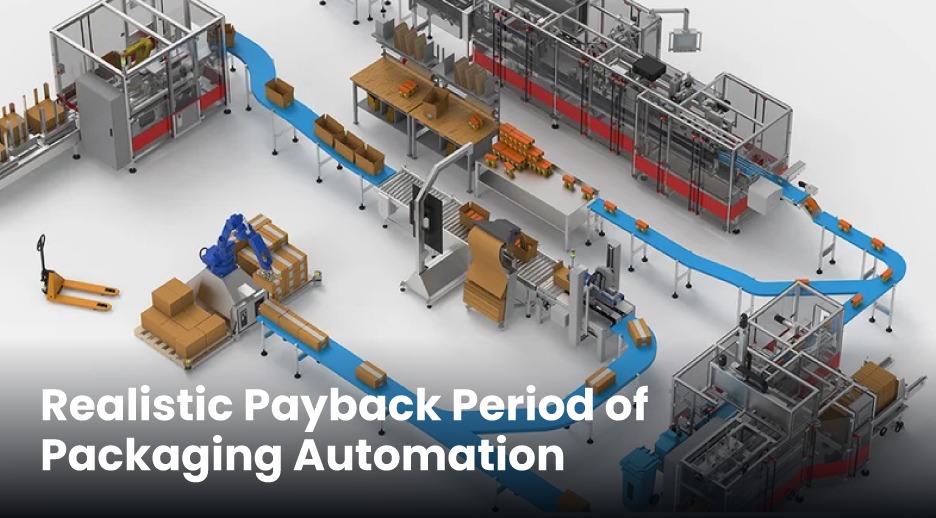
Most factories see a complete payback in 12–24 months, sometimes even faster if material waste or labor dependency is high.
ROI sources include:
- Labor savings
- Material reduction
- Faster throughput
- Lower damage rate
- Fewer returns
- Safer workplace
- Higher customer retention
- Scalability
The combined impact makes automation one of the highest-value investments in modern manufacturing.
Conclusion: Automation Is Not a Cost—It’s a Strategic Advantage
Packaging automation is no longer about replacing labor—it’s about unlocking efficiency, consistency, and growth potential. Modern packaging lines deliver measurable ROI through faster output, better quality, lower waste, fewer injuries, and scalable operations.
Factories that adopt automation strengthen their competitive edge and reduce operational risks. Those who delay continue paying hidden costs that silently erode profitability.