









The label on your product is not just a sticker. It is a legal declaration, a compliance document, a brand statement, and a retail requirement all at once. Get it wrong, and the consequences range from retailer rejection to regulatory action.
Yet labelling remains one of the most overlooked steps in secondary packaging. Most Indian manufacturers discover their labelling problems only after they have already caused damage a rejected export consignment, an FSSAI notice, or a distributor complaint about misaligned labels.
Here are the five most costly labelling mistakes Indian manufacturers make, and exactly what to do about each one.
Mistake 1: Applying Labels by Hand at Scale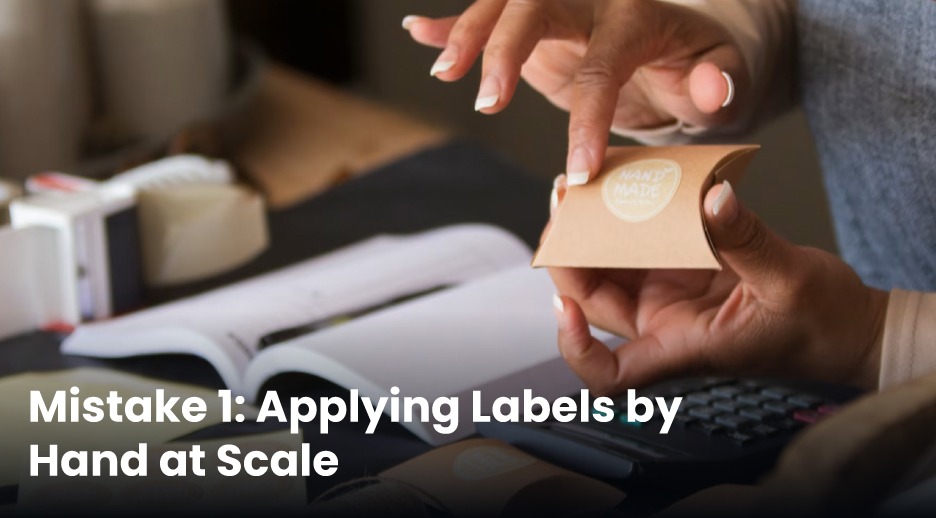
Manual labelling works at low volumes. Below 150 to 200 units per day, a skilled operator can apply labels consistently enough to meet basic quality standards.
Above that threshold, manual labelling becomes a liability. Operators tire. Placement drifts. Labels go on crooked, bubbled, or partially peeled. On a busy shift, these errors multiply across hundreds of units before anyone notices.
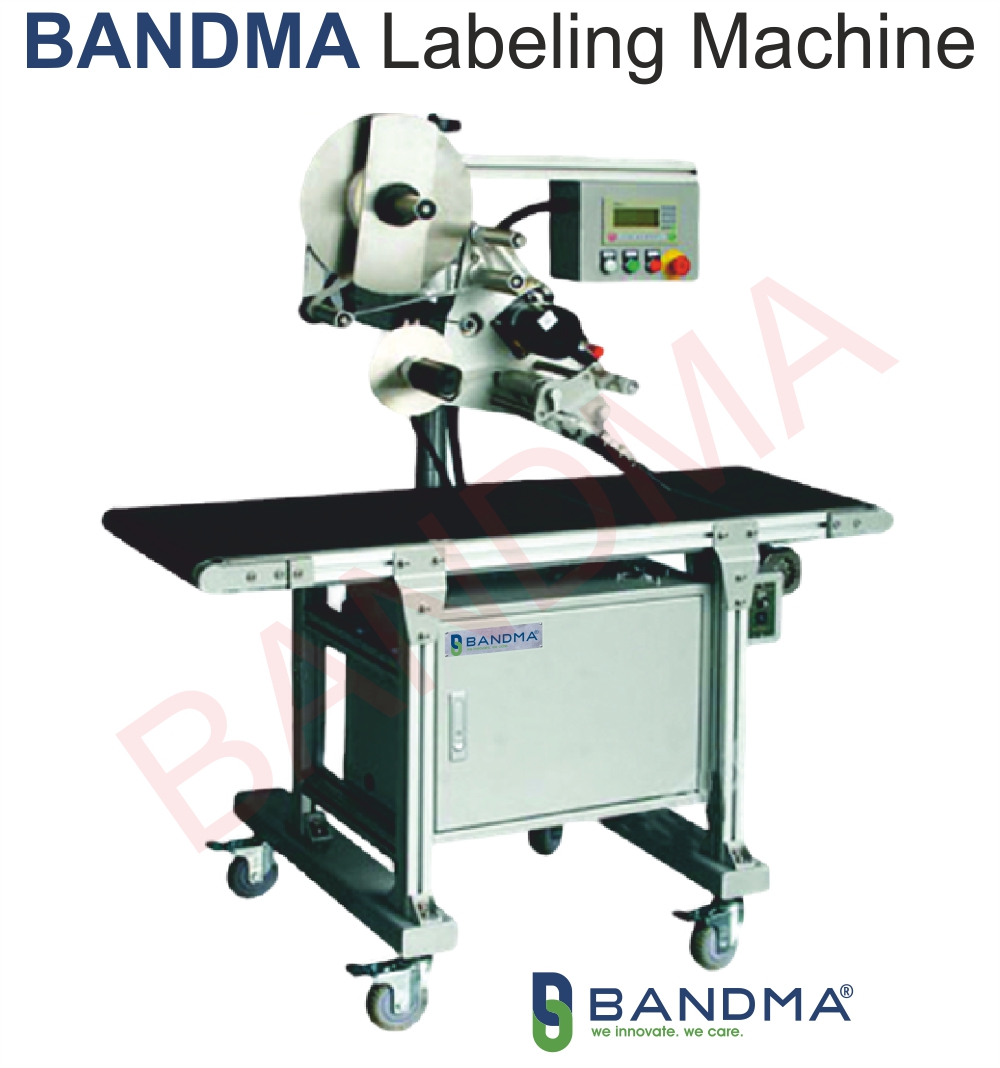
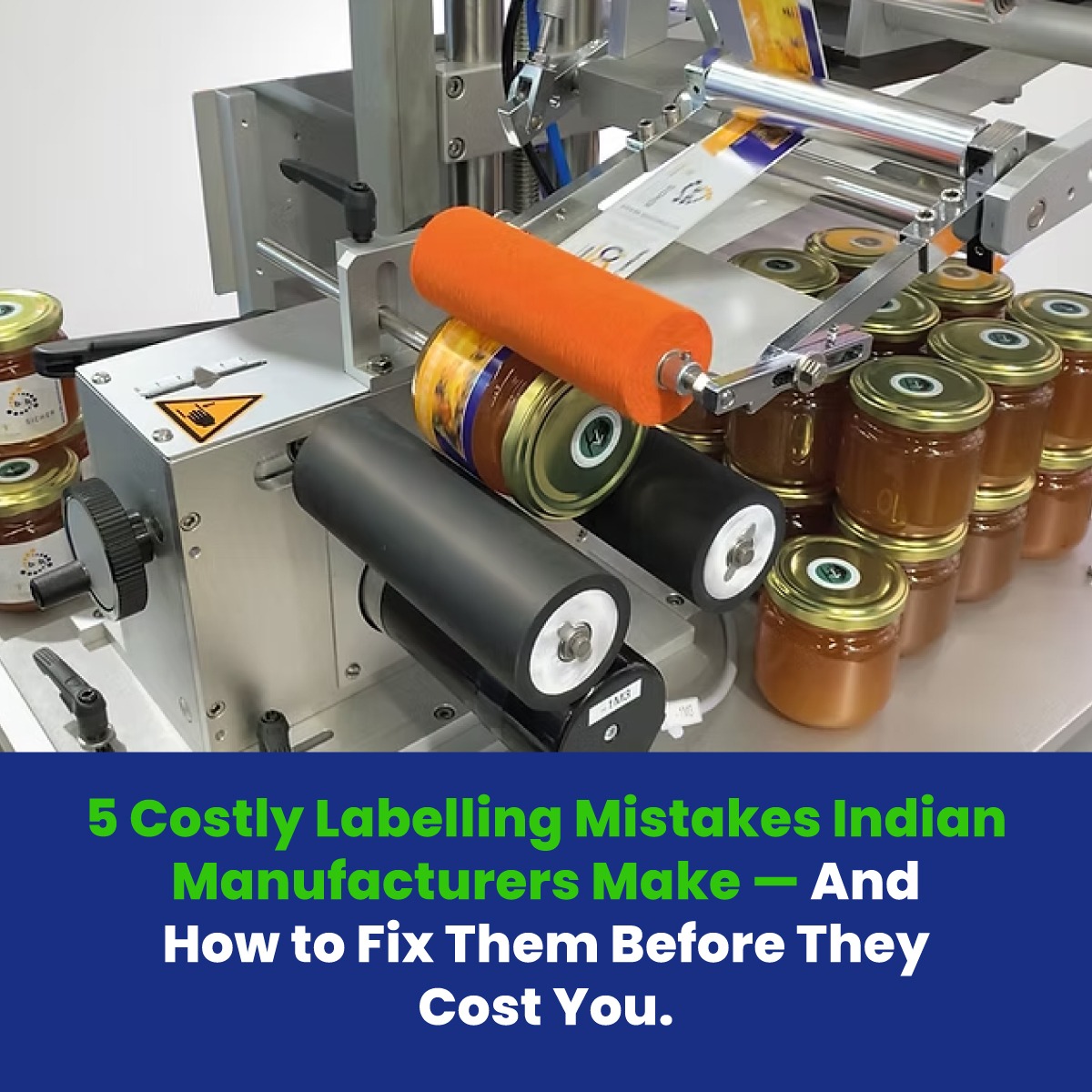
The fix is straightforward: a semi-automatic label dispenser at moderate volumes, and a fully automatic inline labelling machine above 500 units per day. The machine applies every label to a defined position with the same pressure and alignment on the first unit as on the thousandth.
For businesses still hand-labelling above 300 units per day, the cost of the machine is almost always recovered within months in labour savings and rejected units avoided.
Mistake 2: Not Accounting for FSSAI and Legal Metrology Requirements
India's food labelling regulations under FSSAI and the Legal Metrology (Packaged Commodities) Rules are specific and enforced. Required information, minimum font sizes, placement zones, net weight declarations, and FSSAI licence numbers all have defined standards.
The most common compliance mistake is not missing information entirely it is placing correct information in the wrong location, in the wrong size, or in a format that does not meet the regulation's precise requirements.
For export products, the problem compounds. Every destination market has its own labelling standard, and a shipment rejected at a foreign port for a labelling violation is expensive in ways that go well beyond the value of the goods.
The fix is to build compliance requirements into the label design and placement process before production begins, not as a check after the fact. A labelling machine that applies labels to a precisely defined position every time makes compliance verification simple and audit documentation straightforward.
Mistake 3: Using the Wrong Label Material for the Surface or Environment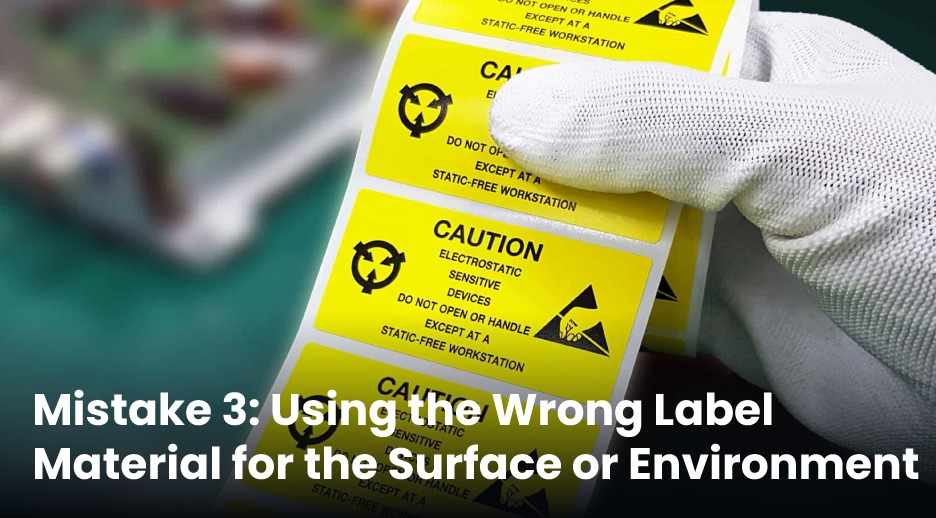
A label that looks perfect leaving the factory and arrives at the customer peeling, smudged, or illegible is a labelling failure regardless of how correctly it was applied.
Label material must be matched to the packaging surface, the storage environment, and the transit conditions the product will experience. A standard paper label on a product stored in a cold or humid environment will degrade. A label applied to a flexible or curved surface needs an adhesive and substrate that can flex without separating.
Indian summer conditions high heat and high humidity accelerate label failure on materials that were not specified for those conditions.
The fix is to select label material based on the full journey of the product, not just how it looks at the point of application. This means considering surface type, temperature range, humidity exposure, and whether the label will face direct handling during transit.
Mistake 4: No Verification That the Right Label Is on the Right Product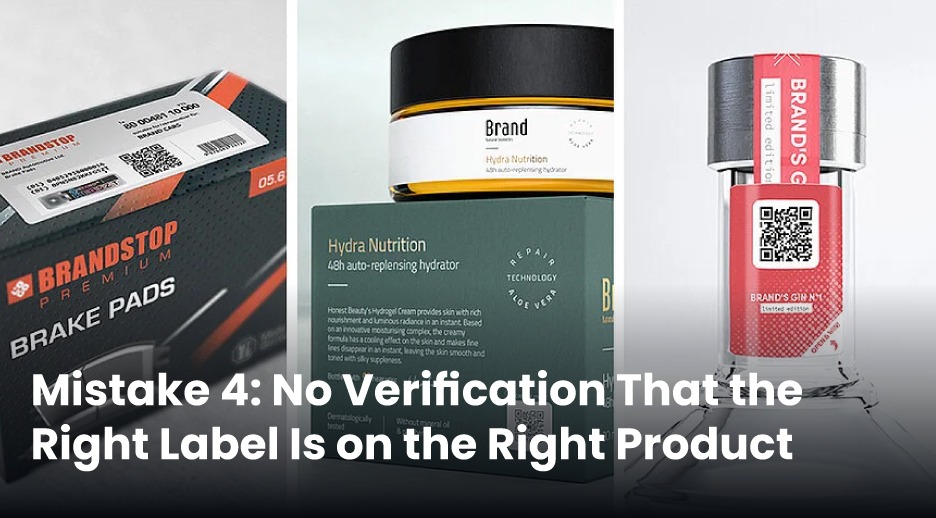
In facilities running multiple SKUs, one of the most damaging labelling errors is applying the correct label but to the wrong product. A mislabelled food product is not just a customer complaint. In regulated categories, it is a safety issue and a regulatory violation.
This error is almost impossible to catch through visual inspection alone at production speeds. It requires a verification step built into the process, either a barcode or QR verification system that confirms the label and product match before the unit moves downstream, or a vision inspection camera that reads label content at line speed.
The fix is to integrate label verification as a standard step in the packaging process, particularly for lines running more than one SKU. The cost of a single mislabelling incident recall, regulatory response, and customer relationship damage makes this investment straightforward to justify.
Mistake 5: Inconsistent Label Placement Affecting Retail and Barcode Scanning
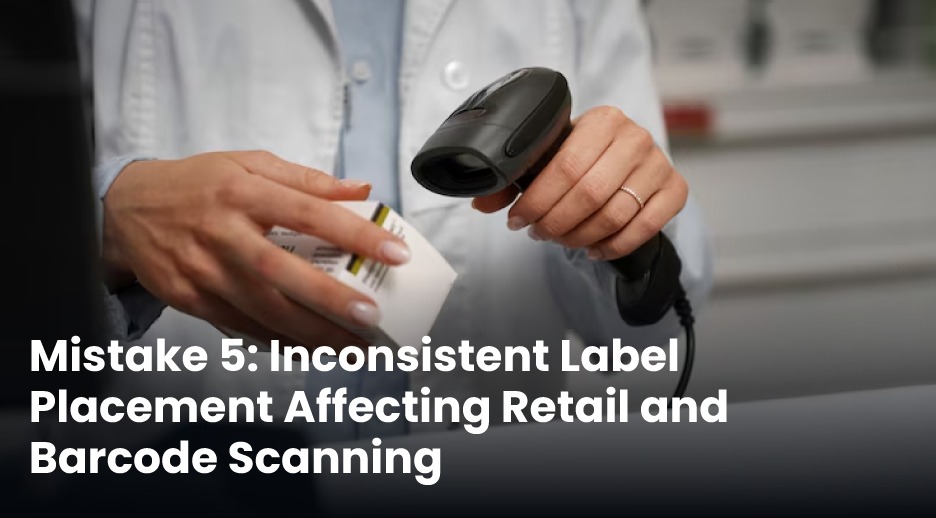
Retailers and modern trade buyers specify label placement zones for a reason. Labels outside those zones cause problems at checkout scanners, disrupt shelf presentation, and result in cartons being rejected at the distribution centre before they ever reach the shelf.
Even small placement inconsistencies a label two centimetres off its specified position can cause barcode scan failures at automated checkouts and warehouse systems that read labels at fixed positions.
Manual labelling cannot hold placement tolerances consistently. A labelling machine can, and for businesses supplying organised retail, modern trade, or export markets, consistent placement is not optional.
The fix is an inline labelling machine with position control calibrated to your specific label placement requirements. Once set correctly, the machine holds that position on every unit regardless of volume or shift duration.
The Underlying Problem
Every one of these five mistakes shares a common root: labelling is treated as a minor finishing step rather than a critical quality and compliance process.
In food, pharma, FMCG, and export manufacturing, the label is the last thing your facility controls before the product reaches a regulator, a retailer, or a consumer. It deserves the same process rigour as every other step on your packaging line.
Bandma supplies labelling machines across the full range of configurations: single-sided, wrap-around, top and bottom, and print-and-apply. Contact us to find the right solution for your product, your volume, and your compliance requirements.
Bandma - We innovate. We care.